Oaxacan Huipiles 2026: Backstrap Loom & Sourcing Guide
The Enduring Legacy of the Oaxacan Huipil in 2026
The Oaxacan huipil is far more than a traditional garment; it is a wearable codex that maps the cosmos, local ecology, and ancestral lineage of the Indigenous peoples of southern Mexico. As we navigate the global textile landscape in 2026, the huipil has garnered immense international attention. However, this surge in popularity has also brought challenges, including mass-produced imitations and cultural appropriation. For collectors, designers, and cultural enthusiasts, understanding the authentic creation process, regional variations, and ethical sourcing channels is more critical than ever. According to the Museo Textil de Oaxaca, preserving these ancestral techniques requires a conscious effort from consumers to support the artisan communities directly, ensuring the survival of these complex textile traditions for future generations.
Materials and the Revival of Natural Dyes
Authentic Oaxacan huipiles are defined by their raw materials. While commercial acrylic yarns flooded the market in the late 20th century, the 2026 market has seen a massive, artisan-led resurgence in natural fibers and dyes. The foundation of a high-quality huipil is often hand-spun native cotton, particularly algodón coyuche, a naturally brown cotton that requires no bleaching or synthetic dyeing. Its earthy tone provides a stunning contrast to vibrant brocade patterns.
The dyeing process is a masterclass in organic chemistry. Artisans utilize grana cochinilla (cochineal), a scale insect that lives on nopal cacti, to produce brilliant crimsons, purples, and oranges. By altering the pH levels with lime juice or baking soda, master dyers can extract an entire spectrum of reds. Indigo (añil) is fermented in clay pots to yield deep, colorfast blues, while marigold (cempasúchil) and pecan shells provide warm yellows and rich browns. The Metropolitan Museum of Art notes that these natural dyeing techniques, which date back to pre-Columbian Mesoamerica, represent a vital link to the region's ecological and historical heritage.
The Mechanics of the Backstrap Loom
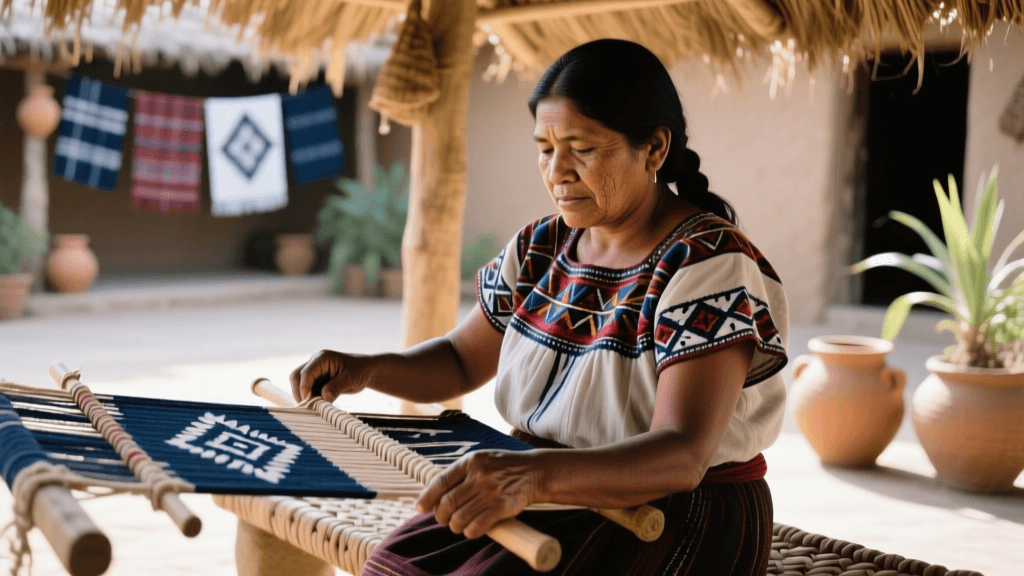
Unlike the rigid pedal loom introduced by the Spanish, the pre-Hispanic backstrap loom relies on the weaver’s own body to create tension. The loom consists of two parallel sticks: one is tied to a sturdy post or tree, and the other is attached to a strap that wraps around the weaver’s lower back. By leaning forward or backward, the weaver precisely controls the warp tension, allowing for incredibly tight, dense, and intricate weaves.
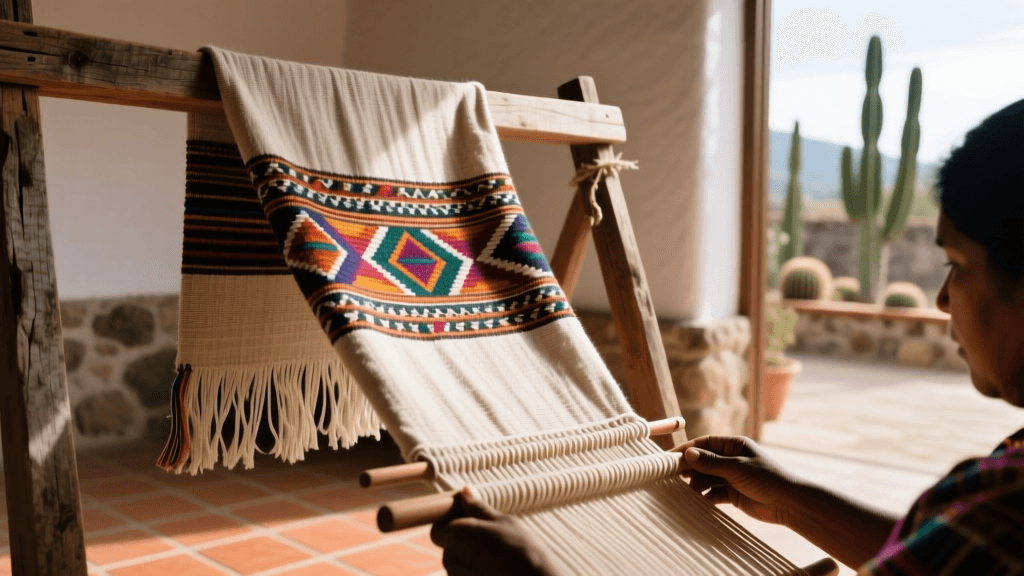
The hallmark of a premium Oaxacan huipil is the trama suplementaria (supplementary weft) or brocade technique. Rather than embroidering a design onto a finished piece of cloth, the weaver integrates the pattern directly into the fabric as it is being woven. Using a small pick-up stick and a bone batten, the artisan meticulously counts and lifts individual warp threads to insert the colored weft yarns. A single, heavily brocaded panel can take anywhere from three to eight months of daily weaving to complete, making the physical labor embedded in each garment staggering.
The Symbolism of Brocade Motifs
The motifs woven into a huipil are never purely decorative; they are deeply symbolic, often reflecting the community's worldview. While patterns vary by village, several core symbols are prevalent across Oaxaca:
- The Diamond (El Diamante): Representing the universe and the four cardinal directions, the diamond is a central motif symbolizing the cycle of the sun and the agricultural seasons.
- The Toad (El Sapo): A symbol of fertility and the coming of the rainy season, crucial for agrarian communities in the Oaxacan valleys.
- The Centipede (El Ciempiés): Often stylized along the borders, it represents the winding path of life, the connection between the underworld and the earth, and protection against evil spirits.
- The Pitcher (El Cántaro): Symbolizing the vital role of water and the traditional duties of women in the community.
Regional Styles: A Comparative Guide
Oaxaca is home to 16 distinct Indigenous ethnolinguistic groups, and the huipil styles vary dramatically from village to village. The Instituto Nacional de los Pueblos Indígenas (INPI) recognizes these regional distinctions as vital markers of cultural identity. Below is a comparison of three highly sought-after regional styles in the 2026 collector's market.
| Region / Village | Ethnolinguistic Group | Distinctive Motifs & Colors | Base Material |
|---|---|---|---|
| San Juan Colorado | Mixtec | Dense geometric brocades in deep purples, reds, and blacks. Heavy use of the diamond and centipede motifs. | Hand-spun white cotton |
| Santa María Tlahuitoltepec | Mixe | Subtle, tonal white-on-white brocade with delicate floral and avian patterns. Highly textured. | Commercial or hand-spun cotton |
| San Bartolomé Yautepec | Zapotec | Vibrant, multi-colored floral and animal motifs woven into a dark indigo or black base. | Coyuche (brown) cotton or silk |
Navigating the 2026 Market: Ethical Sourcing and Pricing
In 2026, the threat of digital plagiarism and fast-fashion knockoffs remains a significant issue. AI-generated textile patterns and overseas factories utilizing digital printing to mimic backstrap brocade have saturated online marketplaces. To ensure you are purchasing an authentic, ethically sourced Oaxacan huipil, buyers must exercise due diligence.
Verifying Authenticity
First, examine the reverse side of the garment. True supplementary weft brocade will show the pattern on both sides, though the back may have slight floats or a slightly less crisp appearance than the front. Digital prints will be flat, and embroidery will have a distinct backing with visible knots and loose threads. Second, look for the natural irregularities of hand-spun yarn and the slight asymmetries that prove a human hand guided the batten.
2026 Pricing Guide
The price of an authentic huipil reflects the months of labor involved. In 2026, fair-trade pricing generally falls into the following tiers:
- Everyday Huipiles ($150 - $350 USD): Woven with commercial cotton and yarns, featuring simpler, spaced-out brocade bands. Takes 1-2 months to weave.
- Ceremonial / Fine Huipiles ($400 - $800 USD): Woven with hand-spun cotton, natural dyes (cochineal/indigo), and dense, full-panel brocade. Takes 3-5 months.
- Masterwork / Antique Pieces ($900 - $2,500+ USD): Museum-quality pieces, often featuring wild silk, vintage natural dyes, and extraordinary complexity. Sourced through specialized galleries or direct commissions with master weavers.
To source ethically, bypass generic e-commerce sites. Instead, connect directly with weaving cooperatives via their official social media channels or utilize verified fair-trade platforms that guarantee the artisan receives the lion's share of the profit. Cooperatives like Mujeres Artesanas de las Chinampas or village-specific collectives in the Mixteca region often take direct commissions via WhatsApp, allowing you to support the weaver's family directly.
Care and Preservation of Handwoven Garments
Investing in an authentic, naturally dyed huipil requires specific care to maintain the integrity of the fibers and the vibrancy of the organic dyes. Never machine wash or dry clean a handwoven backstrap loom textile.
- Washing: Hand wash in cold water using a pH-neutral, organic textile soap. Avoid harsh detergents, bleach, or fabric softeners, which can strip natural cochineal and indigo dyes.
- Rinsing: Rinse thoroughly in cold water until the water runs clear. A splash of white vinegar in the final rinse can help set natural dyes and restore the cotton's softness.
- Drying: Never wring the garment. Gently press out excess water between two clean, dry towels. Lay the huipil flat on a drying rack in a well-ventilated area, strictly out of direct sunlight, which will fade natural dyes rapidly.
- Storage: Store flat or loosely rolled in acid-free tissue paper inside a cedar chest or cotton bag. Avoid wire hangers, which can distort the warp tension and stretch the shoulder seams over time.
Conclusion
The Oaxacan huipil is a triumph of human ingenuity and a profound expression of Indigenous identity. As the global textile community moves further into 2026, the responsibility falls on collectors, designers, and cultural institutions to protect these traditions. By understanding the mechanics of the backstrap loom, recognizing regional styles, and committing to ethical, direct-to-artisan sourcing, we can ensure that the rhythmic clack of the wooden batten continues to echo through the valleys of Oaxaca for centuries to come.