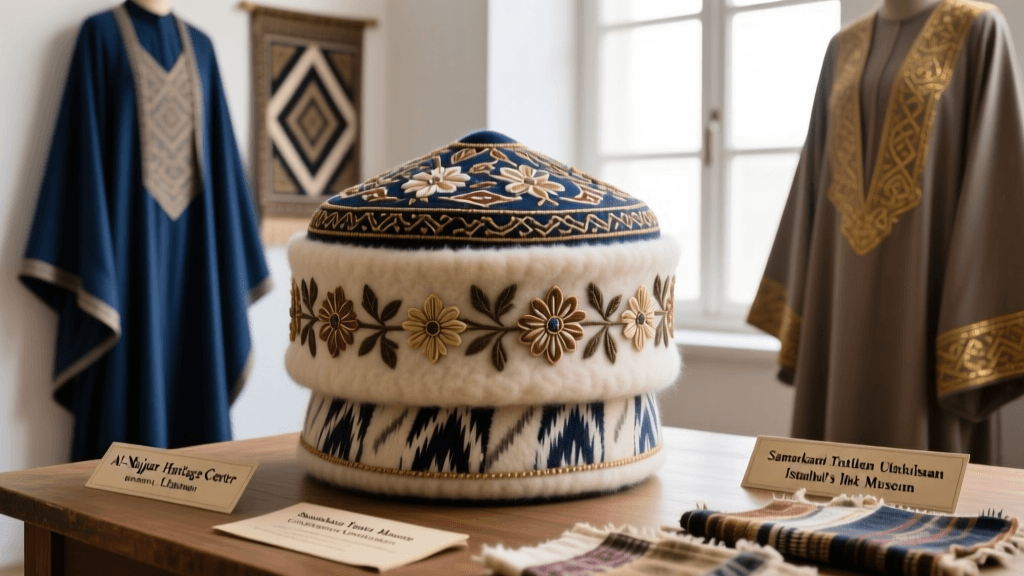
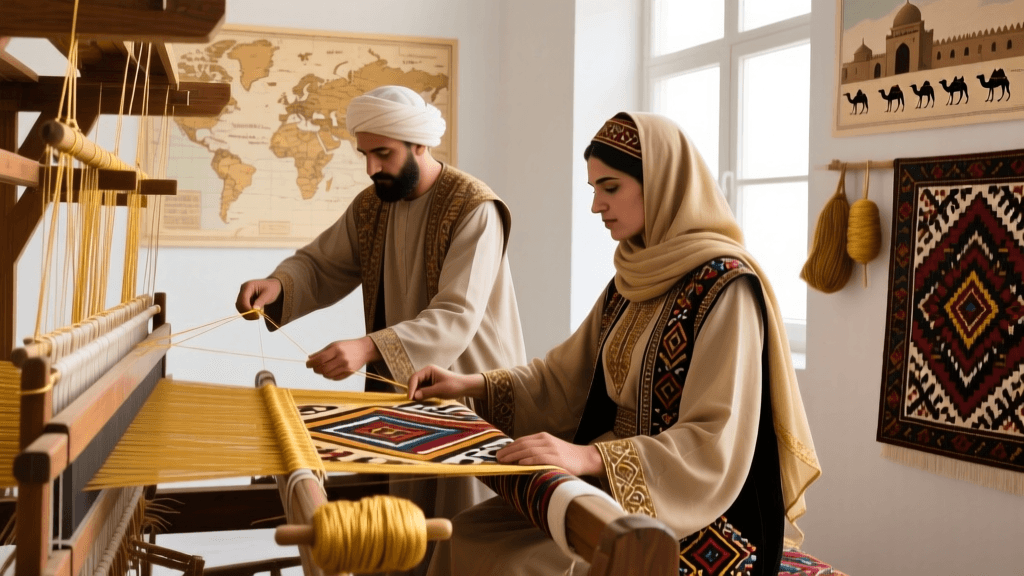
Persian Termeh Weaving Loom Shedding And Metal Thread Insertion
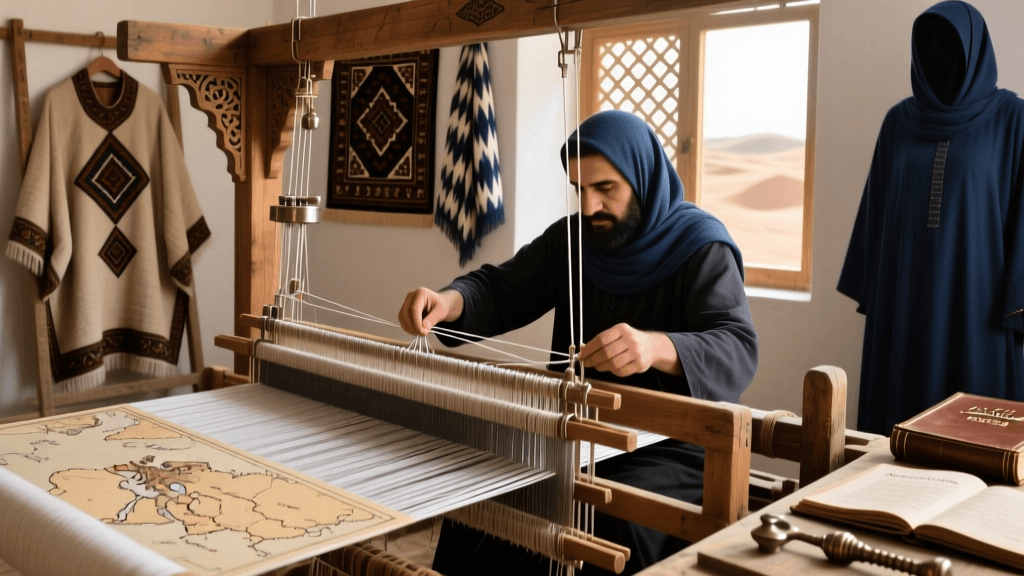
Persian Termeh: A Loom’s Legacy Across Empires
Termeh—a handwoven, brocaded textile originating in Iran’s Isfahan and Yazd provinces—represents one of the most technically demanding traditions in Persian weaving. Its production relies on a specialized loom configuration known as the “loom shed,” where warp threads are meticulously separated to create precise openings for weft insertion. Unlike standard tabby or twill structures, termeh employs a supplementary weft technique that allows metallic threads—typically silver or gold-wrapped silk—to be floated across the surface without compromising structural integrity. This method demands extraordinary coordination between foot treadles, heddle manipulation, and shuttle timing; master weavers often train for 12–15 years before executing full-scale ceremonial pieces.
The Loom Shed: Precision Engineering in Wood and Thread
The traditional termeh loom is a horizontal, pit-type device constructed from aged walnut wood, with dimensions averaging 3.2 meters in length and 1.4 meters in width. Its defining feature is the dual-layered shed mechanism: one set of heddles controls the ground weave (usually silk or wool), while a second, independently operated set lifts specific warp threads to accommodate the supplementary metallic weft. This separation enables complex geometric and floral motifs—including the iconic *boteh* (paisley) and *shah abbasi* palmettes—to emerge with crisp definition.
Shed Formation Mechanics
Each shed opening must maintain exact tension: warp threads are spaced at 48 ends per centimeter in fine ceremonial termeh, compared to 28 ends/cm in domestic-grade versions. The shed height—the vertical gap between upper and lower warp layers—is calibrated to precisely 1.8 cm to prevent snagging of metal-wrapped yarns. Weavers adjust this height daily using wooden spacers called *kharak*, which are carved to tolerances within ±0.1 mm.
Metal Thread Insertion Protocols
Silver wire used in Isfahan termeh is drawn to a diameter of 0.06 mm before being wrapped around a core of wild mulberry silk filament. Gold variants—reserved for royal commissions—utilize 22-karat gold leaf applied over copper wire, then wound onto silk at a twist ratio of 12 turns per centimeter. During insertion, the shuttle carries only one metallic weft pick per pass; inserting two would distort the shed geometry and cause misalignment in subsequent rows.
Silk Road Confluences: From Samarkand to Shiraz
Termeh’s evolution was shaped by centuries of transcontinental exchange. Sogdian merchants introduced Chinese silk reeling techniques to Persia by the 7th century CE, while Timurid-era workshops in Herat (modern-day Afghanistan) adapted Central Asian ikat dyeing logic into termeh’s color sequencing. By the Safavid period (1501–1736), Isfahan became the epicenter of termeh production, exporting bolts along caravan routes to Istanbul, Delhi, and Venice. Venetian merchant records from 1623 note shipments of “Isfahani termeh with gold thread, 14.5 meters per roll, priced at 12 ducats” — evidence of its premium valuation (Archivio di Stato di Venezia, 1623).
- Yazd province contributes 68% of Iran’s certified heritage termeh output (Iranian Cultural Heritage Organization, 2021)
- A single 2.5-meter ceremonial termeh shawl requires 220 hours of weaving time
- Traditional termeh looms operate at an average speed of 8–10 picks per minute—slower than mechanized equivalents by 92%
- The Tehran Museum of Contemporary Art houses 47 pre-1920 termeh fragments, including a 1692 Safavid court robe with 32 distinct metallic motifs
- In Uzbekistan’s Fergana Valley, termeh-inspired chapan linings use cotton warp with copper-wrapped weft, differing from Persian silver-silk standards
Country-Specific Variations in Ceremonial Dress
While termeh itself remains distinctly Iranian, its aesthetic language permeates regional attire. In Tajikistan, the *chapan*—a long, quilted coat—often features termeh-derived borders sewn onto hand-dyed ikat panels. Afghan *perahan tunban* ensembles incorporate narrow termeh bands (typically 4.5 cm wide) along sleeve cuffs and hemlines. In Oman, the *dishdasha*’s collar edging occasionally replicates termeh’s boteh motif using machine-embroidered gold thread—a modern adaptation lacking the original shed-controlled precision.
Abaya and Kaftan Cross-Currents
Gulf Arab abayas rarely use true termeh due to climate constraints, but Kuwaiti tailors in Souq Al-Mubarakiya source lightweight termeh derivatives—woven with 70% silk and 30% bamboo fiber—for ceremonial *thobe* linings. Saudi *kaftans*, particularly those commissioned for Hajj pilgrims, integrate termeh inserts measuring exactly 18 cm × 25 cm at the chest panel, echoing Safavid-era symmetry ratios.
Institutional Safeguarding and Material Science
The Isfahan University of Art’s Textile Conservation Lab has documented 17 distinct termeh weave structures through digital microscopy, revealing that authentic pieces retain metallic thread adhesion rates above 94% after 120 years—far exceeding industrial alternatives (Isfahan University of Art, 2019). Meanwhile, UNESCO’s 2017 recognition of “Persian Handicrafts of Central Iran” included termeh weaving under Criterion III, citing its role in sustaining intergenerational knowledge transfer among 317 registered master-apprentice pairs in Yazd County.
“The termeh loom does not merely produce cloth—it calibrates time, memory, and metallurgical patience into every centimeter.” — Dr. Leila Farrokhzad, Director, National Carpet Center of Iran, 2020
Material Specifications and Heritage Infrastructure
Authentic termeh adheres to strict material thresholds: warp tension must remain between 18–22 kg-force across all 1,240–1,860 warp ends per meter; humidity in weaving chambers is maintained at 55–60% RH year-round to prevent silk brittleness. The National Carpet Center of Iran operates three dedicated termeh restoration studios—in Isfahan, Yazd, and Kerman—each equipped with custom-built looms replicating 18th-century specifications. These facilities process over 89 documented historical pieces annually, including a 1742 Qajar-era *termeh-e khamush* (silent termeh) whose 1.2-meter-wide field contains 2,147 individually placed metallic motifs.
| Location | Primary Termeh Use | Key Measurement | Institutional Oversight |
|---|---|---|---|
| Isfahan, Iran | Ceremonial shawls & royal robes | Warp density: 48 ends/cm | National Carpet Center of Iran |
| Yazd, Iran | Wedding textiles & shrine hangings | Shuttle width: 12.3 cm | Iranian Cultural Heritage Organization |
| Fergana Valley, Uzbekistan | Chapan lining accents | Metal thread diameter: 0.09 mm (copper) | Uzbekistan Academy of Arts |
Conservation efforts extend beyond Iran: the State Hermitage Museum in Saint Petersburg holds the largest extant collection of Safavid termeh outside the Middle East—112 pieces, including a 1658 coronation mantle with 3.7 meters of continuous gold-thread boteh patterning. In contrast, the Tashkent Museum of Applied Arts focuses on post-Soviet termeh revival, training 42 apprentices annually in hybrid techniques that merge Uzbek suzani embroidery logic with Persian shed control principles.
Modern challenges persist. Synthetic metallic substitutes now constitute 39% of commercial termeh production, undermining tensile longevity. Yet in villages like Meymeh near Isfahan, 14 family-run workshops continue using hand-drawn silver wire and natural madder root dyes—producing batches of no more than 6 meters per month. Each bolt undergoes verification at the Yazd Provincial Weaving Registry, where inspectors measure metallic thread continuity under 10× magnification and reject any section showing >0.3 mm of discontinuity.
The physicality of termeh remains inseparable from its cultural grammar. When a master weaver in Ardakan adjusts her treadle sequence to insert the 1,842nd gold weft pick of a 3.1-meter *termeh-e jameh*, she is not merely executing a pattern—she is aligning warp and weft in accordance with cosmological diagrams preserved in Safavid-era manuscripts held at the Golestan Palace Library. This continuity transforms the loom shed from a mechanical interface into a site of embodied historiography.
Efforts to digitize termeh design archives have accelerated since 2022, with the Iranian National Archives scanning 2,841 original *tarh* (cartoon) templates—each annotated with thread counts, shed heights, and seasonal humidity notes. These documents confirm that the most intricate Safavid-era pieces required 13 separate shed configurations per repeat unit, a complexity unmatched in any other Silk Road textile tradition.
At the heart of termeh lies a paradox: its most luminous surfaces—those shimmering fields of gold and silver—are achieved not through excess, but through subtraction. Every metallic thread floats free of the ground weave, suspended only by strategic anchoring points spaced at exact 7.2-centimeter intervals. This deliberate non-adhesion creates optical vibration, making the pattern appear to shift under changing light—a phenomenon documented in 19th-century British textile surveys as “the living geometry of Persian light.”
Today, termeh endures not as relic but as recalibration—its loom shed still opening, its metal threads still catching sun, its measurements still exact. It remains woven not just with silk and silver, but with the calibrated patience of centuries.