Peking Opera Costumes: A Guide to Jingju Theatrical Wardrobes
The Visual Language of Jingju
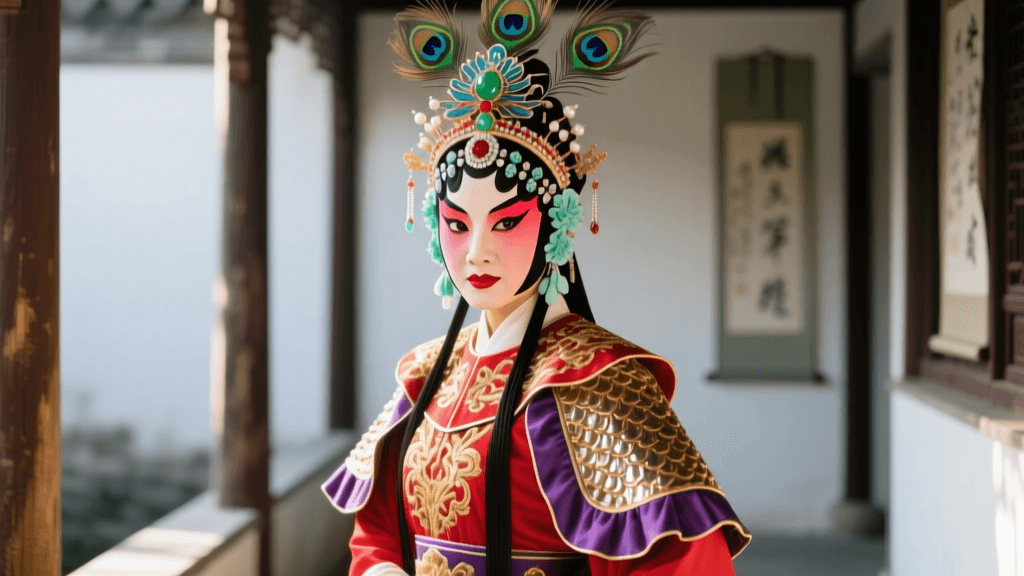
Peking Opera, known as Jingju, is one of China's most celebrated cultural exports. Recognized by UNESCO as an Intangible Cultural Heritage of Humanity, this art form combines music, vocal performance, mime, dance, and acrobatics. However, before a single note is sung or a sword is drawn, the audience is captivated by the xingtou—the elaborate theatrical costumes. Unlike Western theatrical realism, Jingju costumes are not bound by historical accuracy. Instead, they operate on a strict system of visual coding, immediately communicating a character's social status, moral alignment, and emotional state to the audience. For festival organizers, cultural troupes, and traditional garment enthusiasts, understanding the anatomy and sourcing of these garments is essential for authentic performance and preservation.
The Core Wardrobe: Decoding the Five Main Garments
The traditional Peking Opera wardrobe is famously summarized by the phrase 'three chests and two trunks,' containing everything needed to depict any era or setting in Chinese history. The garments are broadly categorized into five main types, each serving a specific theatrical function. As noted in Britannica's comprehensive guide to Beijing Opera, the stylized nature of these garments allows actors to transition seamlessly between grand imperial courts and humble village streets.
| Garment Type | Role Type | Key Features | Festival Use Case |
|---|---|---|---|
| Mang (Python Robe) | Emperors, High Officials | Round collar, python motifs, water sleeves | Grand opening ceremonies, imperial parades |
| Kao (Armor) | Generals, Warriors | Form-fitting, back flags (kao qi), padded | Martial arts demonstrations, battle scenes |
| Pei (Informal Robe) | Nobles, Scholars | Center-front opening, flowing sleeves | Scholarly recitations, romantic interludes |
| Xuezi (Casual Robe) | Commoners, Lower Officials | Simple cross-collar, black or muted tones | Everyday street scenes, comedic routines |
| Yi (Ceremonial Dress) | Female Roles, Attendants | Pleated skirts, embroidered vests | Banquet scenes, festival dances |
Color Symbolism and Embroidery Motifs
The visual impact of Jingju costumes relies heavily on color theory and intricate embroidery. According to exhibitions highlighted by the Smithsonian Magazine, the colors of a Peking Opera costume are not merely decorative; they are a direct reflection of the character's inner nature.
- Yellow: Reserved exclusively for the Emperor and immediate royal family, symbolizing supreme power and the center of the universe.
- Red: Denotes loyalty, courage, and integrity. Often worn by heroic generals and righteous officials (e.g., Guan Yu).
- Black: Represents fierceness, valor, and an impartial, uncorruptible nature. Frequently used for judges and fierce warriors.
- White: In Western contexts, white may signify purity, but in Jingju, it often denotes treachery, cunning, and villainy, typically worn by corrupt ministers.
The embroidery itself is a masterclass in traditional Chinese textile arts. Authentic high-end costumes utilize Su embroidery (Suzhou embroidery), renowned for its fine silk threads and intricate motifs. Dragons with five claws denote emperors, while four-clawed dragons (pythons) denote high officials. Floral motifs like the peony represent wealth and honor, while bats symbolize good fortune.
Practical Guide: Sourcing and Commissioning Costumes
For festival organizers and theatrical troupes looking to acquire authentic Peking Opera costumes, the market is divided into mass-produced synthetic garments and bespoke silk masterpieces. Here is a practical breakdown of what to expect when sourcing xingtou.
Off-the-Rack vs. Bespoke
If you are outfitting a community festival or a student troupe, off-the-rack costumes made from synthetic brocade and machine embroidery are highly practical. These can be sourced from theatrical supply shops in Beijing's Liulichang cultural street or online via specialized Chinese performance wear retailers.
- Cost: $150 to $400 per full set (including basic headgear and boots).
- Material: Polyester brocade, cotton lining, machine embroidery.
- Lead Time: Immediate to 4 weeks for shipping.
For professional troupes, international cultural exhibitions, or serious collectors, commissioning a bespoke silk costume is mandatory. These are typically crafted in Suzhou or Hangzhou by master embroiderers.
- Cost: $2,500 to $8,000+ depending on the complexity of the Kao armor or Mang robe.
- Material: 100% mulberry silk, real gold and silver thread couching, hand-rolled seams.
- Lead Time: 4 to 8 months. The embroidery alone on a single Mang robe can take over 1,000 hours of hand-stitching.
Actionable Sourcing Tips
When commissioning, always request a 'cartoon' (the embroidery blueprint on tracing paper) before the artisans begin stitching. Ensure the contract specifies the use of 'pingjin' (flat gold couching) rather than printed gold foil, which cracks and peels under stage lights.
Measurements and Fitting for Performance
Fitting a Peking Opera costume is vastly different from fitting standard Hanfu or Qipao garments. Theatrical costumes are designed to exaggerate the human form and facilitate highly stylized movements. When taking measurements for a performer, consider the following specific adjustments:
Water Sleeves (Shui Xiu)
Water sleeves are the defining feature of the Mang, Pei, and Yi garments. They are extensions of white silk attached to the cuffs, used to express emotions through flicking, tossing, and trembling motions.
- Standard Measurement: The white silk extension should measure exactly 18 to 24 inches beyond the performer's wrist, depending on the actor's height and arm length.
- Weighting: For outdoor festival performances where wind is a factor, ask the tailor to add a microscopic lead weight or a thicker silk hem to the very edge of the water sleeve to maintain control during tosses.
Armor and Back Flags (Kao)
The Kao is the most physically demanding costume in the Jingju wardrobe. It features four triangular flags attached to the back, representing an army commander's authority.
- Harness Fitting: The flags and the heavy padded chest plate can weigh between 5 to 8 pounds. A custom-fitted leather harness must be worn under the inner tunic to distribute the weight across the shoulders and lower back, preventing spinal strain during acrobatic flips.
- Boot Height: Performers wear hou di xue (thick-soled boots) with cork soles ranging from 2 to 4 inches in height. Measure the performer's calf and ankle circumference after they have strapped on the boots and leg wrappings to ensure the lower armor skirts do not restrict knee flexion.
Maintenance and Storage for Festival Troupes
Authentic silk and gold-threaded costumes are highly susceptible to humidity, sweat, and UV damage. Proper maintenance is crucial for preserving these investment pieces between festival seasons.
'A Jingju costume is not merely clothing; it is a living archive of Chinese textile history. Treating it with the same reverence as a museum artifact ensures its survival for future generations.'
Post-Performance Care
- Sweat Management: Never store a costume immediately after a performance. The acidity in human sweat will degrade silk and tarnish metallic threads. Hang the garment on a wide, padded wooden hanger in a climate-controlled room (45-55% humidity) for at least 24 hours.
- Spot Cleaning: Do not dry clean or water wash authentic Su embroidery. Use a specialized textile sponge to gently lift makeup and sweat from the collar and inner cuffs. For heavy soiling, consult a professional theatrical conservator.
Long-Term Storage
When the festival season concludes, costumes must be stored correctly. Never fold a Mang or Kao robe, as this will permanently break the gold couching threads and create deep creases in the silk brocade. Instead, roll the garments around acid-free cardboard tubes, interleaving the layers with unbleached muslin cloth. Store the rolled tubes in cedar chests, which naturally repel moths and regulate moisture, ensuring the vibrant colors and intricate motifs remain pristine for the next grand performance.