Traveling With Silk Kimonos in 2026: Packing & Transit Guide
The Global Renaissance of Kimono Travel
As we navigate through 2026, the global appreciation for traditional Japanese garments has evolved from niche collecting to active, wearable participation in international cultural events. Enthusiasts, researchers, and practitioners are increasingly traveling with their own silk kimonos, obis, and accessories to attend tea ceremonies, festivals, and academic conferences worldwide. However, transporting these delicate, often antique, textiles requires a meticulous approach that balances heritage preservation with the rigorous demands of modern air travel.
Silk, particularly the crepe (chirimen) and figured satin (rinzu) weaves commonly used in high-end kimonos, is highly vulnerable to moisture fluctuations, compression creasing, and friction. A poorly packed kimono can suffer permanent damage to its metallic threads (surihaku) or delicate hand-painted dyes (yuzen). This comprehensive guide outlines the 2026 standard for packing, transporting, and maintaining traditional Japanese garments on the go.
Essential Archival Packing Materials for 2026
According to the Smithsonian Museum Conservation Institute, silk is a protein fiber that is highly susceptible to light damage, moisture-induced mold, and acid migration from standard paper products. When preparing a kimono for international transit, standard plastic dry-cleaning bags and cardboard boxes are strictly prohibited. Instead, modern travelers must rely on museum-grade archival supplies.
The Core Packing Kit
- Unbuffered Acid-Free Tissue Paper: Buffered tissue contains calcium carbonate, which can degrade protein fibers like silk over time. Always purchase unbuffered, pH-neutral tissue for direct contact with the garment.
- Archival Tyvek or Cotton Muslin Wraps: Tyvek is a flash-spun high-density polyethylene fiber that is water-resistant, breathable, and incredibly tear-resistant. It serves as an excellent modern substitute for the traditional tatoushi (paper wrapper).
- Silica Gel Desiccant Packets: To combat the humidity fluctuations in airplane cargo holds and overhead bins, include reusable, indicator-grade silica gel packets. Ensure they are wrapped in a secondary cotton pouch so they do not directly touch the silk.
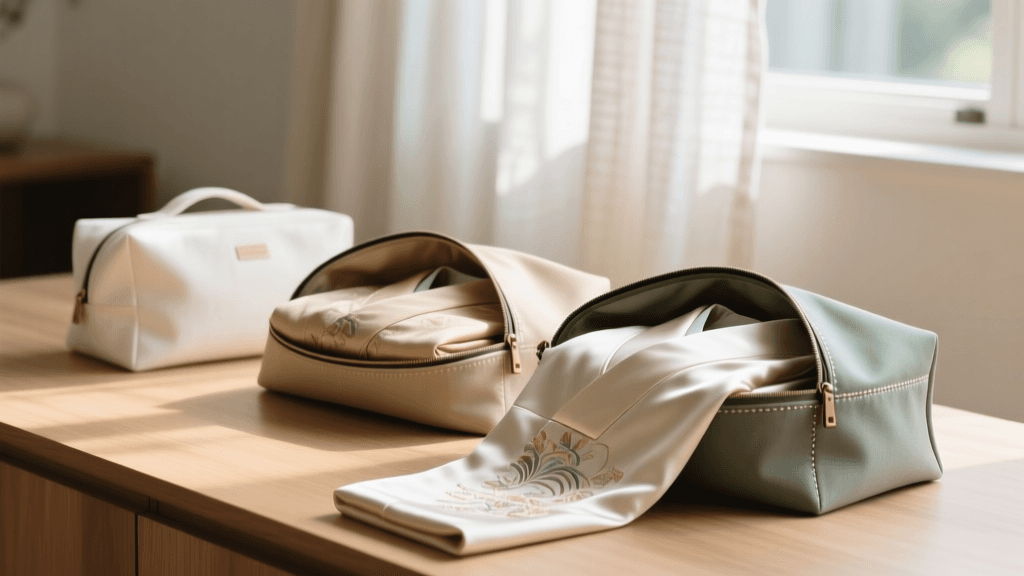
- Soft-Sided Archival Garment Bag: A breathable, unbleached cotton canvas or Tyvek garment bag with a rigid base provides structure without the crushing weight of hard-shell luggage.
Mastering the Hon-Datami: Folding for Transit
The traditional Japanese folding method, known as hon-datami, is specifically designed to align the seams of the kimono to prevent stress on the fabric. However, for travel, the standard fold must be modified to prevent hard, permanent creases from forming under the pressure of transit.
The Victoria and Albert Museum's textile conservation guidelines strongly recommend padding the folds of historic and delicate textiles to distribute pressure and prevent sharp creases. To achieve this in 2026, travelers use the 'roll-and-pad' technique:
- Prepare the Surface: Lay a clean, unbleached cotton sheet over a large, flat surface. Never fold a kimono directly on a hotel bedspread or carpet.
- Align the Seams: Lay the kimono face down. Fold the left front panel over the back, then the right front panel over the left, aligning the okumi (front edge) seams perfectly.
- Pad the Folds: Before folding the sleeves back, place a loosely crumpled sheet of acid-free tissue paper along the fold line. This creates a soft, rounded edge rather than a sharp, damaging crease.
- Pad the Body Folds: When folding the bottom hem up to the collar, insert a long, tissue-stuffed 'sausage' (a roll of tissue paper) along the horizontal fold line. This maintains the structural integrity of the chirimen crepe texture.
- Wrap Securely: Once folded into a neat rectangle (approximately 60cm by 80cm), wrap the kimono tightly in your Tyvek or muslin tatoushi alternative, securing it with flat, unbleached cotton twill tape. Never use elastic bands or synthetic strings, which can snap or leave chemical residues.
Transporting the Obi and Accessories
The obi (sash) presents a unique challenge. Maru and Fukuro obis often feature intricate metallic threads that can crack or permanently kink if folded sharply. For travel, it is best to roll the obi rather than fold it. Place a sheet of acid-free tissue over the metallic designs, then roll the obi loosely around a core made of rolled cotton or a specialized archival foam tube. Store the rolled obi in a separate cotton drawstring bag to prevent friction against the kimono.
Small accessories like obijime (cords), obidome (brooches), and tabi (split-toe socks) should be packed in individual archival polyethylene zip bags or small Tyvek envelopes. Keep these in a separate, rigid accessories case to prevent the heavy metal or ceramic obidome from shifting and snagging the delicate silk during turbulence.
Navigating 2026 Airline Carry-On Policies
In 2026, checking a kimono is considered an unacceptable risk due to extreme temperature fluctuations in the cargo hold, potential luggage delays, and the rough handling of hard-shell cases. Your kimono must travel in the cabin.
Most international airlines allow a standard carry-on dimension of 55cm x 40cm x 20cm. A properly folded kimono wrapped in Tyvek measures roughly 65cm x 40cm x 10cm. To comply with airline sizing while protecting the garment, use a flexible, soft-sided garment bag. When boarding, politely request the flight attendant to place the garment bag flat in a dedicated closet if available (common in First and Business Class). If a closet is unavailable, place the wrapped kimono at the very top of your soft-sided carry-on, or lay it flat across the top of other passengers' bags in the overhead bin. Never place heavy items on top of the silk.
On-the-Go Garment Care: Steaming and Storage
Upon arriving at your destination, unpack the kimono immediately. Even with padded folds, the fabric will need time to relax and release transit-induced compression lines.
The Bathroom Steam Method
The safest way to remove wrinkles without applying direct heat is ambient steam. Hang the kimono on a wide, padded wooden hanger (never wire or thin plastic) in the bathroom. Run a hot shower for 15 minutes, allowing the room to fill with steam. Keep the kimono at least two meters away from the water source to prevent water spotting on the silk. Leave it to hang in the damp room for an hour, then move it to a dry, climate-controlled bedroom to air out.
Portable Steamers
If you must use a steamer, opt for a high-quality, dual-voltage travel steamer like the Steamery Pilo 2 or Panasonic's latest 2026 handheld models. Always use distilled water to prevent mineral deposits from spotting the fabric. Hold the steamer at least 15 centimeters away from the silk, and never let the metal head of the steamer directly touch the yuzen dye or metallic threads, as direct heat can melt the adhesive used in the resist-dyeing process.
Material Comparison Chart for Kimono Transit
| Material | Pros for Kimono Travel | Cons / Risks | 2026 Recommendation |
|---|---|---|---|
| Unbuffered Acid-Free Tissue | Prevents acid migration; cushions folds perfectly | Tears easily if snagged on rough surfaces | Mandatory for all direct silk contact and fold padding |
| Cotton Muslin Bags | Highly breathable; excellent dust and light protection | Can absorb ambient moisture in humid climates | Use only as a secondary outer layer in dry climates |
| Polyethylene Plastic | Waterproof; inexpensive and widely available | Traps moisture; high risk of mold and off-gassing | Never use for silk storage or transit |
| Archival Tyvek Wraps | Tear-resistant; water-resistant; breathable | Can generate mild static charge in dry cabin air | Best modern alternative to traditional paper tatoushi |
Final Thoughts for the Traveling Enthusiast
Traveling with a traditional kimono in 2026 is a rewarding endeavor that bridges the gap between historical preservation and modern cultural exchange. By investing in archival-quality packing materials, mastering the padded hon-datami fold, and treating your garments with the same care as a museum curator, you ensure that these magnificent textiles remain vibrant and intact for generations to come. Whether you are attending a formal tea gathering in Kyoto or a cultural exhibition in London, proper preparation guarantees that your kimono arrives as flawlessly as the day it was woven.