Kimono Travel Guide 2026: Best Packing & Transport Tips
The 2026 Landscape of Kimono Travel
Traveling with a kimono requires a delicate balance between preserving centuries-old sartorial traditions and navigating the rigorous demands of modern transit. As we move through 2026, the international kimono community has expanded dramatically. Cultural tourism, global tea ceremony conventions, and international matsuri (festivals) mean that traditional Japanese garments are crossing borders more frequently than ever before. However, transporting delicate silk, structured obi belts, and fragile accessories requires meticulous planning.
Unlike Western formalwear, which is often designed to be hung in standard garment bags, a kimono is fundamentally engineered to be folded. Hanging a silk kimono for extended periods can distort the shoulders and strain the delicate threads. Therefore, mastering the art of packing, transporting, and performing on-the-go maintenance is an essential skill for the modern kimono enthusiast.
Choosing the Right Luggage and Garment Bags
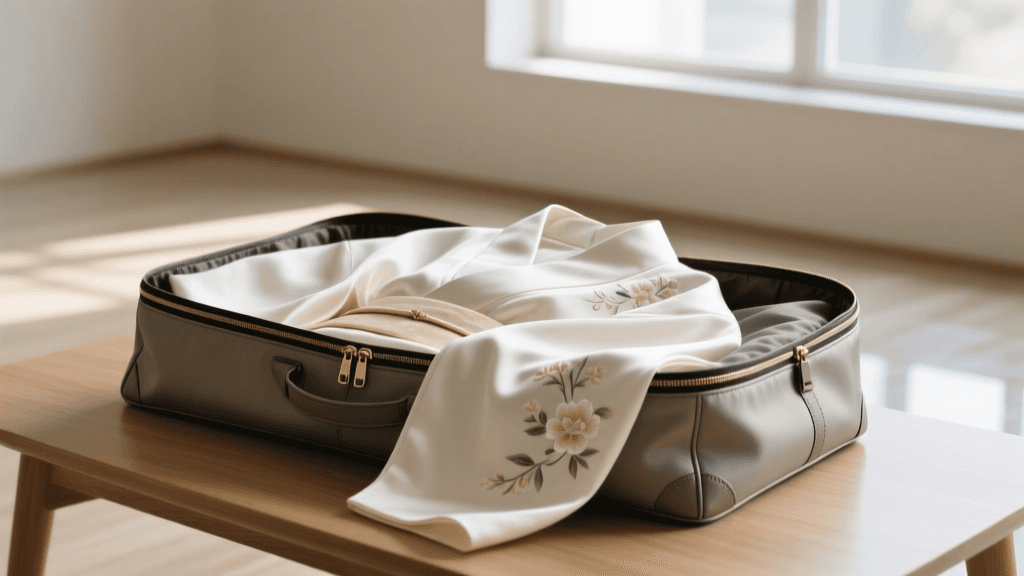
The first rule of kimono transport in 2026 is to abandon the traditional Western hanging garment bag. While hanging might seem intuitive, the weight of the silk and the lining will pull on the seams during transit. Instead, the focus must be on flat, structured storage.
A standard women's kimono, when properly folded, measures approximately 60 cm in width and 35 cm in length, with a thickness of about 5 to 8 cm depending on the fabric weight. For men's kimonos, the dimensions are slightly larger. You need a hard-shell carry-on suitcase that allows the folded garment to lay completely flat without being compressed by other items.
- Hard-Shell Carry-Ons: Polycarbonate suitcases with a 50/50 clamshell opening (such as the latest 2026 models from Rimowa or Tumi) are ideal. They allow you to place the folded kimono on one side without having to stack heavy items on top of it.
- Breathable Cotton Covers: Never store silk in plastic dry-cleaning bags, as trapped moisture can lead to mildew. Use unbleached, breathable cotton garment covers or traditional tatoshi (specialized paper wrapping) to protect the fabric from dust and light.
- Acid-Free Tissue Paper: The American Institute for Conservation emphasizes that acid-free materials are non-negotiable when storing or transporting protein-based fibers like silk to prevent yellowing and fiber degradation over time.
Mastering the Hon-Datami Fold for Transit
The hon-datami (standard fold) is the traditional method for storing and transporting a kimono. When executed correctly, it aligns the seams and distributes the fabric's weight evenly, minimizing stress on the fibers.
'A kimono is not merely a piece of clothing; it is a rectangular canvas of art. Folding it correctly is an act of respect for the weaver, the dyer, and the garment itself.' — Master Kitsuke Instructor, Kyoto.
Step-by-Step Transit Folding:
- Lay the kimono flat on a clean, dry surface with the back facing up.
- Fold one side of the body panel inward along the back seam.
- Fold the sleeve back so it does not overlap the body fold.
- Repeat on the opposite side, ensuring the front panels align perfectly with the back edges.
- Fold the sleeves inward toward the center.
- Fold the bottom hem up to meet the collar, creating a neat rectangle.
Pro-Tip for Travel: To prevent hard creases from forming along the fold lines during a long flight, roll small 'sausages' of acid-free tissue paper and place them inside the folds at the shoulders, sleeves, and hem. This creates a gentle curve rather than a sharp, damaging crease.
Fabric-Specific Travel Care Matrix
Not all kimonos are created equal. The care required during transport varies wildly depending on the textile. Below is a comprehensive matrix for travelers in 2026 to reference before packing.
| Fabric Type | Travel Suitability | Packing Method | Wrinkle Release Strategy |
|---|---|---|---|
| Silk (Kinu) | Moderate (Requires high care) | Hon-datami with tissue buffering | Low-heat portable steaming; bathroom humidity |
| Polyester | Excellent (Highly durable) | Standard folding or rolling | Handheld steamer or low-heat iron with press cloth |
| Cotton (Momen) | Good (Breathable, washable) | Tight rolling to save space | Standard steam iron; damp towel press |
| Wool | Moderate (Prone to moth damage) | Folded with cedar blocks or lavender sachets | Vertical steaming; avoid direct contact |
| Hemp/Ramie | Good (Summer wear, stiffens) | Rolled loosely to prevent fiber breakage | High-heat steam; stretch while damp |
Transporting the Obi and Small Accessories
The obi (sash) is often the most expensive and fragile component of the kimono ensemble. A formal Maru or Fukuro obi features intricate metallic threads (surihaku) that can easily snap or tarnish if folded improperly.
How to Pack an Obi:
Never fold an obi in half. Instead, fold it in a loose accordion style (byōbu-tatami) or roll it gently around a specialized cardboard tube. Wrap the rolled obi in a soft silk cloth or a dedicated obi-bukuro (obi storage bag) to protect the metallic threads from friction. For small accessories like obijime (cords), obidome (brooches), and kanzashi (hair ornaments), utilize a hard-shell sunglasses case or a dedicated jewelry roll to prevent them from being crushed in your luggage.
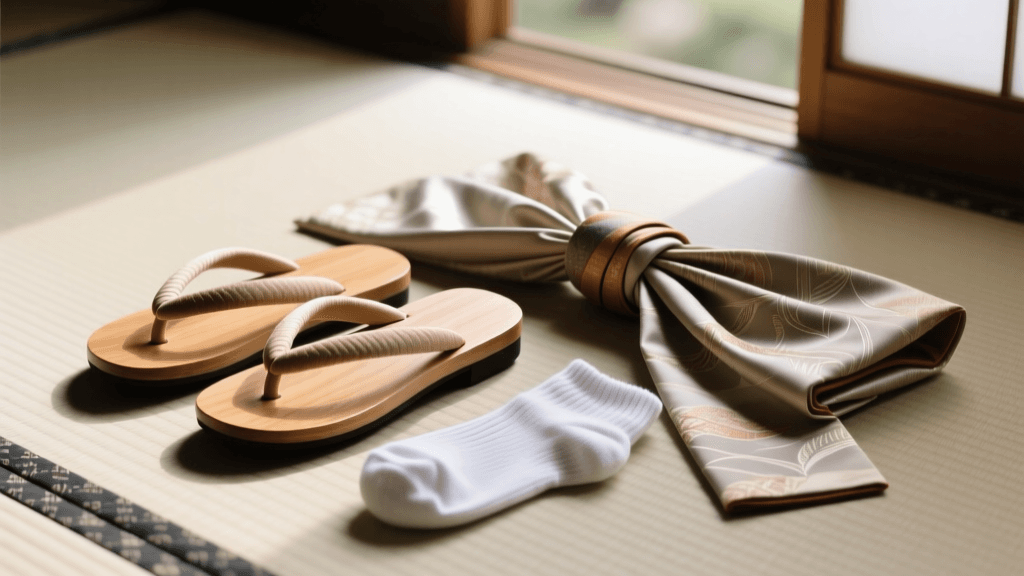
Tabi Socks: Wash and air-dry your cotton tabi before traveling. Pack them flat at the bottom of your suitcase. Never pack wet or damp tabi, as the moisture will transfer to your silk garments in the confined space of a suitcase.
On-the-Go Wrinkle Release and Humidity Control
Even with perfect folding, some minor creasing is inevitable upon arrival at your hotel. Direct ironing is strictly forbidden for silk kimonos, as the high heat and friction will scorch the fibers and ruin the dye.
In 2026, the gold standard for on-the-go kimono care is the portable handheld steamer. Models like the Steamery Cirrus No.3 offer smart temperature controls and a stainless steel faceplate that is safe for delicate protein fibers.
- The Steaming Technique: Hang the kimono on a specialized, wide-shouldered kimono hanger (emono-kake). Hold the steamer at least 10 cm away from the fabric. Allow the steam to penetrate the fibers, then gently tug the hem downward to let gravity pull the wrinkles out.
- The Bathroom Method: If you do not have a steamer, hang the kimono in the bathroom while you take a hot shower. The ambient humidity will relax the silk fibers. Ensure the garment is far enough away to avoid direct water splashes.
- Climate Control: According to guidelines from the Victoria and Albert Museum's conservation department, silk fibers are highly susceptible to permanent creasing when subjected to pressure and fluctuating humidity. Always store your kimono in a climate-controlled room, away from direct sunlight and air conditioning vents which can dry out the fibers.
Navigating Airports and Transit Hubs
When flying, always carry your kimono and obi in the cabin. Checked luggage is subjected to extreme temperature fluctuations in the cargo hold, as well as rough handling that can crush the garment and damage delicate embroidery.
For travelers navigating Japanese transit hubs, the Japan National Tourism Organization (JNTO) recommends utilizing specialized luggage forwarding services (Takuhaibin) for oversized or delicate garment trunks. Services like Yamato Transport can deliver your hard-shell kimono case directly from the airport to your ryokan or hotel, allowing you to navigate crowded train stations unencumbered while ensuring your garments are handled by professionals trained in fragile item transport.
By combining traditional folding wisdom with modern 2026 travel technology, you can ensure that your kimono arrives at your destination in pristine condition, ready to be worn with elegance and pride.