Pacific Northwest Button Blankets & Regalia Trends 2026
Introduction to Northwest Coast Regalia in 2026
The Indigenous peoples of the Pacific Northwest Coast—including the Haida, Tlingit, Tsimshian, Kwakwaka'wakw, and Coast Salish—possess some of the most visually striking and culturally profound garment traditions in the Americas. For these nations, traditional dress is never merely decorative; it is a living embodiment of ancestral law, clan lineage, and spiritual responsibility. As we navigate the cultural landscape of 2026, the revitalization of traditional textile arts and ceremonial regalia has reached an unprecedented peak, driven by a new generation of Indigenous artisans who are reclaiming ancestral techniques while adapting them for contemporary potlatches, powwows, and cultural exhibitions.
Unlike the mass-produced garments of the fast-fashion industry, Northwest Coast regalia is deeply tied to the environment. The harvesting of yellow cedar bark, the ethical sourcing of mountain goat wool, and the careful carving of abalone shell are all acts of ecological and spiritual reciprocity. This comprehensive guide explores the intricate world of Pacific Northwest button blankets, Chilkat weaving, and regional dress traditions, offering insights into the materials, techniques, and 2026 market trends that define this vibrant cultural renaissance.
The Living Art of the Button Blanket
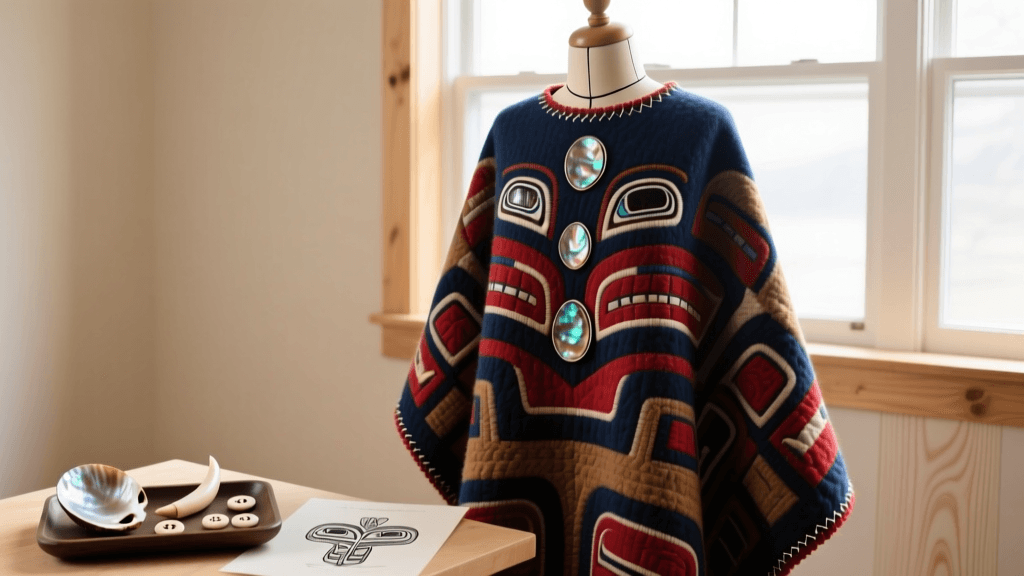
The button blanket, known in the Tlingit language as yeil at.oow (though styles vary across nations), is a ceremonial robe that emerged in the late 18th and early 19th centuries following contact with European and American maritime traders. Indigenous artists brilliantly adapted imported trade goods—specifically dark navy or black Melton wool blankets, cotton flannel, and mother-of-pearl buttons—into a distinctly Indigenous art form that remains central to potlatch ceremonies today.
Formline Design and Clan Crests
The visual language of the button blanket is governed by the strict aesthetic rules of Northwest Coast formline design. This system utilizes continuous, flowing lines that swell and diminish to create ovoids, U-forms, and S-forms. These shapes are assembled to depict clan crests such as the Raven, Eagle, Wolf, Bear, or Killer Whale. In 2026, master appliqué artists continue to use traditional red and black flannel, though the incorporation of deep turquoise and copper-toned fabrics has become increasingly popular to represent specific family histories and regional waterways.
The placement of buttons is not random. Artisans use hundreds, sometimes thousands, of mother-of-pearl or abalone buttons to outline the formline shapes and fill the negative space. When a dancer moves during a potlatch, the buttons catch the firelight or modern hall lighting, creating a shimmering, kinetic effect. Equally important is the auditory experience: the rhythmic clinking of the buttons against one another is considered the "song" of the blanket, a sound that connects the dancer to the ancestors.
Chilkat and Ravenstail Weaving Traditions
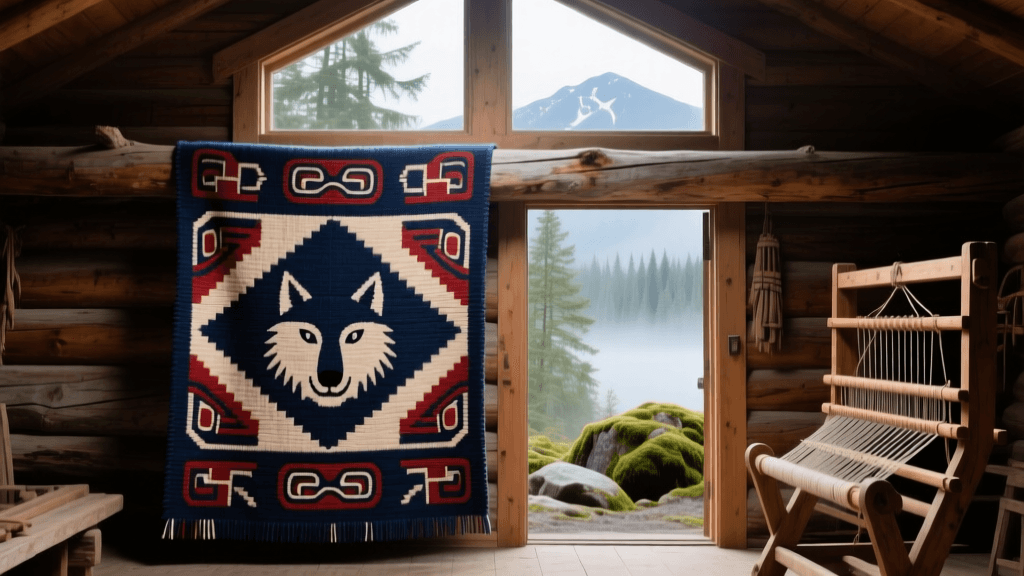
While button blankets represent a brilliant post-contact adaptation, Chilkat and Ravenstail weaving represent ancient, pre-contact textile technologies that require years of dedicated study to master. Originating with the Tlingit and later shared with the Haida and Tsimshian, these weaving styles are widely considered the pinnacle of Indigenous textile art in the Americas.
The Mastery of Chilkat Weaving
Chilkat weaving is characterized by its complex, curvilinear formline designs, which are uniquely translated from a painted wooden or hide pattern board onto a vertical loom. The warp is made from a combination of mountain goat wool and the inner bark of the yellow cedar, while the weft is purely mountain goat wool. The weaver uses a technique called "false embroidery," where the decorative weft is wrapped around the core warp threads, meaning the design only appears on the front of the textile.
According to educational resources from the Sealaska Heritage Institute, the creation of a single full-sized Chilkat dancing blanket can take a master weaver over a year of continuous work. In 2026, there is a massive institutional and community-led push to fund apprenticeships, ensuring that the esoteric mathematics and spiritual protocols required to read a Chilkat pattern board are not lost to time.
Ravenstail: The Geometric Predecessor
Predating Chilkat weaving, Ravenstail (or Yéil Koowú) is characterized by stark, geometric patterns—primarily black, white, and yellow—that resemble the eye and tail feathers of a raven. Historically woven from pure mountain goat wool, Ravenstail robes were the ultimate symbols of wealth and status. Today, contemporary weavers are reviving Ravenstail techniques, often incorporating naturally dyed wools using regional berries, roots, and lichens to achieve vibrant, colorfast yellows and greens.
Regional Variations in Ceremonial Dress
The Pacific Northwest Coast is not a monolith; it is a diverse tapestry of distinct nations, each with its own dialect, governance system, and sartorial traditions. The table below outlines the primary regional variations in ceremonial dress as observed in contemporary 2026 cultural gatherings.
| Indigenous Nation | Primary Weaving & Regalia Style | Distinctive Garment Elements | 2026 Artisan Hubs |
|---|---|---|---|
| Haida | Chilkat / Ravenstail / Button Blankets | Formline appliqué, large woven spruce root hats, carved wooden frontlets | Haida Gwaii (Old Massett, Skidegate), Ketchikan |
| Tlingit | Chilkat Weaving | Elaborate mountain goat tunics, woven leggings with fringe, intricate beadwork | Juneau, Sitka, Haines (Klukwan) |
| Kwakwaka'wakw | Button Blankets / Cedar Bark Regalia | Cedar bark dance rings, transformation masks, woven cedar bark aprons | Alert Bay, Fort Rupert, Campbell River |
| Coast Salish | Spindle Whorl Weaving | Geometric wool blankets, woven headbands, Salish knit sweaters | Vancouver Island, Lummi Nation, Tulalip |
Historical archives and contemporary exhibits at the Burke Museum of Natural History and Culture highlight how Coast Salish weaving differs significantly from the northern formline styles. Coast Salish weavers traditionally used mountain goat and dog wool (from the now-extinct Salish Wool Dog), creating blankets with subtle, geometric diamond and zigzag motifs that reflect the landscape and spiritual teachings of the Salish Sea region.
Sourcing Authentic Garments and Materials in 2026
For collectors, cultural institutions, and Indigenous community members looking to acquire authentic regalia in 2026, the market has shifted heavily toward direct-to-artisan commissions and Indigenous-owned cooperatives. The Smithsonian National Museum of the American Indian frequently emphasizes the importance of provenance and ethical acquisition when dealing with Indigenous material culture.
Commissioning and Pricing
Due to the intense labor and specialized knowledge required, authentic ceremonial garments command prices that reflect their true value as fine art and cultural heritage. As of 2026, collectors and community members can expect the following pricing structures for commissioned pieces:
- Button Blankets: $3,500 to $12,000+, depending on the complexity of the formline design, the quality of the Melton wool, and whether the buttons are standard mother-of-pearl or hand-carved abalone.
- Chilkat / Ravenstail Robes: $15,000 to $40,000+. These are rarely "bought" in a commercial sense; they are usually commissioned by clans or wealthy families for specific potlatches, with payments often structured over the year-long weaving process.
- Woven Cedar Bark Hats & Headbands: $400 to $2,500, based on the tightness of the weave and the inclusion of painted formline crests.
- Contemporary Salish Knitwear: $150 to $600 for everyday garments featuring traditional spindle-whorl motifs, widely available through Indigenous-owned fashion houses like Eighth Generation.
Ethical Material Sourcing
For the artisans themselves, 2026 has brought new challenges and triumphs in material sourcing. Climate change has impacted the availability of prime yellow cedar bark, leading to stricter, community-managed harvesting protocols. Many weavers are now partnering with local forestry management boards to ensure that bark is only taken from trees that have already fallen or are slated for sustainable thinning. Similarly, the sourcing of mountain goat wool is heavily regulated, with many weavers opting for high-grade, ethically sheared sheep wool as a sustainable alternative for practice pieces and non-ceremonial garments.
Preservation and Care for Woven Heritage
Whether housed in a museum archive or a family's cedar chest, the preservation of Northwest Coast regalia requires specialized care. Button blankets must be stored flat or rolled around acid-free tubes to prevent the heavy wool and glass/pearl buttons from stretching and tearing the fabric. Chilkat weavings are highly susceptible to moth damage and fluctuations in humidity. In 2026, tribal cultural centers utilize advanced, climate-controlled vaults with integrated pest management systems to protect these priceless heirlooms. For private owners, storing garments in breathable cotton bags with natural cedar blocks remains the gold standard for preventing insect degradation without the use of harsh chemical mothballs that can damage natural dyes.
Conclusion
The Indigenous dress traditions of the Pacific Northwest Coast are a testament to the resilience, adaptability, and profound artistic vision of their creators. From the shimmering, rhythmic dance of the button blanket to the mathematical brilliance of a Chilkat robe, these garments are not relics of the past. In 2026, they remain vital, living expressions of identity and sovereignty. By supporting Indigenous artisans, respecting cultural protocols, and understanding the deep regional variations of these textiles, we can help ensure that the looms and needles of the Northwest Coast continue to weave the stories of the ancestors for generations to come.