Pacific Northwest Button Blanket Regalia Guide 2026
The Evolution of Pacific Northwest Coast Button Blankets
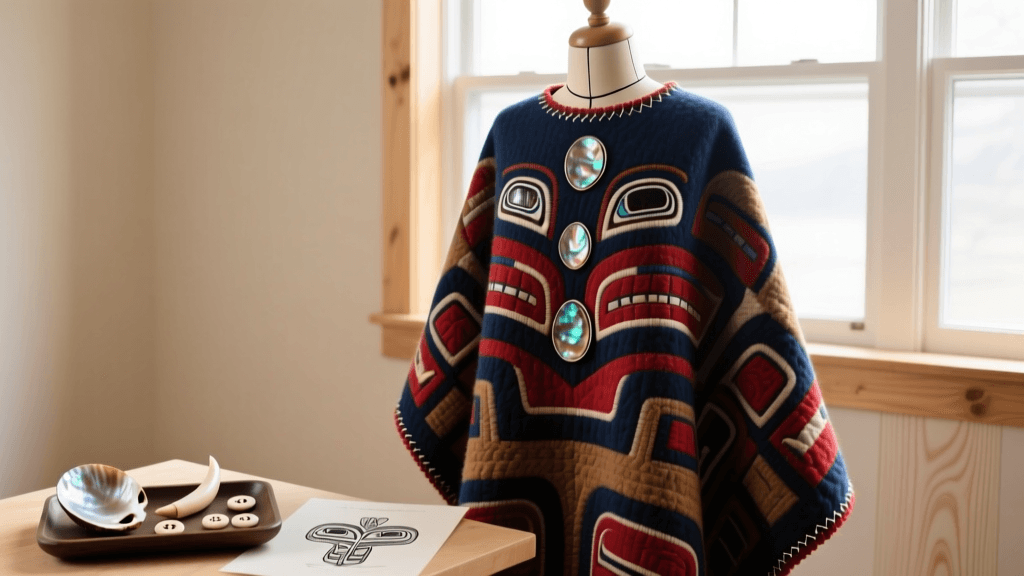
The button blanket, known in various Indigenous languages as a dance robe or ceremonial mantle, stands as one of the most visually striking and culturally significant garments of the Pacific Northwest Coast. Unlike the ancient, pre-contact Chilkat and Raven’s Tail weaving traditions that require years to complete a single garment, the button blanket emerged in the mid-19th century as a brilliant adaptation to introduced trade goods. Today, in 2026, these garments remain central to potlatches, naming ceremonies, and contemporary Indigenous fashion, representing a living continuum of Haida, Tlingit, Kwakwaka’wakw, and Tsimshian artistry.
Historically, the introduction of Hudson’s Bay Company point blankets and maritime trade buttons allowed Indigenous artisans to translate their monumental formline designs—previously carved into cedar and painted on bentwood boxes—onto wearable textiles. As we navigate the cultural renaissance of 2026, the button blanket is not merely a historical artifact; it is a dynamic, evolving medium. Artisans are blending traditional hand-stitching with modern textile technologies, ensuring that clan crests and family histories are worn with pride at gatherings from Southeast Alaska to British Columbia.
Core Materials: Melton Wool and Shell Inlay in 2026
The foundation of any high-quality button blanket is the base fabric. While early robes utilized wool trade blankets, modern artisans overwhelmingly prefer heavyweight Melton wool. Melton is a tightly woven, heavily milled fabric that is wind-resistant and, crucially, does not fray when cut. This non-fraying property is essential for the intricate appliqué work required to build the bold ovoids, U-forms, and split U-forms of Northwest Coast formline design.
Selecting the Right Melton Wool Weight
For a standard adult dance robe, which typically measures between 50 by 60 inches to 60 by 70 inches, artisans require a fabric weight of at least 24 to 30 ounces per linear yard. In 2026, sourcing premium, sustainably dyed Melton wool has become easier through specialized textile suppliers catering to Indigenous artists. Black and dark navy remain the standard background colors, providing a high-contrast canvas for the red, white, and sometimes yellow or green appliqué fabrics. The appliqué layers themselves are usually cut from high-quality cotton flannel or broadcloth, which lay flat against the wool without puckering.
Navigating Abalone Conservation and Sourcing
The most iconic element of the button blanket is its shimmering shell inlay. Historically, California red abalone and local mother-of-pearl were traded up the coast. However, due to severe ecological declines and strict conservation laws protecting red abalone populations, artisans in 2026 have pivoted toward sustainable alternatives. New Zealand Paua shell and Australian mother-of-pearl are now the industry standards. Paua offers a brilliant, iridescent blue-green flash that mimics the oceanic hues prized by coastal nations, while mother-of-pearl provides the classic, luminous white base. Artisans purchase these shells pre-cut into discs, ovals, or custom geometric shapes, often backing them with dark felt or foil to maximize their reflective properties when dancing near firelight or modern LED stage lighting.
Regional Variations in Formline and Garment Construction
While the basic construction of a button blanket is shared across the coast, regional aesthetic preferences and cultural protocols dictate the final look of the garment. The Sealaska Heritage Institute frequently highlights the distinct Tlingit approaches to beadwork and geometric integration, which differ markedly from the flowing, asymmetrical formlines of the Haida. Below is a comparison of regional styles as observed in contemporary 2026 regalia making.
| Region / Nation | Primary Design Elements | Common Embellishments | Garment Silhouette |
|---|---|---|---|
| Haida | Fluid, continuous formline; heavy use of ovoids and crescents | Large abalone discs, operculum shell borders | Rectangular, often with a separate collar or cape |
| Tlingit | Geometric precision, integrated floral and beadwork motifs | Seed bead borders, Russian trade bead accents, octopus bags | Rectangular, heavily weighted, sometimes tailored at shoulders |
| Kwakwaka'wakw | Bold, graphic crest representations; copper-colored accents | Red and white buttons, cedar bark trim, animal masks attached | Wide, sweeping drape designed for dramatic dance movements |
| Tsimshian | Symmetrical crest layouts, intricate border patterns | Mother-of-pearl buttons, dentalium shell fringes | Structured, often featuring a prominent central crest panel |
Step-by-Step Construction and Appliqué Techniques
Creating a button blanket is a labor-intensive process that can take anywhere from 80 to over 200 hours, depending on the complexity of the crest and the density of the button work. The construction process in 2026 still heavily favors traditional hand-finishing, even if modern sewing machines are used for the initial structural seams.
- Pattern Drafting: The artist first draws the formline design on large craft paper. The design must account for the drape of the blanket; a design that looks perfect flat may distort when worn over the shoulders. The paper pattern is then pinned to the Melton wool and carefully cut out.
- Appliqué Layering: The cut wool shapes are layered over the base blanket. Artisans use a blind stitch or a tight blanket stitch to secure the edges. The red flannel is typically applied first, followed by the white or secondary colors, creating the distinct layered look of Northwest Coast art.
- Button and Shell Placement: This is the most time-consuming phase. Hundreds, sometimes thousands, of buttons and shell pieces are sewn along the formline borders. The buttons serve a dual purpose: they outline the design and add a rhythmic, percussive sound when the dancer moves. In 2026, many artisans use heavy-duty waxed linen thread to secure the shells, ensuring they can withstand the vigorous movements of traditional dances.
- Lining and Binding: To protect the intricate stitching and provide structure, the blanket is often lined with a lighter cotton or satin fabric. The edges are bound with a durable bias tape or a contrasting wool strip to prevent stretching over time.
Tools and Notions for the Modern Artisan
While the soul of the garment is traditional, the tools of the trade have been refined. A well-equipped regalia maker in 2026 relies on specialized notions. Heavy-duty leather needles are required to pierce through multiple layers of Melton wool and thick shell inlay without snapping. Titanium thimbles are essential for pushing needles through dense fabric. Furthermore, rotary cutters and self-healing mats have largely replaced fabric shears for cutting the intricate curves of the appliqué, allowing for surgical precision that honors the strict rules of formline design. For beadwork integration, particularly in Tlingit and inland-influenced coastal robes, size 13/0 and 15/0 Czech glass seed beads remain the gold standard for their uniform shape and vibrant colorways.
Cultural Protocols, Potlatches, and Wearing the Regalia
It is vital to understand that a button blanket is not merely a piece of clothing; it is a legal document and a sacred object. According to the cultural frameworks upheld by coastal nations, the crests depicted on the blanket are the intellectual and spiritual property of specific clans or families. Wearing a blanket bearing a crest you do not have the hereditary or bestowed right to wear is a severe breach of Indigenous law and protocol.
The Smithsonian National Museum of the American Indian notes that ceremonial garments are often brought out only for specific occasions. When a new button blanket is unveiled, it is typically done during a potlatch or a memorial feast. The garment is ‘danced’ to awaken its spirit and validate the wearer’s right to the crest. The sheer weight of the blanket—which can easily exceed 15 pounds due to the dense shell and button work—requires the dancer to possess significant physical stamina and training. The sweeping motions of the dance are designed to catch the light, allowing the abalone to flash and the buttons to clatter, effectively bringing the ancestral crest to life in the physical world.
The Future of the Button Blanket in Contemporary 2026 Fashion
As of 2026, the boundary between ceremonial regalia and contemporary Indigenous high fashion is being thoughtfully navigated. While sacred clan crests remain strictly protected for ceremonial use, many Indigenous designers are creating ‘inspired’ button blanket coats, vests, and capes for the commercial market. These garments often utilize abstract formline elements or personal, non-hereditary motifs, allowing a broader audience to support Indigenous artisans without violating cultural protocols. Events like the Vancouver Indigenous Fashion Week continue to showcase how the structural brilliance of the button blanket—its bold color blocking, its dramatic drape, and its masterful textile manipulation—influences modern garment construction. Whether worn in the big house during a winter ceremony or on a contemporary runway, the Pacific Northwest button blanket remains a profound testament to Indigenous resilience, adaptability, and unparalleled artistic genius.