Osage Ribbon Work Regalia: Traditions & 2026 Guide
The Origins and Evolution of Prairie Ribbon Work
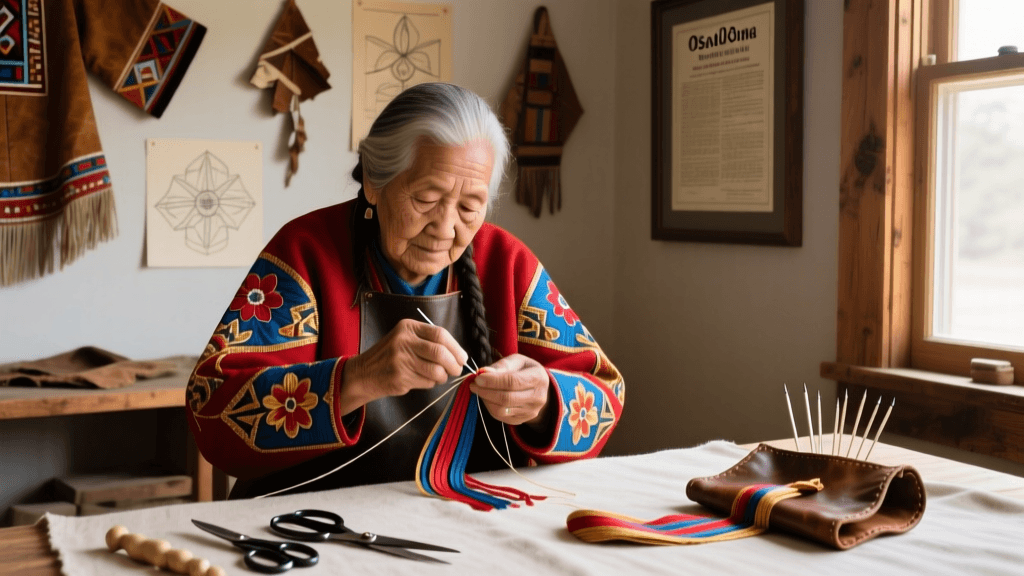
Ribbon work, known as mawatseh in the Osage language, is one of the most visually striking and culturally significant textile traditions among the Indigenous peoples of the North American Plains and Prairie regions. While often associated broadly with Native American regalia, ribbon work is a highly specialized art form with distinct regional and tribal variations. Originating in the late 18th and early 19th centuries, this art form emerged when European and Euro-American traders introduced silk ribbons, glass beads, and broadcloth to Indigenous communities. Native women, who had previously mastered the intricate arts of porcupine quillwork and hide painting, rapidly adapted these new materials to create complex, layered appliqué designs that served as markers of identity, status, and spiritual protection.
Today, as we navigate the 2026 powwow season and contemporary Indigenous art markets, ribbon work remains a vital, living tradition. It is not merely a historical artifact preserved behind glass; it is a dynamic practice worn with pride during ceremonies, dances, and community gatherings. Understanding the nuances of this craft requires a deep dive into the specific tribal traditions, the modern sourcing of materials, and the meticulous techniques that have been passed down through generations of master artisans.
Osage vs. Ponca vs. Miami: Regional Distinctions
While many tribes across the Midwest and Southern Plains practice ribbon work, the aesthetic philosophies and structural approaches vary significantly. The Osage Nation Museum and various cultural preservation initiatives highlight the unique geometric precision that defines traditional Osage work. Osage ribbon work is renowned for its bold, large-scale geometric patterns, often utilizing a striking palette of black, red, white, and yellow. The designs are heavily symmetrical, reflecting a worldview centered on balance and duality. Osage skirts and shawls often feature massive, sweeping chevrons and diamond motifs that command attention from a distance.
In contrast, neighboring tribes such as the Ponca, as well as Great Lakes tribes like the Miami and Potawatomi, often incorporate more fluid, curvilinear, and sometimes floral motifs into their appliqué. The Ponca tradition frequently bridges the gap between the strict geometry of the Osage and the more organic lines of the woodland tribes, utilizing a wider spectrum of pastel and jewel-toned silks. Recognizing these distinctions is crucial for collectors, dancers, and cultural historians in 2026, as it ensures proper attribution and respect for the specific intellectual and cultural property of each nation.
Materials and Sourcing in 2026
One of the most significant challenges for contemporary ribbon workers is sourcing high-quality, authentic materials. In the 19th century, the silk ribbons traded by the French and British were heavy, lustrous, and dyed with natural pigments. Today, the global textile market is flooded with synthetic alternatives that melt under the iron and fray excessively during the cutting process. For serious artisans and those commissioning high-end regalia in 2026, securing 100% silk or high-grade rayon taffeta ribbons is paramount.
Japanese and French silk ribbons remain the gold standard. They possess the necessary 'bite' and structural integrity to hold the sharp folds required for reverse appliqué. Below is a breakdown of the primary materials used in modern ribbon work, along with their 2026 market pricing and sourcing recommendations.
| Material | Purpose | 2026 Avg. Cost | Sourcing Notes |
|---|---|---|---|
| 100% Silk Taffeta Ribbon (1-2 inch) | Primary appliqué layers | $12 - $18 / yard | Imported from Japan or France; avoid polyester blends. |
| Rayon Taffeta Ribbon | Secondary layers / borders | $6 - $9 / yard | Excellent drape and heat resistance; widely available. |
| Wool Broadcloth (Melton) | Skirt and shawl base | $35 - $55 / yard | Must be 100% wool or high-wool blend for proper weight. |
| Cotton Calico / Muslin | Backing and lining | $8 - $12 / yard | Provides stability to the wool base without adding bulk. |
| Silk or Cotton Thread | Hand stitching and tacking | $4 - $8 / spool | Must match the ribbon color exactly to hide stitches. |
When sourcing wool broadcloth, artisans in 2026 are increasingly turning to specialized Indigenous-owned textile cooperatives that import heavy-weight Melton wool directly from European mills, ensuring the fabric has the density required to support the heavy layers of silk without sagging.
The Technique: Mastering Reverse Appliqué
The defining characteristic of Prairie ribbon work is the use of reverse appliqué, combined with folded-edge appliqué. Unlike standard appliqué, where a shape is cut out and sewn on top of a background, reverse appliqué involves layering multiple colors of ribbon, cutting a window through the top layers, and folding the raw edges under to reveal the vibrant colors beneath. This creates a mesmerizing, multi-dimensional effect that catches the light as the dancer moves.
Step-by-Step Process
- Pattern Drafting: Artisans begin by drafting geometric templates on heavy cardstock. In 2026, while some younger artists use digital vector software to design and print complex symmetrical patterns, master traditionalists still prefer hand-cutting templates to maintain the organic, slight asymmetries that give the work its human touch.
- Layering and Basting: Ribbons are layered from the bottom color up to the top color. They are temporarily basted together using fine cotton thread or specialized, low-residue fabric adhesives that will not stain the silk.
- Cutting the Window: Using extremely sharp, short-bladed embroidery scissors, the artist cuts through the top layers of ribbon along the template lines. This requires immense precision; a slip of the millimeter can ruin the symmetry of the design.
- Folding and Tacking: The raw edges of the cut ribbon are folded under at a crisp 90-degree angle. The artist then uses a nearly invisible slip stitch to tack the folded edge down to the layer below. This step is the most time-consuming, often taking hundreds of hours for a single dance skirt.
- Mounting to Broadcloth: Once the ribbon panels are complete, they are carefully arranged and hand-sewn onto the heavy wool broadcloth base, which has been pre-hemmed and lined with cotton.
Commissioning and Pricing in the 2026 Market
For those looking to acquire authentic ribbon work regalia, it is essential to understand the economics of Indigenous art in 2026. This is not fast fashion; it is a painstakingly slow, meditative process that demands fair compensation for the artist's time and expertise. According to data from the National Museum of the American Indian and contemporary Indigenous art market reports, the valuation of traditional textiles has risen significantly as collectors and cultural institutions recognize the immense labor involved.
A fully finished, master-crafted Osage-style ribbon work skirt, featuring intricate reverse appliqué across multiple panels, typically ranges from $2,500 to $5,500 in 2026, depending on the complexity of the design and the grade of silk used. Matching shawls can add another $1,500 to $3,000. When commissioning a piece, buyers should expect a lead time of six to twelve months. It is customary to provide a 50% deposit upfront to allow the artist to purchase the expensive silk and wool materials, with the remainder paid upon completion.
Protecting Indigenous Intellectual Property
A critical issue facing Native textile artists in 2026 is the protection of their cultural intellectual property. With the rise of advanced AI image generators and overseas fast-fashion manufacturers, traditional Osage and Ponca patterns are at risk of being scraped, digitized, and mass-produced without consent or compensation. In response, tribal councils and Indigenous artist guilds have implemented stringent digital watermarking and blockchain-based authentication protocols for high-value regalia.
When purchasing ribbon work today, reputable artists provide a certificate of authenticity that includes a digital ledger entry, proving the garment's origin, the artist's lineage, and the specific materials used. Buyers must be vigilant against 'Native-inspired' knockoffs sold on global e-commerce platforms. Supporting the Smithsonian's Native American art initiatives and purchasing directly from verified tribal artisans or certified Native-owned galleries remains the only ethical way to acquire these sacred garments.
Conclusion: Wearing the Culture Forward
Osage and Ponca ribbon work is far more than a decorative technique; it is a visual language that speaks to the resilience, adaptability, and enduring beauty of Indigenous North American cultures. As the tradition continues to evolve in 2026, the dedication of the women and men who spend countless hours folding, cutting, and stitching silk ensures that the legacy of mawatseh will continue to flow through the arenas of powwows and the halls of museums for generations to come. Whether you are an aspiring artisan seeking to learn the reverse appliqué technique or a collector looking to invest in authentic Native regalia, approaching this art form with deep respect, patience, and a commitment to ethical sourcing is paramount.