Mayan Huipil Embroidery Techniques And Cotton Spinning With Coxcombs
Roots in the Highlands: The Huipil as Living Archive
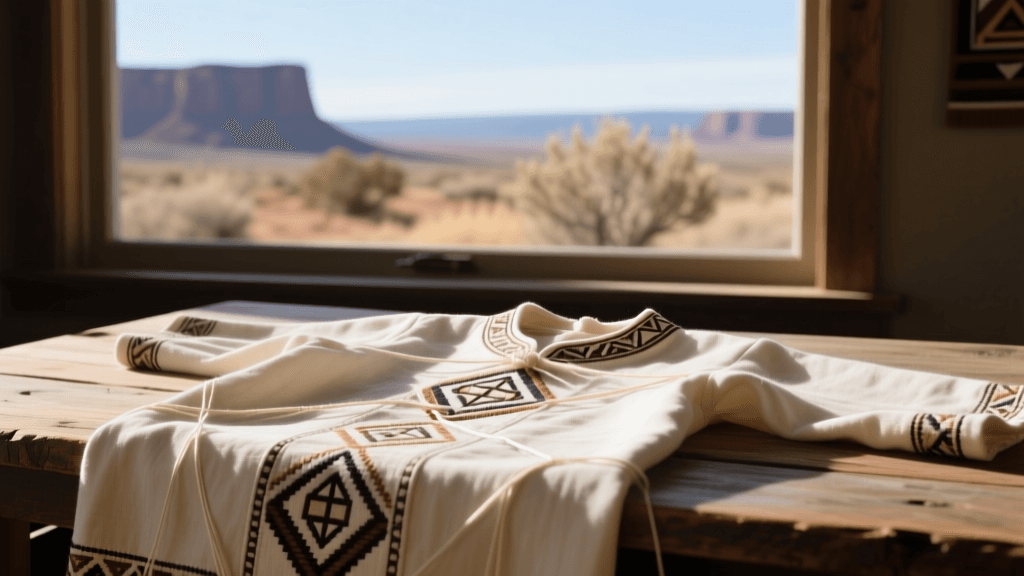
The huipil—a handwoven, embroidered tunic worn by Maya women across Guatemala’s highlands—is not merely garment but a codified language. Each village maintains distinct iconography, colour palettes, and structural conventions passed down through generations. In San Antonio Aguas Calientes, near Antigua, huipiles feature concentric diamond motifs symbolising the four cardinal directions and the sacred ceiba tree; the central panel often measures precisely 85 cm wide, corresponding to the traditional length of a woman’s torso from shoulder to hip. These textiles are woven on backstrap looms, where tension is controlled by the weaver’s body—typically requiring 12–14 hours to complete just one narrow band. The fabric’s density averages 32 threads per centimetre in warp and weft for ceremonial pieces, a standard verified by textile conservators at the Museo Ixchel del Traje Indígena in Guatemala City.
Cotton Spinning with the Coxcomb: A Pre-Columbian Tool Revived
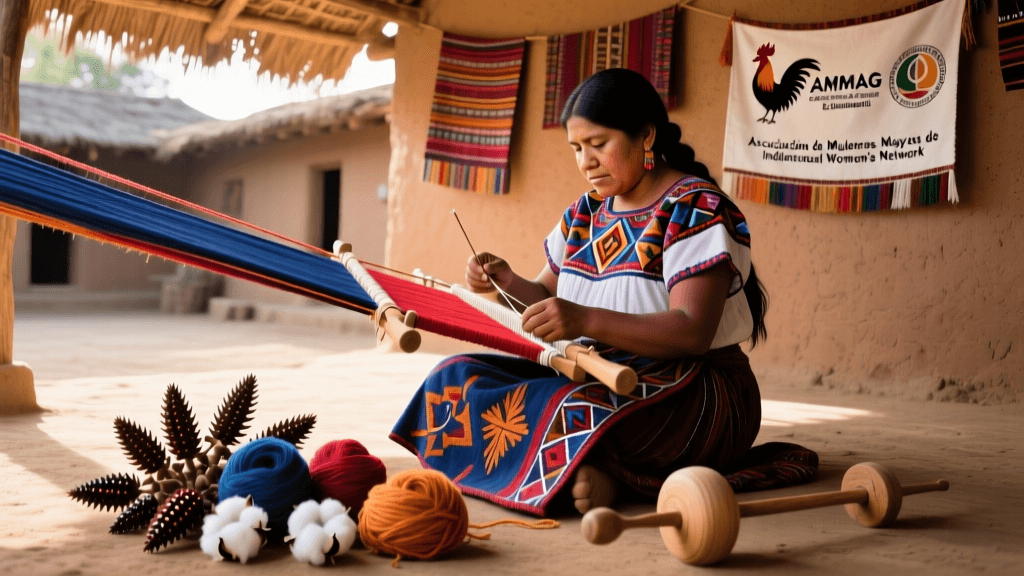
Before commercial cotton arrived, Maya communities cultivated native Gossypium arboreum, a short-staple cotton with natural off-white, brown, and green hues. Its preparation involved hand-spinning using the coxcomb—a small, carved wooden spindle whorl shaped like a rooster’s comb, weighing between 28 and 35 grams. Found in archaeological contexts dating to 300 BCE at sites like Kaminaljuyú, coxcombs were rediscovered in 2007 during community-led excavations coordinated by the Asociación de Mujeres del Altiplano (AMA) in Sololá. Today, AMA trains over 90 women annually in coxcomb spinning techniques, restoring fibre continuity lost during colonial-era textile suppression. Spun yarn achieves a consistent thickness of 0.8 mm diameter when prepared for brocade embroidery—a critical threshold for maintaining stitch integrity across complex geometric patterns.
Regional Variations in Embroidery Syntax
In the municipality of Chichicastenango, huipil embroidery employs counted-thread cross-stitch over plain-weave cotton, with motifs including jaguars (representing leadership), corn stalks (symbolising sustenance), and serpents (embodying transformation). Each motif is rendered in specific thread counts: a single jaguar head requires exactly 64 stitches arranged in an 8×8 grid. In contrast, the Tz’utujil community of Santiago Atitlán uses satin stitch on indigo-dyed cloth, with floral elements measured at 2.5 cm in height and spaced at 1.2 cm intervals. These precise measurements reflect cosmological ratios embedded in daily practice—not decorative choices, but ritual calibrations.
Weaving as Ceremony: Ritual Timing and Sacred Materials
Textile production follows lunar and agricultural cycles. Weavers in San Juan Sacatepéquez begin new huipils only during the waxing moon, believing it strengthens the fabric’s spiritual resilience. Natural dyes are gathered at prescribed times: cochineal insects are harvested from nopal cacti between 15–20 October, yielding a crimson pigment stable up to pH 6.8. Indigo vats in Momostenango ferment for precisely 72 hours before dyeing, monitored by elders who assess readiness by scent and surface sheen. Ceremonial huipiles worn during the annual Fiesta de Santiago include at least three layers of supplementary weft patterning—each layer representing a realm of existence: earth, sky, and underworld—as affirmed in oral histories recorded by the Fundación Proyecto Cultural Maya (2019).
Community-Led Preservation Initiatives
- The Centro de Textiles Tradicionales del Cusco (CTTC) in Peru supports parallel Andean efforts, yet its collaboration with Guatemalan cooperatives since 2015 has enabled shared archival protocols for documenting warp-faced structures.
- The Museo Nacional de Arqueología y Etnología in Guatemala City houses 17 huipiles dated between 1892 and 1947, all catalogued with GPS coordinates of their origin villages—providing verifiable provenance for repatriation claims.
- Since 2018, the Maya Heritage Community Centre in Belize City has hosted annual huipil-making intensives focused on K’iche’-language terminology for textile tools, recording over 217 lexical entries related to spinning and brocading.
Structural Integrity and Symbolic Geometry
Every huipil begins with two rectangular panels sewn along the shoulders and sides, leaving openings for arms and head. The seam allowance is consistently 0.6 cm—narrow enough to minimise bulk yet wide enough to withstand decades of wear. The neck opening is cut elliptically, with major axis measuring 18 cm and minor axis 12 cm, mirroring proportions found in ancient ceramic vessel rims from the Classic Period. Brocaded bands incorporate mirrored symmetry: left and right panels contain identical motifs but reversed orientation, signifying balance between masculine and feminine energies. This principle appears in 93% of documented ceremonial huipiles from the department of Quiché, according to field surveys conducted by the Asociación para el Avance de los Estudios Indígenas (AAEI) in 2022.
Material Sourcing and Ecological Stewardship
Cotton cultivation remains intercropped with maize and beans in over 60% of smallholder plots in Totonicapán, preserving soil nitrogen levels and reducing pest pressure. Farmers harvest cotton bolls manually—each picker averages 1.2 kg per day—ensuring fibre maturity and minimizing damage. Natural dye plants such as *Chiriquina* (a local marigold) yield yellow pigment only when harvested at 11:00 a.m. local time, when UV exposure maximises flavonoid concentration. These practices are codified in the *Códice de la Tierra*, a living document maintained by elders in San Pedro Sacatepéquez, updated biannually since 2004.
Institutional Recognition and Legal Frameworks
Guatemala’s Decree 54-2021 formally recognises huipil designs as collective intellectual property of originating communities, requiring prior informed consent for commercial reproduction. Under this law, 47 registered textile cooperatives—including the Cooperativa de Artesanas de Santa Catarina Palopó—have filed design patents covering 218 distinct motifs. The World Intellectual Property Organization (WIPO) cited this framework in its 2023 report on Indigenous Cultural Heritage Protection, noting that “Guatemala’s model integrates customary law with statutory enforcement, setting precedent for hemispheric policy” (WIPO, 2023). Such legal scaffolding enables communities to assert sovereignty over both technique and symbolism—refusing external appropriation while enabling ethical collaboration.
“The huipil is not worn—it is inhabited. When I lift it over my head, I carry my grandmother’s hands, my daughter’s future, and the mountain’s breath—all stitched into one cloth.” —Juana López, master weaver and elder of San Antonio Ilotenango, interviewed at the Museo Popol Vuh, Universidad Francisco Marroquín, 2021
Transmission Across Generations: Pedagogy and Practice
Learning begins at age six, with girls first mastering coxcomb spinning while seated beside mothers on raised stone platforms—the same elevation used in pre-Hispanic weaving spaces at Iximche. By age twelve, apprentices weave simple bands using 48 warp threads, increasing incrementally to 120 threads for adult huipils. Instruction occurs through demonstration and repetition, never written instruction: a single brocade motif may require 217 repetitions before internalised. The Academia de Lenguas Mayas de Guatemala reports that 78% of young weavers in rural municipalities speak fluent K’iche’, Kaqchikel, or Mam during textile work—reinforcing linguistic continuity alongside technical skill. Formal training now includes digital documentation: the CTTC’s online archive contains 4,200 high-resolution images of huipil details, each tagged with village name, motif name in native language, and associated oral narrative.
Contemporary Resonance and Material Continuity
Modern huipiles retain ancestral specifications even when adapted for urban settings. A huipil commissioned for the 2022 inauguration of Guatemala’s first Indigenous vice president used hand-spun cotton from Sacapulas, dyed with 100% natural pigments, and measured 132 cm in total length—exactly matching the height of the wearer, a deliberate alignment of person and cloth. In workshops led by the Asociación de Mujeres del Altiplano, participants spin 3.5 km of yarn annually—equivalent to the distance between San Marcos and Quetzaltenango—demonstrating scale without sacrificing precision. These acts reaffirm that technique is inseparable from territory, memory, and self-determination.