Okinawan Bingata: A Guide to Ryukyuan Traditional Dress
The Vibrant World of Ryukyuan Textiles
When discussing traditional Japanese clothing, the mainstream image often defaults to the refined silk kimono of Kyoto or the austere formal wear of Tokyo. However, Japan’s rich tapestry of regional and prefecture variations reveals a vastly different sartorial landscape at its geographic extremes. In the subtropical southern reaches of Okinawa Prefecture, the legacy of the independent Ryukyu Kingdom birthed one of Asia’s most vibrant and technically complex textile traditions: Ryukyuan Bingata.
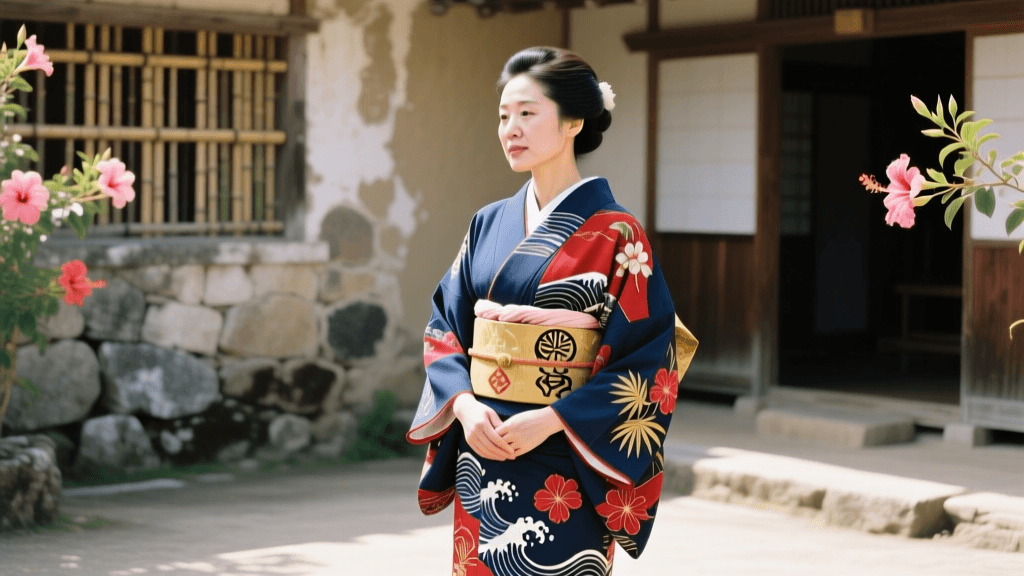
Far removed from the subdued, seasonal motifs of mainland Honshu, Okinawan traditional dress is a visual explosion of tropical flora, mythical beasts, and bold geometric patterns. For collectors, cultural historians, and kimono enthusiasts, understanding the regional variations of Ryukyuan garments offers a fascinating lens into Japan’s diverse ethnic and climatic heritage.
The Historical Roots of Ryukyuan Bingata
To understand Okinawan dress, one must look to the Ryukyu Kingdom (1429–1879), a prosperous maritime nation that served as a vital trading hub between Japan, China, Korea, and Southeast Asia. According to the Britannica historical archives, this unique geopolitical position allowed Ryukyuan artisans to synthesize foreign techniques into a distinctly local craft.
Bingata, which translates roughly to 'red paint' or 'patterned cloth,' is a resist-dyeing technique that utilizes hand-carved paper stencils (katagami) and a soybean milk resist (gojiru). Unlike the freehand paste-resist of Kyoto’s Kyo Yuzen, Bingata relies on precise stencil layering. Artisans rub vibrant pigments—historically derived from local minerals, plants, and imported Chinese dyes—into the fabric using specialized brushes. The result is a textile with a striking, almost painted clarity that defies the humid, sun-bleaching climate of the subtropics.
Mainland Yuzen vs. Okinawan Bingata: A Structural Comparison
To truly appreciate the regional divergence within Japanese traditional garments, it is helpful to compare Okinawa’s Bingata with the dominant mainland dyeing techniques. The following table outlines the primary differences between Kyoto’s Kyo Yuzen, Ishikawa’s Kaga Yuzen, and Okinawa’s Ryukyu Bingata.
| Feature | Kyo Yuzen (Kyoto) | Kaga Yuzen (Ishikawa) | Ryukyu Bingata (Okinawa) |
|---|---|---|---|
| Primary Resist Method | Freehand rice paste | Freehand rice paste | Stencil & soybean milk |
| Color Palette | Pastel, varied, gold leaf | Muted, realistic (Kaga Gosai) | High-contrast, vibrant primary colors |
| Dominant Motifs | Four seasons, courtly life | Realistic flora, insects, birds | Tropical plants, phoenixes, Chinese clouds |
| Historical Wearer | Aristocracy, wealthy merchants | Samurai class, elite | Ryukyuan royalty, nobility, tribute trade |
| Climate Adaptation | Layered silks for cold winters | Heavy silks, winter linings | Breathable ramie, unlined summer gauze |
Intra-Prefecture Variations: Shuri, Naha, and Kumejima
Even within Okinawa Prefecture, traditional dress is not a monolith. The island’s internal regional variations reflect historical class structures and local resources.
Shuri: The Royal Standard
Shuri, the site of the royal castle, was the epicenter of Bingata production for the nobility. Shuri Bingata is characterized by its grand, sweeping motifs. Because sumptuary laws dictated that only the highest-ranking royalty could wear certain colors (like bright yellow and deep vermilion) and large-scale dragon or phoenix motifs, Shuri pieces remain the most highly coveted by modern collectors.
Naha: The Merchant Class
As the commercial capital, Naha’s merchants developed their own variations. Restricted from wearing the bold, large-scale motifs of the Shuri elite, Naha artisans perfected smaller, denser, and more intricate stencil patterns. Today, Naha-style Bingata is often preferred for everyday summer kimono and yukata, as the smaller patterns are considered more versatile and understated.
Kumejima: The Mud-Dyed Alternative
Traveling to the outer islands of the prefecture, specifically Kumejima, reveals a stark contrast to the neon brilliance of Bingata. Here, the tradition of Kumejima Tsumugi reigns supreme. Recognized by the Association for the Promotion of Traditional Craft Industries as a vital regional heritage, Kumejima Tsumugi utilizes a unique mud-dyeing process (dorozome) where silk is repeatedly dyed with local plant extracts and iron-rich mud, resulting in deep, lustrous blacks and rich earth tones. This reflects the rural, agrarian reality of the outer islands compared to the cosmopolitan center of Shuri.
Practical Guide: Acquiring and Wearing Okinawan Garments
For those looking to integrate Ryukyuan textiles into their wardrobe or collection, navigating the market requires specific knowledge of local terminology, measurements, and styling.
Cost, Investment, and Measurements
Authentic, hand-dyed Bingata is a premium investment. A vintage, mid-century Bingata kimono in good condition typically ranges from 40,000 to 90,000 JPY ($250–$600 USD). However, commissioning a brand-new, custom-tailored piece directly from a certified artisan in Naha or Shuri will cost upwards of 300,000 JPY ($2,000+ USD) and can take six to twelve months to complete.
When purchasing fabric by the bolt (tanmono), be aware that traditional Okinawan ramie (choma) or banana fiber (bashofu) may sometimes be woven on narrower looms than standard mainland silk. While a standard kimono bolt is roughly 38 cm wide, some rustic island textiles may require specialized tailoring or panel splicing to achieve standard mainland kimono dimensions.
Where to Buy Authentic Pieces
To ensure authenticity, avoid mass-produced souvenir shops. Instead, visit established cooperatives and studios:
- Shuri Ryusen: A premier dyeing studio located near the ruins of Shuri Castle, offering both historical reproductions and modern adaptations.
- Naha City Traditional Arts and Crafts Center: An excellent resource for verified artisans and high-quality vintage appraisals.
- Tsuboya District: While famous for pottery, several textile galleries in this historic neighborhood specialize in authentic Bingata and Bashofu.
Styling for the Subtropical Climate
Okinawa’s climate is intensely hot and humid from May through October. Therefore, traditional mainland layering is entirely impractical. Okinawan garments are predominantly tailored as hitoe (unlined kimono) or woven as ro and sha (summer gauze).
When wearing Bingata, it is culturally appropriate and highly practical to pair it with a lightweight, breathable linen or cotton obi, rather than the heavy, stiff brocade obi worn in Kyoto. For timing, the best occasions to debut your Okinawan textiles are during summer festivals, such as the Naha Haarii (dragon boat races in early June) or the vibrant Eisa dance festivals in August, where the bold patterns of Bingata complement the festive, tropical atmosphere.
Japan’s Extremes: Contrasting Ryukyuan and Ainu Traditions
To fully grasp the scope of Japan’s regional and ethnic minority dress, one must contrast the tropical south with the frozen north. While the Ryukyuan people developed Bingata to reflect a sun-drenched, maritime kingdom, the indigenous Ainu people of Hokkaido Prefecture developed Attus—a cloth woven from the inner bark of the elm tree—to survive brutal sub-arctic winters.
Where Bingata is defined by its vibrant, imported dyes and complex stencil resist, Ainu Attus is defined by its raw, undyed earth tones and intricate, appliqué embroidery (moreu) featuring protective, thorn-like geometric patterns meant to ward off evil spirits. According to the Japan Folk Crafts Museum, both traditions represent a profound harmony between indigenous peoples and their extreme local environments, proving that 'Japanese traditional dress' is not a single entity, but a vast spectrum of regional survival and artistry.
Preserving the Craft in the Modern Era
Today, the survival of Ryukyuan Bingata relies on a new generation of artisans who are adapting historical patterns for modern life. While the destruction of World War II nearly wiped out the craft—with many historical stencils and tools lost to the fires of the Battle of Okinawa—dedicated artisan families have painstakingly recreated the katagami from charcoal rubbings and surviving fragments.
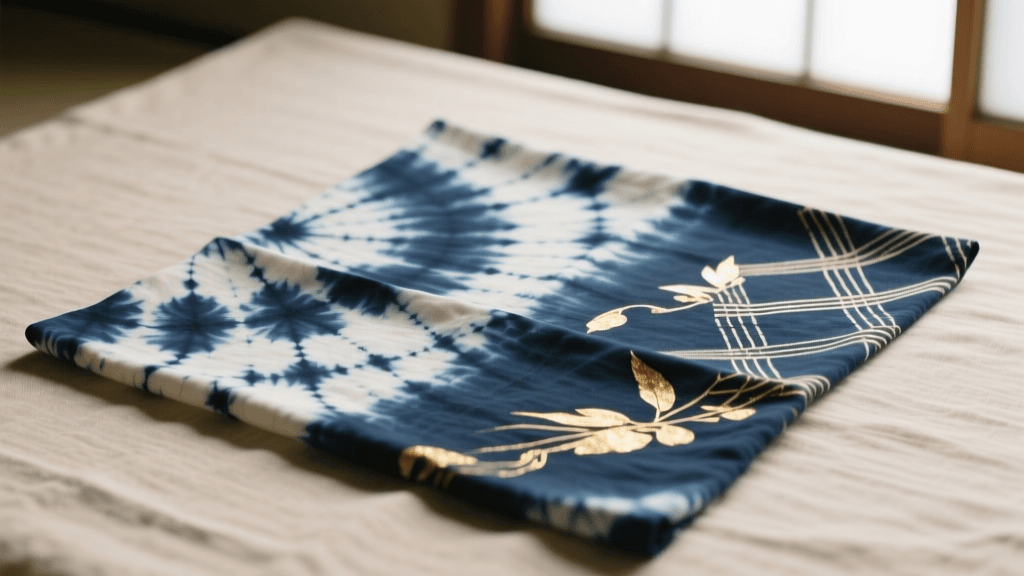
Modern visitors to Okinawa can support this heritage by purchasing directly from cooperative studios, where you can even participate in stencil-dyeing workshops on cotton tote bags and tenugui (hand towels) before committing to a full kimono. This hands-on engagement ensures that the economic lifeblood of the craft continues to flow into the local artisan community.
Conclusion
Exploring the regional variations of Japanese traditional garments shatters the myth of a monolithic national dress. From the mud-dyed silks of Kumejima to the vibrant, stencil-painted masterpieces of Shuri, Okinawa Prefecture offers a textile tradition that is entirely its own. Whether you are a collector seeking a vintage Ryukyuan masterpiece or a traveler looking to understand the deep cultural currents of Japan’s southern islands, the story of Bingata is a brilliant, unyielding testament to the resilience and beauty of the Ryukyuan spirit.