The Jingle Dress Regalia 2026: Powwow Materials Guide
The Sacred Origins of the Jingle Dress
The powwow grounds in 2026 are a vibrant tapestry of sound, color, and ancestral memory, with the Jingle Dress dance standing out as one of the most visually and auditorily captivating exhibitions of Indigenous culture. Originating among the Ojibwe (Chippewa) Nation in the early 20th century, the Jingle Dress is fundamentally a healing dress. According to oral tradition, the dress was revealed in a dream to a medicine man seeking a way to heal his gravely ill granddaughter. The dream instructed him to create a dress adorned with metal cones that would produce a specific, rain-like sound when the wearer danced. Upon its creation and the performance of the accompanying dance, the granddaughter was healed.
While the dance began as a sacred healing ceremony, it evolved throughout the decades, eventually entering the competitive powwow circuit. Today, the Jingle Dress is a powerful symbol of resilience, prayer, and cultural continuity. As documented by the Smithsonian National Museum of the American Indian, the powwow remains a vital, living tradition where Native communities gather to celebrate heritage, and the Jingle Dress continues to be a central pillar of these gatherings, carrying the prayers of the people with every step.
Deconstructing the Regalia: Essential Materials
Constructing an authentic Jingle Dress requires a deep understanding of both traditional techniques and modern material advancements. The regalia is not merely a garment; it is a meticulously engineered instrument of sound and movement. In 2026, dancers and seamstresses are blending time-honored methods with innovative, sustainable textiles to create dresses that are both beautiful and durable enough to withstand the rigorous demands of the modern powwow trail.
Fabric and Foundation
Historically, Jingle Dresses were made from solid-colored cotton or broadcloth, often in deep, earthy tones like forest green, navy blue, or burgundy. The fabric needed to be heavy enough to swing gracefully and hold the weight of hundreds of metal cones without tearing. As of 2026, while traditional wool broadcloth remains highly prized for its weight and matte finish, many dancers are opting for high-performance, breathable poly-blends. These modern fabrics offer superior moisture-wicking properties, which are essential for the hot summer months of the peak powwow season. Additionally, there is a massive 2026 trend toward upcycled vintage fabrics and eco-friendly, plant-dyed textiles, reflecting a broader Indigenous movement toward environmental stewardship and sustainability.
The Jingles (Ziibaaska'iganan)
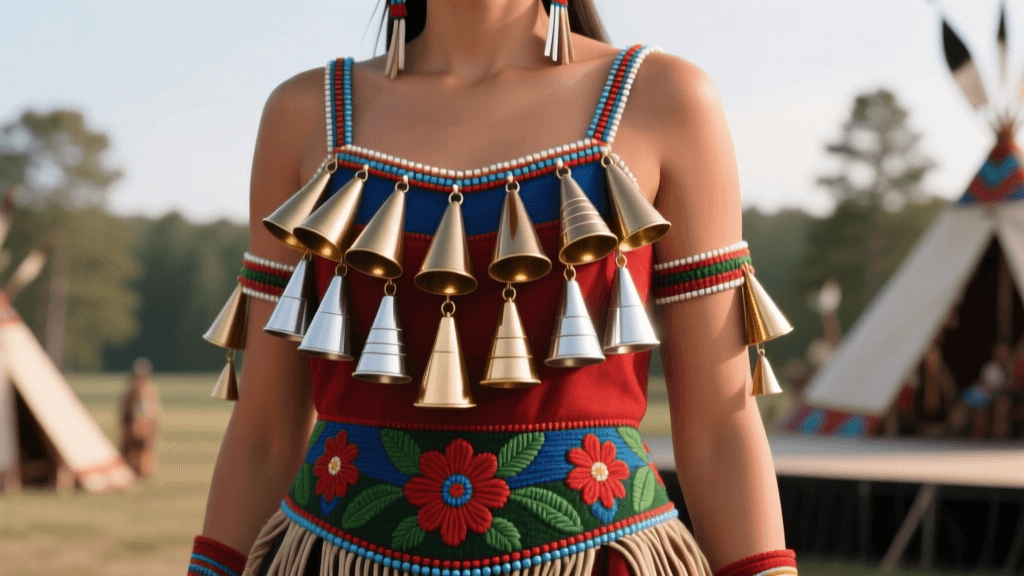
The defining feature of the regalia is the jingle, or ziibaaska'iganan in Ojibwe. Originally crafted by rolling the lids of snuff cans into small, conical tubes, modern jingles are now mass-produced from stamped steel, aluminum, and sometimes copper. The sound they create is meant to mimic the patter of rain on a tin roof, a sound believed to carry healing energy and call upon the spirits. A standard adult dress requires anywhere from 300 to 700 jingles, depending on the size of the cones and the design of the dress.
| Cone Type | Material | Sound Profile | Best Use Case |
|---|---|---|---|
| Large (2.5 inch) | Stamped Steel | Deep, resonant, loud | Traditional style, outdoor arenas |
| Medium (2 inch) | Aluminum | Bright, crisp, rhythmic | Contemporary competition, fast footwork |
| Small (1.5 inch) | Steel or Copper | High-pitched, cascading | Youth regalia, intricate bodice designs |
| Teardrop | Brass/Steel alloy | Mellow, melodic ringing | Specialty healing ceremonies, exhibition |
Ribbon Appliqué and Beadwork
The visual contrast on a Jingle Dress is typically achieved through intricate ribbon appliqué. This technique involves layering contrasting ribbons and cutting away the top layer to reveal the color beneath, creating striking geometric or floral patterns. In 2026, the integration of 3D beadwork and raised embroidery along the yoke and hem has become incredibly popular. Dancers are collaborating with master beadworkers to incorporate family crests, clan animals, and localized floral motifs that pay homage to their specific tribal lineage.
2026 Powwow Trends: Modernity Meets Tradition
The 2026 powwow season has introduced several exciting trends to the Jingle Dress category. While the fundamental rules of the dance and the sacred nature of the dress remain untouched, the aesthetic presentation has evolved. One major trend is the use of high-visibility and reflective materials integrated subtly into the ribbon work. With many major powwows featuring evening grand entries and night-time competition rounds, these reflective threads catch the arena lights beautifully without compromising the traditional look of the garment.
Another significant trend in 2026 is the shift toward modular regalia. Dancers are designing dresses with interchangeable yokes, belts, and aprons. This allows a single foundational dress to be restyled for different competitions, reducing the immense financial and temporal cost of creating a brand-new dress for every major event. Furthermore, digital design mapping is now being used by Native seamstresses to calculate the exact placement of jingles, ensuring perfect acoustic distribution and preventing the cones from tangling during complex footwork.
Sourcing Authentic Components in 2026
For those looking to build or commission a Jingle Dress, sourcing materials from Native-owned and operated businesses is paramount. The Indigenous textile economy has grown significantly, and supporting these artisans ensures the cultural and economic vitality of the community. In 2026, bulk pricing for high-quality stamped steel cones from Native suppliers averages between $0.15 and $0.30 per cone, depending on the finish and gauge of the metal.
When purchasing ribbon, broadcloth, and beads, dancers are increasingly turning to specialized Indigenous trading posts and online cooperatives that guarantee the authenticity of their goods. It is crucial to avoid mass-market, non-Native costume suppliers, as these entities often appropriate designs and provide inferior materials that cannot withstand the rigors of the dance. Authentic glass seed beads from the Czech Republic or Japan, sourced through Native beadwork guilds, remain the gold standard for durability and colorfastness.
Construction, Footwork, and Synergy
The construction of the dress must be perfectly tailored to the dancer's specific style of footwork. The Jingle Dress dance is characterized by a low, gliding side-step, with the feet remaining close to the ground. The dress is designed to swing in a pendulum motion, causing the jingles to strike one another and create the signature rain-like sound. If the dress is cut too narrow, it will restrict movement; if cut too wide, the jingles will not collide properly, resulting in a muffled sound.
Expert seamstresses in 2026 utilize hidden gussets and strategic pleating to allow for maximum lateral movement while maintaining a sleek, elegant silhouette. The placement of the jingles is equally critical. They are typically staggered in a chevron or diamond pattern across the bodice and skirt. This staggered arrangement ensures that as the dancer shifts her weight from one foot to the other, the jingles cascade in a continuous, rolling wave of sound rather than clashing all at once.
Preservation and Care of Your Regalia
A Jingle Dress is a significant investment of time, money, and spiritual energy, and proper care is essential to its longevity. After a weekend on the powwow trail, the dress must be aired out to prevent moisture buildup, which can cause the metal cones to rust and the fabric to mildew. In 2026, many dancers use specialized, breathable canvas garment bags infused with natural cedar and sweetgrass to store their regalia, keeping it fresh and protected from pests.
Cleaning the dress requires meticulous care. The metal cones should never be submerged in water. Instead, spot-cleaning the fabric with a gentle, pH-neutral detergent is recommended. If the cones begin to lose their luster or develop surface rust, they can be carefully polished with a microfiber cloth and a non-abrasive metal polish, taking care not to get the chemicals on the surrounding ribbon or beadwork. Regularly inspecting the heavy-duty thread used to secure the jingles is also vital; a single broken thread can result in the loss of multiple cones during a performance.
Conclusion
The Jingle Dress is far more than a competition garment; it is a rolling prayer, a testament to Indigenous survival, and a masterpiece of functional textile art. As we navigate the 2026 powwow season, the dedication of the dancers, the artistry of the seamstresses, and the enduring power of the Ojibwe healing tradition continue to shine brightly on the dance floor. Whether you are a seasoned competitor, an emerging dancer, or an admirer of Indigenous textile arts, understanding the profound history and intricate construction of the Jingle Dress deepens our appreciation for this magnificent cultural treasure. For further anthropological and historical context on the evolution of these dances, resources like Britannica's overview of Native American dance and the extensive archives at PBS Native America offer invaluable insights into the enduring legacy of Indigenous regalia.