2026 Jingle Dress Regalia: Materials & Powwow Trends
The Sacred Origins of the Jingle Dress
The Jingle Dress, often referred to as the Prayer Dress, represents one of the most profound and visually stunning traditions in Native American powwow culture. Originating among the Ojibwe (Anishinaabe) people of the Great Lakes region in the early 1920s, the dress and its accompanying dance were revealed through a sacred dream as a healing ceremony. Today, as we navigate the 2026 powwow season, the Jingle Dress remains a powerful symbol of resilience, prayer, and Indigenous identity. According to the Smithsonian National Museum of the American Indian, the healing dance has transcended its Ojibwe roots, embraced by Indigenous women and Two-Spirit individuals across Turtle Island. This comprehensive guide explores the materials, construction techniques, and 2026 design trends necessary for creating or commissioning an authentic, competition-ready Jingle Dress regalia.
Fabric Selection for the 2026 Powwow Trail
The foundation of any Jingle Dress is its base fabric, which must withstand immense physical stress. A fully beaded and jingled dress can weigh anywhere from 15 to 30 pounds. In 2026, traditionalists continue to favor heavyweight wool broadcloth or wool-cotton blends. Wool provides excellent drape, breathability for summer powwows, and the structural integrity needed to support heavy beadwork and metal cones without tearing.
For contemporary and fancy-style Jingle Dancers, heavy bridal satin, matte taffeta, and crushed velvet have become increasingly popular on the 2026 powwow circuit. These fabrics catch the arena lights beautifully and allow for vibrant, high-contrast color blocking. However, because these synthetic or delicate fabrics lack the tensile strength of wool, builders must use a heavy-duty cotton or canvas backing. Applying a fusible interfacing or sewing a secondary lining to the yoke and hem is non-negotiable to prevent the metal jingles from ripping through the material during the vigorous footwork of the dance.
The Hardware: Sourcing and Selecting Jingles
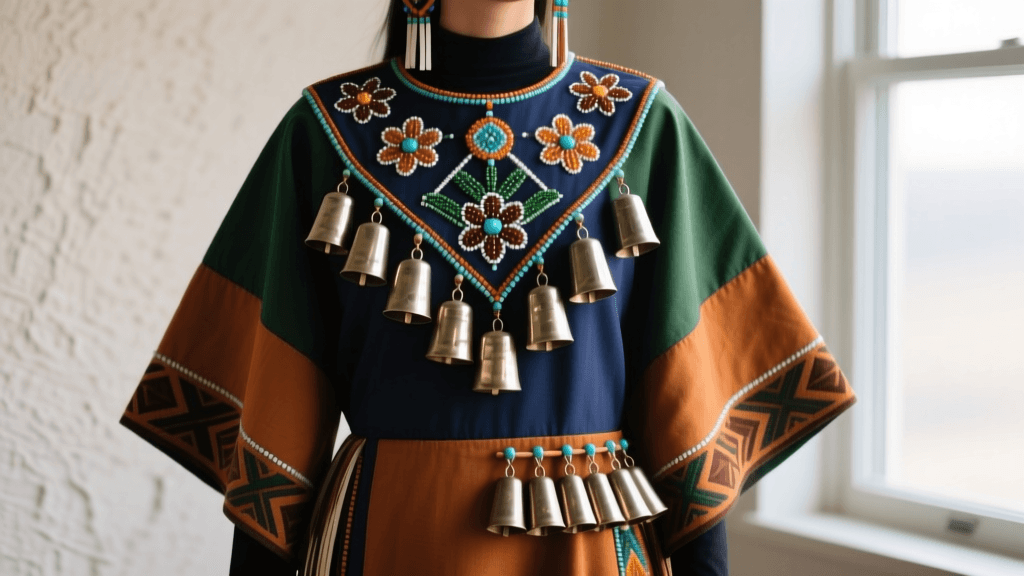
The defining auditory and visual element of the regalia is the jingle, or cone. Historically, these were hand-rolled from the lids of snuff cans or baking powder tins. While some elders and traditionalists still hand-roll their own copper or brass cones for a deeper, more resonant pitch, the vast majority of dancers in 2026 purchase machine-stamped cones.
When sourcing jingles for the upcoming season, dancers typically choose between brass, copper, and nickel silver. Brass offers a bright, sharp ring that cuts through the sound of large outdoor powwow drums. Copper provides a warmer, more muted tone, while nickel silver offers a brilliant, flashy aesthetic that pairs well with cool-toned beadwork. A standard adult dress requires anywhere from 250 to 400 jingles. While the oral tradition often cites 365 jingles—one for each day of the year to represent continuous prayer—modern competitive dancers sometimes use fewer cones to reduce weight and increase mobility, spacing them further apart on the skirt.
2026 Regalia Material Cost and Sourcing Breakdown
Building a Jingle Dress is a significant financial and temporal investment. Below is a breakdown of estimated material costs and sourcing strategies for the 2026 season, reflecting current market prices for high-quality Indigenous art supplies.
| Material Component | Estimated 2026 Cost | Sourcing & Notes |
|---|---|---|
| Heavyweight Wool Broadcloth (5 yards) | $175 - $250 | Specialty Native trade cloth vendors; avoid standard craft store wool. |
| Stamped Brass Jingles (Box of 100) | $45 - $65 | Native-owned beadwork suppliers; buy in bulk to ensure consistent dye lots. |
| Size 11/0 Czech Glass Seed Beads | $3 - $6 per hank | Require 40-60 hanks for full yoke and cuffs; matte finishes are trending in 2026. |
| Heavy Cotton Backing / Interfacing | $40 - $60 | Essential for reinforcing the yoke and jingle attachment points. |
| Wide Satin Appliqué Ribbon | $2 - $4 per yard | Used for geometric border patterns; requires 15-20 yards per dress. |
Beadwork and Appliqué: 2026 Design Trends
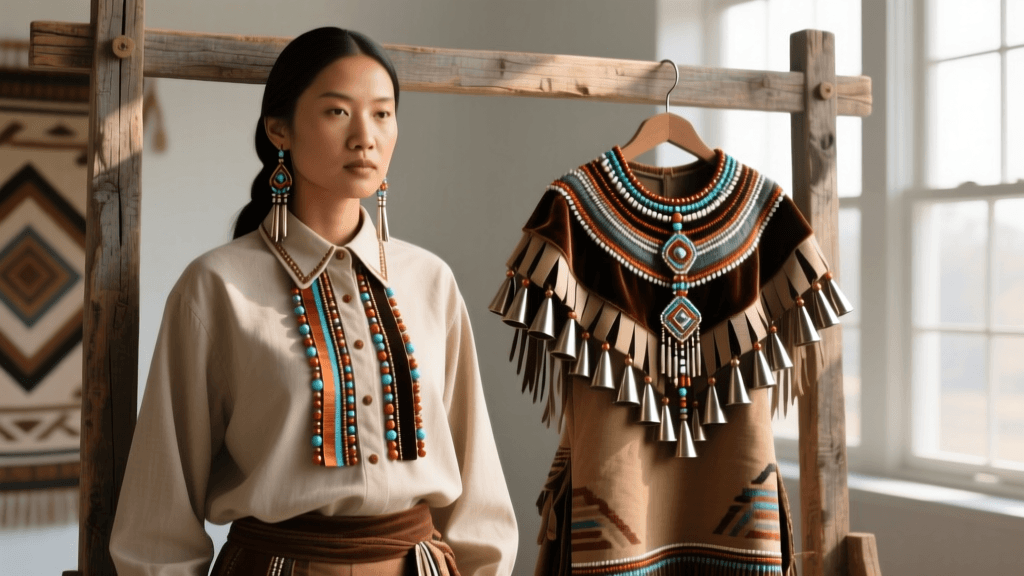
The beadwork on a Jingle Dress is deeply personal, often reflecting the dancer's clan, family lineage, or spiritual visions. The traditional Ojibwe floral motif remains the most culturally significant and widely respected design. In 2026, there is a massive resurgence in three-dimensional, raised beadwork techniques, particularly on the yoke and belt. Artisans are combining size 11/0 Czech glass seed beads with size 8/0 beads to create textured, sculptural petals that stand out dramatically against dark wool or velvet backgrounds.
Color palettes for 2026 show a fascinating dichotomy. On one hand, many dancers are returning to "earth tone" traditionalism, utilizing deep ochres, forest greens, navy blues, and burgundies to honor historical precedents. On the other hand, the "fancy" contemporary category has embraced hyper-vibrant, neon-accented palettes, mixing electric pinks and bright turquoise with metallic gold thread. As noted by contemporary Native arts coverage in ICT News, Indigenous fashion and regalia are continuously evolving, with younger generations pushing the boundaries of color theory while maintaining strict adherence to traditional stitch techniques like the lazy stitch and the two-needle appliqué method.
Ribbon work and satin appliqué are also critical components. Wide ribbons are sewn in intricate geometric patterns—often zig-zags or stepped diamonds—along the hem, cuffs, and yoke. This not only adds visual weight and movement to the dress but also helps to conceal the structural seaming required to support the heavy jingles.
Construction Secrets: Weight Distribution and Spacing
The most common mistake made by novice regalia builders is failing to account for the kinetic force of the dance. The Jingle Dance involves intricate, low-to-the-ground footwork where the dancer keeps one foot close to the earth, creating a rhythmic, syncopated shuffling that makes the cones sing. This movement generates immense centrifugal force on the skirt.
To manage this, the jingles are rarely sewn directly onto the outer fabric. Instead, they are attached to heavy-duty twill tape or cotton webbing, which is then sewn in horizontal rows across the skirt. This distributes the weight across the structural grid of the dress rather than concentrating it on the delicate outer fabric. Spacing is equally crucial. Jingles are typically spaced about one inch apart horizontally, with rows staggered like bricks to ensure a continuous, cascading sound when the dancer moves.
Furthermore, the yoke must be heavily reinforced. Many master builders in 2026 incorporate a hidden leather or heavy canvas harness system inside the yoke that rests on the dancer's shoulders, transferring the weight of the heavy beaded collar away from the neck and spine. The Minnesota Historical Society maintains extensive archives of Great Lakes Indigenous material culture, highlighting how historical garments utilized natural hides and sinew for structural support—principles that modern builders translate into contemporary heavy-duty threads and synthetic backing materials.
Cultural Protocols and Powwow Etiquette
It is imperative to understand that a Jingle Dress is not a costume; it is a sacred bundle, a form of prayer, and a living extension of the dancer's spirit. The protocols surrounding the creation and wearing of the dress are strict. Many dancers fast, pray, or participate in a sweat lodge ceremony before cutting the fabric or attaching the first jingle.
For spectators attending powwows in 2026, the rules of etiquette remain absolute. Never touch a dancer's regalia without explicit permission. The oils from human hands can tarnish metal cones and damage delicate beadwork. Furthermore, if a jingle falls off or a piece of beadwork breaks during a competition, it is considered a sacred item that has been dropped. It should never be picked up and handed back casually; instead, it must be treated with the same respect as a dropped eagle feather, often requiring a specific pickup ceremony or the intervention of a powwow elder. Understanding and respecting these protocols ensures that the healing power of the Jingle Dress continues to resonate across the Americas for generations to come.