Ojibwe Jingle Dress and Plains Ribbon Shirts: 2026 Guide
Introduction to Regional Indigenous Regalia in 2026
Indigenous North American dress is not a monolith; it is a vibrant, living tapestry of regional identities, spiritual beliefs, and historical adaptations. As we navigate the 2026 powwow season and the ongoing contemporary Indigenous fashion renaissance, understanding the distinct differences between Great Lakes and Plains regalia is essential for collectors, cultural enthusiasts, and those seeking to support authentic Native artisans. While mass-market costume shops often blur these lines into generic stereotypes, true Indigenous garment traditions are highly specific to their geographic and tribal origins.
According to the Smithsonian National Museum of the American Indian, Native regalia is deeply tied to spiritual identity, community history, and personal expression, functioning as far more than mere clothing. This comprehensive guide explores the profound traditions of the Ojibwe Jingle Dress and the Plains Ribbon Shirt, detailing regional variations, modern material sourcing, and current 2026 market pricing for authentic pieces.
The Ojibwe Jingle Dress: Great Lakes Healing Tradition
Origins and Spiritual Significance
The Jingle Dress, often referred to as a healing dress, originated among the Ojibwe (Anishinaabe) people in the Great Lakes region, specifically around the Whitefish Bay area on the Ontario-Minnesota border, in the early 20th century. The tradition stems from a powerful vision received by an Ojibwe medicine man, who was instructed to create a specific dress and dance to heal his gravely ill daughter. When the dress was completed and the dance performed, the child recovered. Today, the Jingle Dress Dance remains a cornerstone of Great Lakes powwows, revered as a dance of healing, resilience, and prayer.
Construction and 2026 Material Sourcing
A traditional Jingle Dress is constructed from a durable broadcloth or cotton base, heavily adorned with floral appliqué work that reflects the woodland botanical environment of the Great Lakes. The defining feature of the garment is the 'jingles'—metal cones sewn in overlapping rows across the skirt and sleeves. When the dancer moves, the jingles strike one another, creating a rhythmic, rain-like sound that is believed to carry prayers to the Creator.
In 2026, material sourcing for authentic jingles has seen a major shift. While stamped aluminum cones were popular in the late 2010s due to their low cost, contemporary Ojibwe artisans are returning to hand-rolled tin and copper jingles for their superior acoustic resonance and historical accuracy. As of early 2026, the cost of authentic, hand-rolled tin jingles from Great Lakes metalworkers averages $0.45 to $0.65 per piece. A full-sized adult dress typically requires between 300 and 400 jingles, representing the days of the year and the cycles of life. Therefore, the raw metal materials alone for a premium dress can exceed $250 before fabric and labor are factored in.
Floral Appliqué and Beadwork Trends
The floral beadwork and appliqué on Great Lakes garments are distinct from the geometric patterns of the Plains. In 2026, master Ojibwe beadworkers are utilizing high-quality Czech glass seed beads (sizes 11/0 and 13/0) to create hyper-detailed, raised beadwork (embroidery) on the dress's yoke and cuffs. The current trend favors vibrant, high-contrast color palettes—deep magentas, turquoise, and golden yellows set against navy or black broadcloth—to ensure the floral motifs stand out in the competitive powwow arena.
Plains Ribbon Shirts: Lakota, Cheyenne, and Crow Styles
Trade Era Origins and Cultural Adaptation
Moving westward to the Great Plains, the Ribbon Shirt represents a completely different historical trajectory and aesthetic. The tradition of ribbon work emerged during the 18th and 19th centuries when European traders introduced silk ribbons to Plains tribes, including the Lakota, Cheyenne, Crow, and Osage. Native artisans brilliantly adapted these foreign materials, developing complex reverse-appliqué techniques to create striking, symmetrical patterns that replaced earlier quillwork and hide painting. As highlighted by the PBS Native America documentary archives, these trade garments became powerful markers of tribal identity and prestige across the Plains.
Regional Cuts and Appliqué Techniques
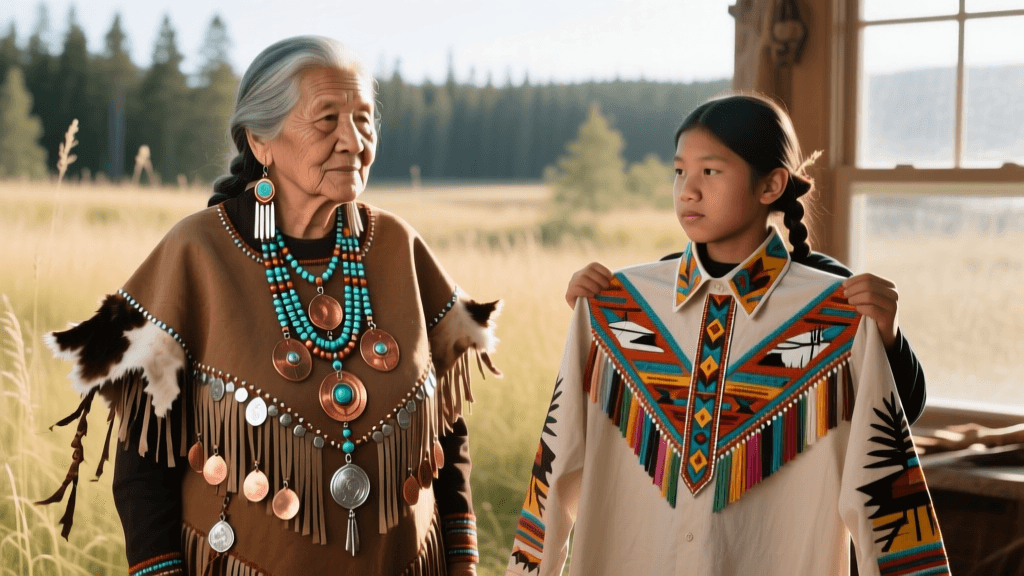
The Plains Ribbon Shirt is characterized by its drop-shoulder construction, wide sleeves, and prominent yoke. However, regional variations are stark. Lakota and Cheyenne ribbon shirts often feature horizontal banding and intricate, sharp-edged geometric reverse appliqué. In contrast, Crow ribbon work (though more frequently applied to women's shawls and elk-tooth dresses) influences men's shirts with wider, bolder ribbon placements and the integration of dentalium shells or bone hairpipes.
The reverse appliqué technique involves layering a top ribbon over a contrasting base fabric, cutting a precise pattern into the top ribbon, and folding the edges under to stitch them down, revealing the color beneath. This requires immense precision. In 2026, while some artisans use laser-cutters for commercial production, master traditionalists still insist on hand-cutting with specialized appliqué shears to maintain the slight, organic variations that prove human craftsmanship.
2026 Fabric Trends and Artisan Pricing
A major trend in the 2026 Plains powwow circuit is the rejection of cheap, synthetic acetate ribbons that melt easily and fray quickly. Artisans and dancers are demanding pure silk ribbons and high-grade mercerized cottons. French-made silk ribbons, particularly in 3/8-inch and 1/2-inch widths, are the gold standard for premium shirts. Due to global textile supply chain shifts, the cost of imported pure silk ribbons has risen by approximately 18% since 2024, pushing the material cost for a heavily ribboned men's shirt to over $300. Consequently, current pricing for a fully custom, hand-sewn ribbon shirt from a master Plains artisan ranges from $1,200 to $2,800 in 2026, reflecting the dozens of hours of meticulous hand-stitching required.
Regional Comparison Chart: Great Lakes vs. Plains Regalia
To help collectors and enthusiasts distinguish between these two major regional styles, the following table outlines the core differences in construction, materials, and cultural context as of 2026.
| Feature | Great Lakes (Ojibwe/Anishinaabe) | Plains (Lakota/Cheyenne/Crow) |
|---|---|---|
| Primary Garment | Jingle Dress (Women's Healing Dance) | Ribbon Shirt (Men's & Women's Formal/Powwow) |
| Base Material | Wool broadcloth, heavy cotton | Cotton broadcloth, calico, light wool |
| Decorative Elements | Rolled tin/copper jingles, floral beadwork | Silk ribbons, geometric reverse appliqué |
| Design Motifs | Woodland florals, vines, leaves, berries | Geometric shapes, step patterns, stripes |
| Primary Symbolism | Healing, prayer, water, medicine | Prestige, trade history, tribal identity |
| 2026 Artisan Price | $800 - $2,500+ (depending on beadwork) | $1,200 - $2,800+ (depending on silk quality) |
Ethical Sourcing and the 2026 Artisan Market
Navigating the Indian Arts and Crafts Act
As interest in authentic Indigenous garments grows, so does the market for counterfeit, mass-produced 'Native-inspired' clothing. When purchasing a Jingle Dress or Ribbon Shirt in 2026, it is critical to adhere to the ethical guidelines established by the Indian Arts and Crafts Board (IACB). Under the Indian Arts and Crafts Act, it is illegal to offer or display for sale any art or craft product in a manner that falsely suggests it is Indian-produced. Authentic regalia must be purchased directly from enrolled members of state or federally recognized tribes, or from certified Indian artisans.
Actionable Sourcing Advice for 2026
If you are a dancer, collector, or museum curator looking to acquire authentic regional garments this year, follow these actionable steps:
- Attend Major Regional Powwows: The best place to source authentic garments is directly from the artisans at major gatherings. For Great Lakes pieces, attend the Red Lake Nation Powwow or the Mille Lacs Band of Ojibwe celebrations. For Plains ribbon shirts, the Crow Fair in Montana and the Black Hills Powwow in South Dakota remain premier venues for connecting with master seamstresses and tailors.
- Verify Tribal Enrollment: When purchasing online via Indigenous-owned cooperatives or social media marketplaces, politely ask for the artisan's tribal affiliation. Genuine creators are usually proud to share their community ties and the specific regional teachings that inform their patterns.
- Invest in Custom Fittings: Traditional regalia is not meant to be worn off-the-rack. In 2026, top-tier artisans require precise measurements—including shoulder drop, arm wingspan, and specific dance stride lengths—to ensure the garment moves correctly. For a Jingle Dress, the hem must hit at the exact right height to allow the jingles to clash without tangling in the dancer's footwork.
- Support Sustainable Material Initiatives: Look for artisans who are participating in the 2026 Indigenous textile revitalization movements, such as those sourcing naturally dyed cottons or utilizing recycled metals for jingles, merging environmental stewardship with traditional craft.
Conclusion
The garments of Indigenous North America are profound expressions of survival, artistry, and spiritual continuity. Whether it is the resonant, healing rain of an Ojibwe Jingle Dress or the sharp, vibrant geometry of a Plains Ribbon Shirt, these garments demand respect and deep understanding. By recognizing the distinct regional variations and committing to ethical, direct-from-artisan sourcing in 2026, we help ensure that these magnificent textile traditions continue to thrive for generations to come.