Ojibwe Jingle Dress Regalia: 2026 Material Sourcing Guide
The Enduring Legacy and Medicine of the Jingle Dress
The Jingle Dress, known in the Ojibwe language as Chiigaazidebing, is far more than a beautiful garment; it is a profound medicine dress with deep spiritual roots. Originating from the Mille Lacs Band of Ojibwe in the early 20th century through a powerful healing dream, the dress was created to bring wellness to a sick child. Today, as we navigate the 2026 powwow season, the Jingle Dress remains a central pillar of Indigenous healing, prayer, and cultural expression across Turtle Island. The distinctive sound of the metal cones striking one another is said to mimic the sound of rain on a tin roof, calling upon the healing spirits and carrying the prayers of the dancer and her community into the air.
For Indigenous artisans, dancers, and families preparing for the 2026 powwow trail, sourcing the right materials is a meticulous process that balances historical authenticity with contemporary comfort and durability. Whether you are a seasoned regalia maker or a first-time crafter building a dress for a young dancer, understanding the current landscape of textile and hardware sourcing is essential. This comprehensive guide explores the best practices for acquiring metal cones, broadcloth, ribbon, and seed beads in 2026, ensuring your regalia honors tradition while standing up to the rigorous demands of modern competition and exhibition dancing.
Sourcing Metal Cones: The Voice of the Dress
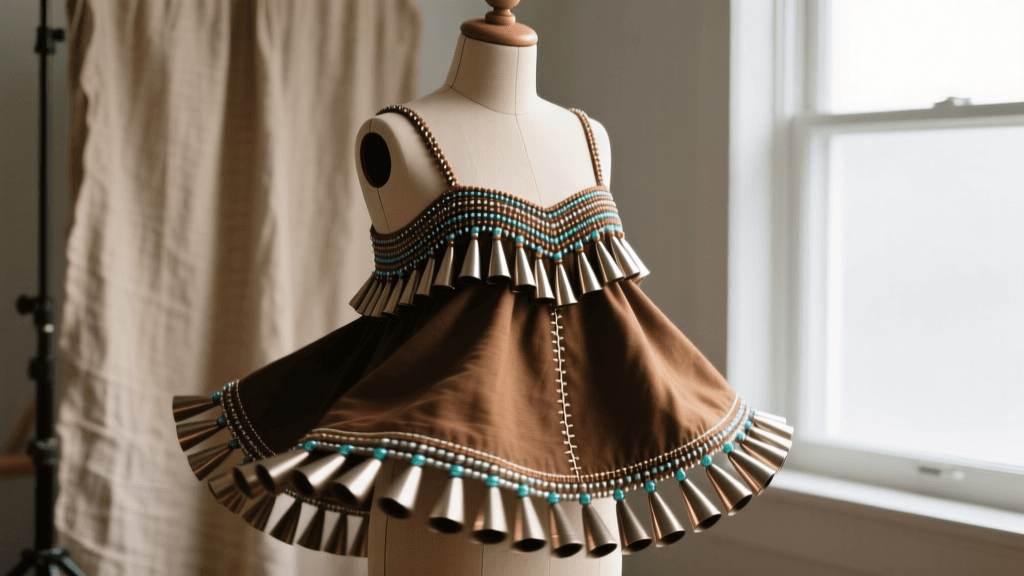
The defining feature of the Jingle Dress is its 'jingles'—the rolled metal cones that create the dress's iconic acoustic signature. Historically, these cones were painstakingly hand-rolled from the lids of snuff and tobacco tins. While some traditionalists and historical reenactors still practice this method for specialized heritage pieces, the vast majority of contemporary dancers in 2026 rely on commercially stamped, pre-rolled metal cones crafted specifically for powwow regalia.
When sourcing cones for the upcoming season, dancers must consider the weight, tone, and finish of the metal. Standard aluminum or lightweight tin cones offer a bright, high-pitched ring and are significantly easier on the dancer's shoulders and back during long grand entries. Heavier brass or copper-alloy cones produce a deeper, more resonant tone but add considerable weight to the garment. A traditional full-size adult dress may feature anywhere from 300 to 500 cones, with some elders noting the spiritual significance of using exactly 365 cones—one for each day of the year.
2026 Pricing and Availability for Jingles
In 2026, global supply chain stabilization has brought the cost of raw stamped metals back to predictable levels, though shipping from specialized Native-owned craft suppliers remains a factor. Most artisans purchase cones in bulk lots of 100 to 500. It is highly recommended to purchase at least 20% more cones than your pattern requires to account for crushing, loss during travel, and future repairs.
| Material Type | 2026 Average Cost (Per 100) | Acoustic Profile | Sourcing Recommendations |
|---|---|---|---|
| Standard Aluminum | $45.00 - $60.00 | Bright, crisp, high-pitched | Ideal for youth dresses and hot summer powwows; widely available online. |
| Heavyweight Tin | $65.00 - $85.00 | Classic, sharp, traditional | Best for adult competition dancers seeking the authentic historical sound. |
| Brass / Copper Alloy | $90.00 - $130.00 | Deep, resonant, mellow | Premium choice for exhibition dancers; heavier, requires reinforced stitching. |
Selecting Broadcloth and Modern Fabric Blends
The foundation of the Jingle Dress is typically a rich, flowing fabric that allows the cones to move freely and strike each other with every step. Historically, heavy wool broadcloth and melton wool were the standards, providing beautiful drape and durability. However, as powwows increasingly feature extreme summer heat and multi-day outdoor events, the 2026 regalia-making community has seen a massive shift toward advanced fabric blends.
While premium wool broadcloth remains the gold standard for its rich texture and traditional appearance, many contemporary Ojibwe seamstresses are now utilizing high-quality cotton-polyester broadcloth blends. These modern textiles offer the visual weight and matte finish of traditional wool but provide crucial breathability and moisture-wicking properties. When sourcing fabric in 2026, look for 'powwow-grade' broadcloth that is at least 60 inches wide to minimize seaming. Jewel tones—such as deep ruby, emerald, sapphire, and amethyst—continue to dominate the color palette, often serving as a striking backdrop for vibrant ribbon appliqué.
Ribbon Appliqué and Geometric Patterns
Ojibwe ribbonwork is a hallmark of Jingle Dress design, featuring intricate geometric patterns, zig-zags, and diamond motifs that represent the natural world and spiritual pathways. In 2026, the choice of ribbon is critical for both aesthetics and longevity. Double-faced satin ribbon remains the most popular choice due to its brilliant sheen and clean edges, which prevent fraying during the intense movement of the fancy and traditional jingle dance styles.
For the base appliqué, artisans are moving away from narrow ribbons and instead sourcing wide (1.5 to 2-inch) grosgrain and satin ribbons to create bold, highly visible patterns from the distance of the powwow arena. When purchasing ribbon, always buy from specialized Indigenous bead and craft shops. Not only does this support the Native economy, but these vendors also stock colorfast, UV-resistant ribbons that will not fade under the harsh summer sun or bleed when the regalia is professionally cleaned.
Beadwork: Choosing the Right Glass Seed Beads
The yoke, cuffs, and belt of a Jingle Dress are often adorned with exquisite floral beadwork, a signature of Great Lakes Indigenous artistry. The quality of your seed beads will dictate the final brilliance and durability of your work. In 2026, the debate between Czech Charlotte beads and Japanese Miyuki or Toho beads continues, but both have their distinct place in regalia making.
- Czech Charlotte Beads (Size 13/0): Known for their single faceted cut, these beads catch the light beautifully, offering a sparkling, organic look that mimics the irregularity of historical cut beads. They are the preferred choice for traditional floral motifs and medallions.
- Japanese Cylinder Beads (Size 11/0): Uniform, precise, and incredibly durable, Japanese beads are ideal for the structural elements of beadwork, such as loom-beaded belts, headbands, and barrettes where perfect alignment is necessary.
When sourcing beads, always verify that the dye lots match if you are buying in smaller increments. Top-tier Native craft suppliers in 2026 now offer 'regalia kits' that bundle matching Czech seed beads, Nymo thread, and backing leather, saving artisans hours of color-matching.
Ethical Sourcing and Supporting Indigenous Economies
As the demand for Native American regalia grows, so does the unfortunate proliferation of mass-produced, imported knock-offs that violate the spirit and letter of the law. When purchasing finished regalia, commissioned pieces, or even raw materials, it is vital to ensure you are supporting authentic Indigenous artisans. The Indian Arts and Crafts Board, a division of the U.S. Department of the Interior, strictly enforces the Indian Arts and Crafts Act, which prohibits the misrepresentation of Native American arts and crafts. Always verify that the artisans and vendors you purchase from are enrolled members of federally or state-recognized tribes.
Furthermore, organizations like the Native Arts and Cultures Foundation provide incredible resources and directories for connecting with traditional knowledge keepers and master regalia makers. By sourcing your metal cones, broadcloth, and beads directly from Native-owned enterprises, you are not only acquiring the highest quality materials for the 2026 powwow season but also actively participating in the economic sovereignty and cultural preservation of Indigenous communities.
Final Thoughts for the 2026 Powwow Trail
Creating a Jingle Dress is an act of devotion, requiring hundreds of hours of cutting, sewing, rolling, and beading. As you prepare your materials for the 2026 season, remember that every yard of broadcloth and every handful of metal cones carries the weight of your ancestors' prayers. Take the time to source ethically, build with durability in mind, and honor the healing medicine that the Chiigaazideb brings to the circle. For more historical context on the evolution of powwow regalia, the Smithsonian National Museum of the American Indian offers extensive digital archives and educational resources that can inspire your next design.