Ojibwe Ribbon Shirts & Floral Beadwork: 2026 Guide
The Enduring Legacy of Great Lakes Indigenous Dress
The Great Lakes region of North America is home to the Anishinaabe people, a culturally rich group that includes the Ojibwe (Chippewa), Odawa (Ottawa), and Potawatomi tribes. Among the most visually striking and culturally significant elements of their traditional dress are the intricate floral beadwork and the vibrant ribbon shirts. As we navigate the cultural landscape in 2026, these garments are not merely historical artifacts; they are living, evolving expressions of Indigenous identity, sovereignty, and artistic excellence. From the bustling powwow circuits of the Midwest to high-fashion Indigenous runways, Great Lakes dress traditions continue to command respect and admiration.
For collectors, cultural enthusiasts, and those seeking to support authentic Native artisans, understanding the nuances of these garments is essential. The transition from pre-contact porcupine quillwork to the silk ribbon appliqué and glass beadwork of the post-contact era represents a profound adaptation. Today, contemporary Ojibwe and Potawatomi artisans are blending ancestral techniques with modern materials, creating pieces that honor the past while firmly planting their culture in the present.
The Anatomy of the Modern Ojibwe Ribbon Shirt
The ribbon shirt is a staple of modern Indigenous men’s and women’s regalia, as well as everyday cultural wear. Originating from the trade era when European merchants introduced silk ribbons and broadcloth to North America, Native artisans transformed these foreign materials into distinctly Indigenous art forms. In 2026, the ribbon shirt remains a powerful symbol of cultural pride, worn at graduations, ceremonies, political rallies, and social dances.
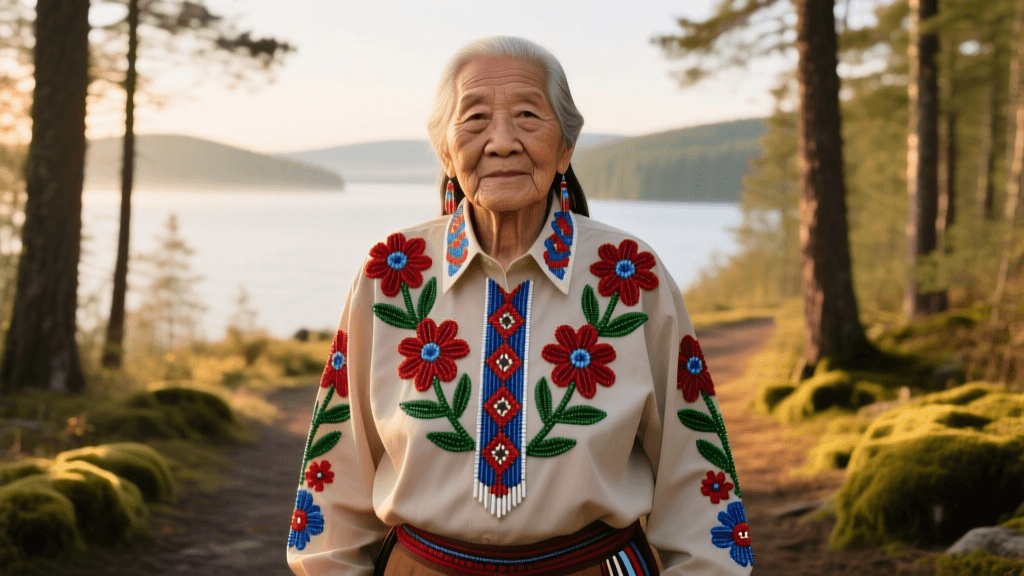
A traditional ribbon shirt is characterized by its loose, comfortable fit, a fold-down collar, and distinctive ribbon appliqué work. The appliqué typically adorns the chest, shoulders, and sometimes the lower hem. Artisans use a technique where silk or synthetic ribbons are folded, cut, and sewn onto a base fabric to create geometric or floral patterns. The negative space created by cutting away the top layer of ribbon reveals the contrasting color beneath, resulting in a vibrant, multi-layered design.
Materials and Sourcing in 2026
The quality of a ribbon shirt is heavily dependent on the materials used. In 2026, top-tier Indigenous seamstresses and tailors favor high-grade German or Italian broadcloth and Melton wool for the base of the garment. These fabrics provide a heavy, durable drape that holds the weight of the ribbon appliqué without sagging. For the ribbons themselves, while traditional silk remains highly prized for its luster and historical accuracy, many artisans now utilize high-quality double-faced satin polyester ribbons. These modern synthetics offer superior colorfastness, resistance to fraying, and a wider array of vibrant, colorfast dyes that withstand the rigors of frequent powwow use.
Sourcing these materials has become more streamlined in 2026, with specialized Indigenous-owned textile suppliers operating online, providing bulk yards of ethically sourced broadcloth and imported French silk ribbons directly to Native communities. This direct-to-artisan supply chain ensures that the economic benefits of the regalia market remain within Indigenous networks.
Floral Beadwork: Techniques and Regional Variations
While the Plains tribes are renowned for their geometric beadwork, the hallmark of Great Lakes Indigenous dress is the lush, asymmetrical, and highly detailed floral beadwork. This style, heavily influenced by the transition from quillwork, features winding vines, delicate leaves, and blooming flowers. The Ojibwe are widely considered the masters of this style, though variations exist across the Anishinaabe diaspora.
Contemporary beadworkers in 2026 primarily use Japanese glass beads, specifically size 13/0 and 11/0 Charlotte cut beads. The 'Charlotte cut' features a single facet on the otherwise round bead, which catches the light and gives the finished piece a brilliant, sparkling quality reminiscent of morning dew on flower petals. The beadwork is typically executed on a base of brain-tanned deer hide, smoked moose hide, or heavy wool felt, using a two-needle appliqué technique that allows for smooth, curved lines essential to floral motifs.
Regional Variations in Anishinaabe Dress
To truly appreciate these garments, one must recognize the subtle regional differences that distinguish the various tribes and bands. The following table outlines the primary distinctions in floral beadwork and ribbon appliqué among the Three Fires Confederacy.
| Tribe / Nation | Primary Region (2026) | Beadwork & Appliqué Characteristics | Common Motifs |
|---|---|---|---|
| Ojibwe (Chippewa) | Minnesota, Wisconsin, Michigan, Ontario | Highly asymmetrical, dense floral clusters, extensive use of raised beadwork and velvet backing. | Wild rose, strawberry, maple leaf, winding vines. |
| Potawatomi | Michigan, Indiana, Wisconsin, Oklahoma | Slightly more symmetrical than Ojibwe, bold color blocking in ribbon work, distinct Prairie-style floral influences in western bands. | Prairie rose, oak leaf, geometric floral hybrids. |
| Odawa (Ottawa) | Michigan, Ontario, Oklahoma | Delicate, sprawling vine networks, frequent use of black or navy velvet as a high-contrast base for bright floral beads. | Columbine, trailing vines, small berry clusters. |
Sourcing Authentic Garments and Avoiding Appropriation
As the global interest in Indigenous fashion continues to surge in 2026, the market has unfortunately been flooded with mass-produced, 'Native-inspired' fast fashion. These items not only violate the intellectual property and cultural heritage of Native communities but also undercut the livelihoods of authentic Indigenous artisans. When seeking to purchase a ribbon shirt, beaded yoke, or pair of floral beaded moccasins, it is imperative to buy directly from the source.
The Indian Arts and Crafts Board (IACB), a federal agency within the U.S. Department of the Interior, provides vital resources for consumers to verify the authenticity of Native American art. Under the Indian Arts and Crafts Act, it is illegal to market art or craftwork as 'Indian-made' if it is not produced by a member of a federally or state-recognized tribe. In 2026, reputable online marketplaces and physical galleries strictly enforce these regulations, requiring artisans to provide their tribal enrollment numbers.
Furthermore, institutions like the National Museum of the American Indian (NMAI) and the Minnesota Historical Society (MNHS) frequently host directories and exhibitions featuring contemporary Great Lakes artists. Engaging with these institutional networks is an excellent way to discover master beadworkers and tailors who accept custom commissions.
2026 Pricing Guide for Authentic Pieces
Authentic, handcrafted Indigenous garments represent hundreds of hours of meticulous labor. Buyers should expect to pay prices that reflect this immense dedication. Below is a general pricing guide for authentic Great Lakes garments in the 2026 market:
- Custom Silk Ribbon Shirt (Broadcloth base, machine-sewn appliqué): $450 – $800
- Custom Ribbon Shirt (Hand-stitched appliqué, premium wool): $850 – $1,500
- Fully Beaded Floral Yoke (Brain-tanned hide, size 13/0 beads): $2,500 – $5,000+
- Pair of Fully Beaded Anishinaabe Moccasins (Smoked moose hide): $600 – $1,200
- Floral Beaded Bandolier Bag (Ceremonial grade): $3,000 – $8,000
While these prices may seem steep to the uninitiated, they are a fraction of the hourly wage the artisan actually earns when calculating the time spent on design, material prep, and the painstaking bead-by-bead execution.
Care and Preservation of Heirloom Textiles
Garments featuring silk ribbon work and glass beadwork are often treated as family heirlooms, passed down through generations. Proper care is essential to ensure these pieces survive the century. In 2026, museum conservators recommend specific protocols for Indigenous textile preservation that can easily be adapted for home use.
First, never machine wash a ribbon shirt or beaded garment. The agitation will shatter glass beads and cause silk ribbons to bleed and fray. Instead, spot clean the base fabric with a mild, pH-neutral detergent and a damp cloth. For deep cleaning, consult a textile conservator who specializes in mixed-media Indigenous artifacts.
Storage is equally critical. Beaded yokes and heavy bandolier bags should never be hung on standard wire or wooden hangers, as the weight of the beads will eventually tear the hide or felt base. Instead, store them flat in acid-free archival boxes, interleaved with unbuffered acid-free tissue paper. Keep the garments in a climate-controlled environment, away from direct sunlight, which will rapidly fade both the silk ribbons and the dyed hides. For ribbon shirts, use padded, wide-shoulder hangers to support the weight of the broadcloth and prevent shoulder dimpling.
Conclusion
The Ojibwe, Potawatomi, and Odawa dress traditions of the Great Lakes are a testament to the resilience and adaptability of Indigenous cultures. The ribbon shirt and floral beadwork are far more than decorative clothing; they are wearable narratives that speak to a deep connection with the land, the ancestors, and the community. As we move through 2026, supporting authentic Native artisans ensures that these vibrant traditions continue to thrive, evolve, and inspire future generations. By educating ourselves on the materials, techniques, and ethical sourcing of these garments, we honor the profound artistry of the Anishinaabe people and contribute to the preservation of their living heritage.