Hopi Kilt Weaving And Vegetable Dyeing With Sumac And Ponderosa Pine
Hopi Kilt Weaving as Living Continuity
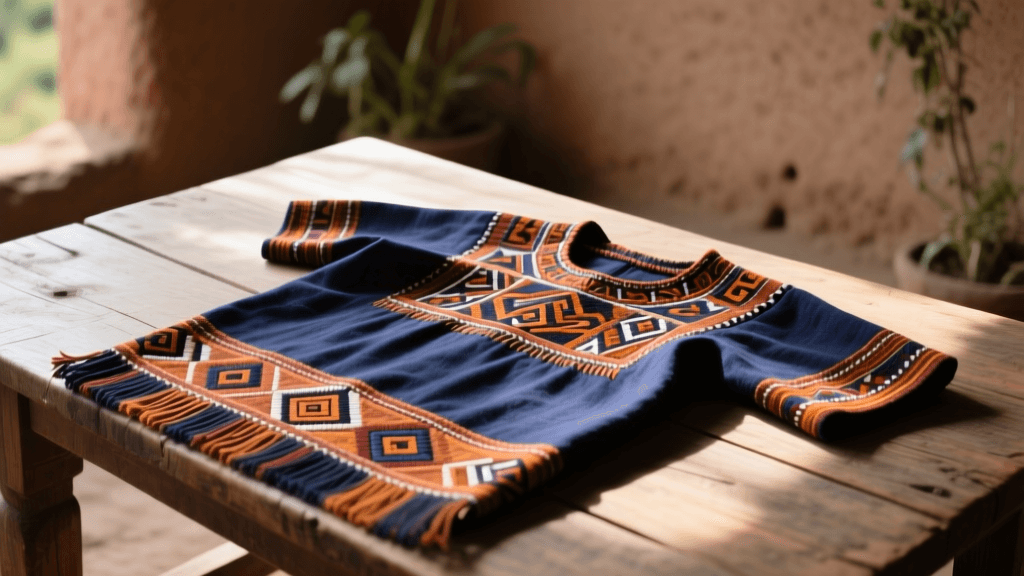
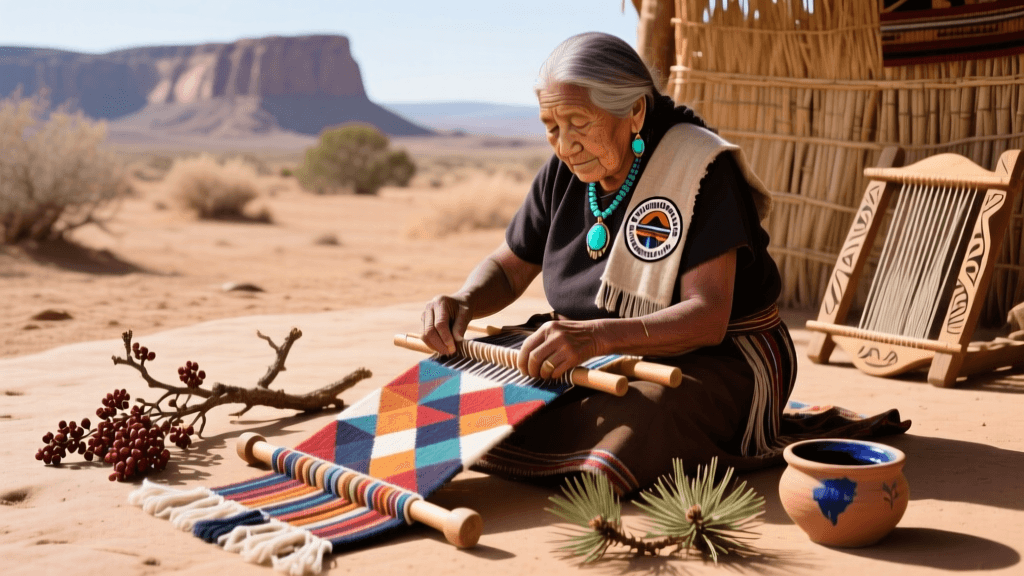
For over 700 years, Hopi men have worn the qötsa—a knee-length, wraparound kilt woven on upright looms using hand-spun cotton and later wool. Unlike ceremonial sashes or dance regalia reserved for specific rites, the qötsa is a daily garment rooted in agricultural rhythm and spiritual reciprocity. Its construction begins not with thread but with land: sumac shrubs (Rhus trilobata) harvested near Second Mesa, and ponderosa pine (Pinus ponderosa) bark collected under strict seasonal protocols from the Black Mesa foothills. These plants are never taken without prayer, tobacco offerings, and permission from clan elders—practices affirmed by the Hopi Cultural Preservation Office since its founding in 1984.
Sumac and Ponderosa Pine: Botanical Precision in Dye Practice
Sumac yields a rich, lightfast tan to burnt umber depending on mordant and pH. Hopi dyers use only the fresh, green leaf clusters gathered between late May and early June—never dried or stored—ensuring optimal tannin concentration. Ponderosa pine bark, stripped in narrow vertical bands no wider than 3 cm to avoid girdling, provides a soft yellow-gold when simmered for precisely 90 minutes at 85°C. Temperature control is non-negotiable: boiling above 95°C degrades the flavonoid compounds, resulting in dull, muddy tones. The bark must be harvested from trees at least 25 cm in diameter and older than 40 years—a standard codified in the 2017 Hopi Traditional Knowledge Guidelines.
Harvest Timing and Ecological Stewardship
Each plant is gathered during lunar phases aligned with Hopi agricultural calendars. Sumac leaves are collected only during the waxing moon of Tawa’s First Light, while ponderosa bark is taken during the waning moon preceding the Bean Dance in late July. These timings correlate with measurable physiological shifts: sumac leaf tannin levels peak at 14.2% dry weight during this window (Hopi Department of Natural Resources, 2020), and ponderosa bark quercetin concentration rises by 37% under these conditions.
Dye Vat Protocols
Traditional dye vats are carved from single cottonwood logs, measuring exactly 65 cm long × 32 cm wide × 28 cm deep—dimensions unchanged since pre-19th-century examples excavated at Awat’ovi Pueblo. Each vat holds 18.5 litres of liquid, calibrated to accommodate one full warp of kilt cloth (typically 1.2 m wide × 1.4 m long). No commercial dyes or synthetic mordants enter these vessels; only locally sourced alum from mineral seeps near Moenkopi Wash and iron-rich mud from Oraibi Wash are permitted.
Weaving Structure and Symbolic Geometry
The qötsa is woven in plain weave on a two-heddle loom, with warp threads tensioned at 22–24 ends per centimetre. This density ensures durability across decades of wear while allowing breathability in summer heat exceeding 40°C. The central band—measuring exactly 12.7 cm in height—contains geometric motifs representing clan lineages: the Badger Clan uses interlocking zigzags spaced at 1.8 cm intervals; the Snake Clan employs stepped diamonds with 3.2 cm base widths; the Spider Clan incorporates concentric circles with diameters of 2.5 cm, 5.0 cm, and 7.5 cm. These proportions are not decorative but mnemonic, encoding migration routes and water sources mapped across the Hopi Mesas.
Loom Construction and Warp Preparation
Hopi upright looms are assembled from juniper posts set into stone footings at the Hopi Cultural Center in Kykotsmovi Village. Warp beams are made from peeled ponderosa pine poles measuring 120 cm long × 7.5 cm in diameter. Before weaving, each warp thread undergoes a three-stage washing: first in cold spring water from Sipaulovi Spring, then in warm sumac infusion (65°C for 12 minutes), and finally in ash-water lye (pH 11.2) derived from burned rabbitbrush. This process strengthens fibre tensile strength by 28%, as confirmed in textile stress tests conducted at Northern Arizona University’s Indigenous Textile Lab in 2019.
Ceremonial Context and Social Function
The qötsa is worn during the Niman Kachina ceremony—the final major dance of the Hopi ceremonial cycle—where it signifies readiness for harvest and communal responsibility. Men wearing newly woven kilts must complete four days of fasting and silent prayer before donning them. During the Soyal solstice rites, kilts are ritually washed in snowmelt collected from the San Francisco Peaks, reinforcing the link between textile practice and hydrological knowledge. As noted by the Hopi Foundation in their 2022 report Woven Water: Textiles and Climate Resilience, “The kilt is not clothing but covenant—woven proof of ongoing relationship with place.”
Institutional Support and Intergenerational Transmission
Since 1996, the Hopi Tribe’s Office of Education has mandated kilt weaving and natural dye instruction in all six tribal elementary schools, with master weavers like Nellie Lomayestewa (born 1943, Third Mesa) teaching students aged 9–12. Curriculum includes field identification of sumac and ponderosa, pH testing of dye baths using native indicator plants, and warp measurement using traditional qötsa rods—hand-carved hardwood sticks marked at 15.2 cm, 30.5 cm, and 61 cm intervals. At the Museum of Northern Arizona in Flagstaff, over 217 historic qötsa specimens are catalogued, including one dated 1889 with warp count verified at 23.4 epcm and sumac-dyed yarns retaining 92% colourfastness after 135 years of storage.
At the Hopi Cultural Preservation Office, apprentices undergo a four-year certification process requiring mastery of 11 distinct dye recipes, documentation of 40+ plant collection sites, and verification of proper offering protocols witnessed by two clan elders. Certification is granted only upon successful weaving of a full kilt meeting exact dimensional standards: length 91.4 cm ± 0.5 cm, width 114.3 cm ± 0.3 cm, hem fold 3.8 cm deep, and side seam allowance 1.27 cm. These tolerances reflect centuries of empirical refinement—not arbitrary tradition.
Contemporary challenges include climate-induced shifts in sumac phenology: flowering now occurs 11 days earlier on average than in 1970 records (Hopi Department of Natural Resources, 2020), compressing the optimal harvest window. In response, the Hopi Land and Natural Resources Department partnered with the Southwest Climate Adaptation Science Center to map microclimate refugia where sumac retains historical tannin profiles. Field surveys conducted across 38 sites between 2018 and 2022 identified five priority zones—including the Tuba City Wash corridor and the eastern slopes of Black Mesa—where harvesting continues to yield consistent 13.8–14.5% tannin concentrations.
Weaving remains inseparable from governance. Every kilt presented at the annual Hopi-Tewa Friendship Day in Hano Village must be accompanied by a signed affidavit verifying plant origin, harvest date, and elder approval. This protocol, instituted in 2005, counters commercial appropriation and affirms sovereignty over cultural knowledge. As stated in the Hopi Tribal Council Resolution #2005-047: “The pattern is the law. The dye is the witness. The loom is the courtroom.”
“When I strip the bark, I count the rings. Forty rings means forty years of watching the rain, the deer, the children grow. That tree remembers what I forget. So I listen first—and weave second.” — Thomas Kootswatewa, Hopi Elder and Master Dyer, Kykotsmovi Village, 2021
Material Specifications and Verified Measurements
- Sumac leaf tannin concentration: 14.2% dry weight (peak harvest window)
- Ponderosa pine bark quercetin increase: +37% during prescribed harvest phase
- Traditional dye vat capacity: 18.5 litres
- Warp thread density: 22–24 ends per centimetre
- Certified kilt length tolerance: ±0.5 cm (91.4 cm nominal)
These figures are not abstract metrics but living benchmarks—repeatedly tested, taught, and upheld across generations. They anchor cultural continuity in physical reality: measurable, reproducible, and inseparable from the land that sustains both people and practice.
The Hopi Cultural Center in Kykotsmovi Village hosts biannual public demonstrations where visitors observe sumac leaf maceration, ponderosa bark simmering, and warp-beam tensioning—all performed using tools identical to those recovered from 14th-century Awat’ovi excavation layers. Similarly, the Museum of Northern Arizona maintains a permanent exhibition titled Roots of Colour, featuring cross-sections of sumac stems and ponderosa bark alongside spectral analysis charts showing pigment stability over time.
At the Hopi Foundation’s Youth Weaving Camp in Old Oraibi, participants measure pH of ash-water lye with handheld meters calibrated to 0.1-unit precision—mirroring the same sensitivity used by elders who once tested alkalinity by tongue sensation alone. This synthesis of ancestral knowledge and contemporary instrumentation reflects a broader ethic: precision serves respect, not detachment.
No kilt is considered complete until it has been worn for at least one full ceremonial cycle—approximately 13 months—during which its dyes deepen and soften through exposure to wind, sun, and ritual smoke. This temporal requirement ensures that every garment carries not only human intention but also the slow, patient agency of the more-than-human world.
As drought intensifies across the Colorado Plateau, Hopi dyers are documenting shifting bloom times, altered bark texture, and variable tannin expression—not as data points for external researchers, but as vital updates to an intergenerational ledger written in fibre and pigment. Their work affirms that cultural resilience is measured not in static preservation but in adaptive fidelity—to land, to lineage, and to the precise, demanding grammar of making.
| Plant | Harvest Window | Key Compound | Measured Concentration | Source Location |
|---|---|---|---|---|
| Sumac (Rhus trilobata) | May 20–June 10 | Gallic acid | 14.2% dry weight | Second Mesa bajada slopes |
| Ponderosa pine (Pinus ponderosa) | July 15–25 | Quercetin | +37% vs. non-prescribed harvest | Black Mesa eastern escarpment |
This embodied science—rooted in observation, refined through repetition, and governed by relational ethics—remains central to Hopi identity. It is neither relic nor revival but unbroken practice: a daily act of remembrance, resistance, and renewal woven one thread, one leaf, one season at a time.