Authentic Oaxacan Zapotec Huipiles: 2026 Buyer's Guide
The Living Codex: Navigating Oaxacan Textiles in 2026
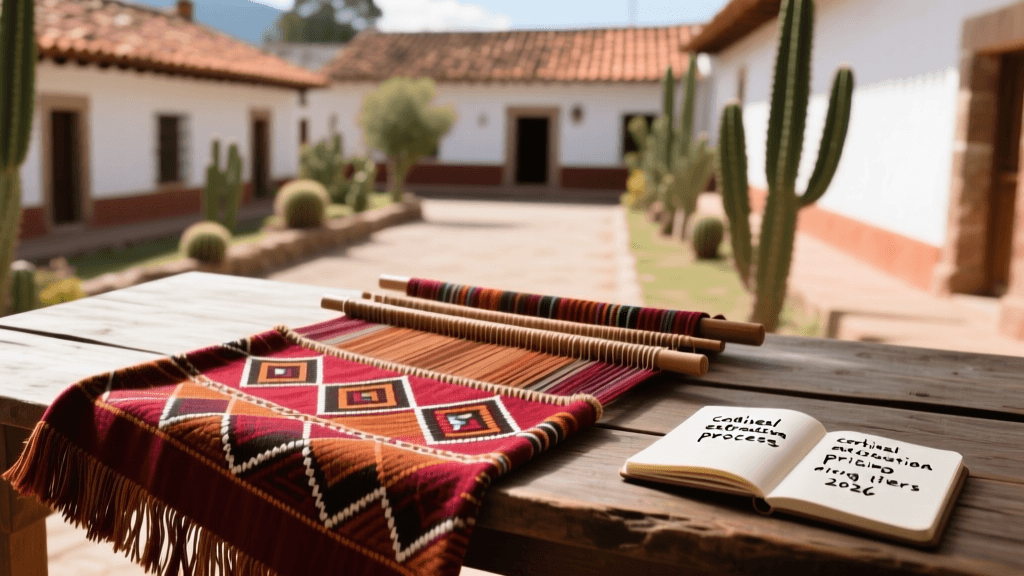
The Oaxacan huipil is far more than a traditional garment; it is a woven codex of Zapotec cosmology, history, and identity. As we navigate the textile landscape in 2026, the global demand for sustainable, slow-fashion garments has brought unprecedented international attention to the Valles Centrales and the Sierra Sur of Oaxaca. However, this surge in popularity also necessitates a highly educated approach to sourcing. In 2026, the strict enforcement of Mexico’s federal intellectual property laws—specifically the Ley General de Salvaguarda de los Conocimientos, Saberes y Expresiones de los Pueblos Indígenas—has fundamentally shifted the market. Fast-fashion brands can no longer freely appropriate Zapotec motifs without facing severe legal repercussions and community boycotts. For the ethical collector, cultural ally, and conscious consumer, understanding the nuanced differences between an authentic, naturally dyed ceremonial huipil and a commercially produced imitation is essential. This comprehensive 2026 buyer’s guide will equip you with the historical knowledge, botanical identification techniques, and market pricing data required to source Oaxacan textiles responsibly.
The Anatomy of a Zapotec Huipil
Unlike the single-panel garments found in some regions of Mesoamerica, the traditional Zapotec huipil is typically constructed from three distinct panels of hand-woven cotton or silk, known as lienzos. These panels are joined together using a highly decorative, intricate embroidery stitch called the randa. The randa is not merely structural; it is a hallmark of the weaver’s technical mastery. A finely executed randa should lay completely flat, with tension that perfectly mirrors the woven webs themselves.
The iconography woven into the garment via the supplementary weft technique (brocade) serves as a visual language. Common motifs include the double-headed eagle (representing the duality of existence and the heavens), the diamond (symbolizing the four cardinal directions and the cosmos), and stylized frogs or serpents (invocations for rain and agricultural fertility). In towns like San Bartolo Yautepec, the integration of magenta-dyed silk threads into the native coyuche (naturally brown) cotton creates a striking contrast that is globally revered by textile curators.
The Telar de Cintura: A Masterclass in Tension
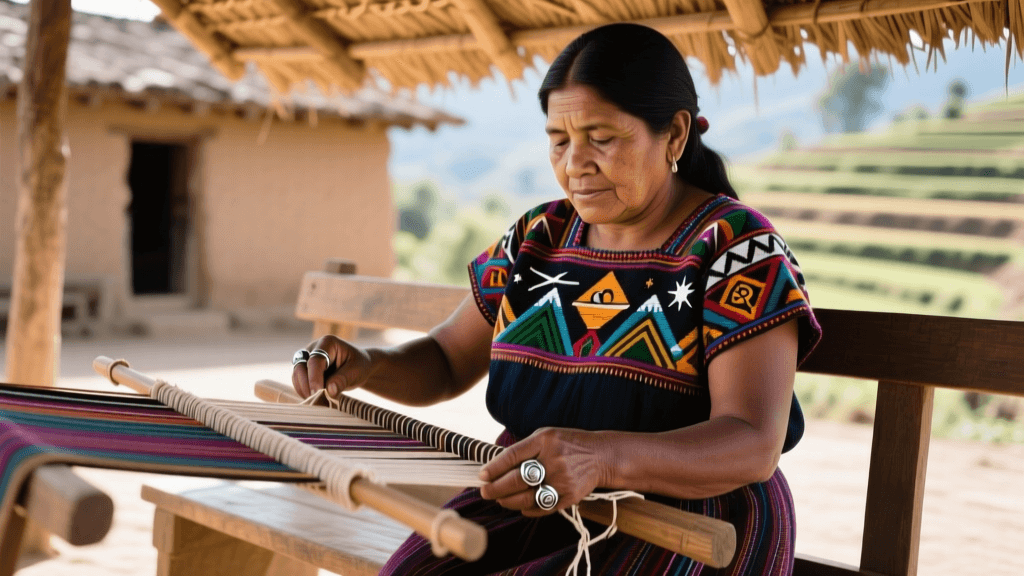
To truly appreciate the value of a Zapotec huipil, one must understand the mechanics of the telar de cintura, or backstrap loom. This pre-Columbian technology relies entirely on the weaver’s body to maintain the warp tension. One end of the loom is anchored to a sturdy post or tree, while the other is secured around the weaver’s lower back via a leather or wooden strap. By leaning forward or backward, the artisan micro-adjusts the tension of hundreds of warp threads, allowing for the precise insertion of the brocade weft.
This process is physically demanding and incredibly time-consuming. A master weaver working on a complex ceremonial huipil may spend up to eight hours a day at the loom, yet only complete a few inches of fabric daily. According to the Smithsonian Center for Folklife and Cultural Heritage, the preservation of backstrap weaving is not just about saving a technique, but protecting an embodied, intergenerational knowledge system that connects Indigenous women to their ancestors.
The Botanical Palette: Natural Dyes in 2026
The most critical factor in determining the authenticity and value of an Oaxacan textile is its color palette. In 2026, the use of natural dyes has become a premium standard, driven by both ecological consciousness and a cultural renaissance.
Cochineal (Dactylopius coccus)
The vibrant reds, magentas, and deep purples of Oaxacan textiles are derived from cochineal, a parasitic scale insect that lives on the nopal cactus. The insects are harvested, dried, and ground into a powder rich in carminic acid. In 2025 and 2026, prolonged drought conditions in the Central Valleys have reduced nopal yields, causing the price of premium, naturally dyed cochineal red cotton to rise by nearly 20%. If a vendor is offering a bright crimson huipil at a 'bargain' price in 2026, it is almost certainly dyed with synthetic aniline or acid reds.
Indigo (Indigofera suffruticosa)
Native Mesoamerican indigo, or añil, requires a complex fermentation vat process. The leaves are soaked, oxidized, and reduced using alkaline wood ash. Authentic indigo penetrates the cotton fiber deeply but will naturally fade and develop a beautiful patina over time, unlike synthetic indigo which often rubs off uniformly or smells faintly of petrochemicals.
Huizache and Iron Mordants
The deep, rich blacks seen in high-end ceremonial garments are often achieved using the pods of the huizache tree, combined with an iron-rich mud mordant. This chemical reaction creates a colorfast black that is entirely botanical, though it requires careful pH management to prevent the iron from degrading the cotton fibers over decades.
Actionable Field Tests for Buyers
When sourcing textiles in Oaxaca or through international importers, you can employ simple, non-destructive field tests to verify natural dyes and fibers.
- The Citrus Acid Test: Cochineal is highly pH-reactive. If you squeeze a drop of fresh lemon or lime juice onto a discrete, hidden area of red thread, authentic cochineal will instantly shift toward a bright orange or pink hue. Synthetic reds will remain unchanged.
- The Burn Test for Fibers: Pull a single, loose thread from the fringe or seam allowance and hold a flame to it. Hand-spun cotton will burn quickly, smell like burning paper, and leave a fine, crushable gray ash. Synthetic polyester blends will melt, smell like sweet plastic, and leave a hard, black bead.
- The Acetone Swab: To test for synthetic indigo, lightly dab a cotton swab moistened with acetone (nail polish remover) on a blue thread. Synthetic dyes will often bleed onto the swab, while properly vat-dyed natural indigo will remain largely colorfast.
2026 Sourcing, Pricing, and Digital Provenance
The ethical sourcing landscape in 2026 has been revolutionized by direct-to-artisan cooperatives and digital provenance tracking. Many leading weaving cooperatives in Oaxaca now embed washable NFC (Near Field Communication) tags or provide blockchain-verified digital passports with high-end garments. Scanning these tags reveals the name of the weaver, the botanical origins of the dyes, and the exact number of hours spent at the loom. This transparency ensures that the artisan receives a living wage and that the cultural IP remains protected, a standard heavily supported by FONART (the National Fund for the Development of Arts and Crafts).
When purchasing directly from cooperatives or verified fair-trade galleries, use the following 2026 pricing matrix to ensure you are paying a respectful, market-accurate wage for the artisan's labor.
| Garment Type | Weave Technique | Estimated Production Time | 2026 Fair Trade Price (USD) |
|---|---|---|---|
| Huipil de Diario (Everyday) | Single-panel, basic brocade | 1 - 2 Months | $120 - $180 |
| Huipil de Fiesta (Ceremonial) | Three-panel, complex supplementary weft | 4 - 6 Months | $450 - $850 |
| Wedding Huipil (San Bartolo Yautepec) | Coyuche cotton, magenta silk brocade | 6 - 9 Months | $1,200 - $2,500 |
Curatorial Care: Washing and Storing Natural Dyes
Owning an authentic, naturally dyed Zapotec huipil requires a commitment to curatorial care. The botanical dyes, while beautiful, are more sensitive to modern laundering habits than synthetic counterparts.
Washing Protocols
Never machine wash or dry clean a hand-woven, naturally dyed huipil. Dry cleaning solvents can strip the natural oils from hand-spun cotton and alter the pH of cochineal, resulting in severe color shifting. Instead, hand wash the garment in cold water using a pH-neutral, synthetic-free detergent, such as a specialized wool wash or a mild castile soap. Submerge the garment gently, avoid any wringing or aggressive agitation, and rinse thoroughly in cool water. Roll the damp huipil in a clean, dry towel to press out excess moisture, then lay it flat on a mesh drying rack in a shaded, well-ventilated area. Direct UV sunlight will rapidly degrade natural indigo and marigold dyes.
Storage and Preservation
When storing your textile collection, avoid wire hangers or wooden hangers that have not been sealed, as the acids in raw wood and the rust from metal can transfer to the cotton. Fold the huipil using acid-free archival tissue paper to prevent hard creases from breaking the warp threads over time. Store the garment in a breathable cotton pillowcase or an archival textile box in a climate-controlled environment, ideally maintaining a relative humidity of around 50% to prevent both mold growth and fiber desiccation. For long-term preservation, the Mexican Ministry of Culture recommends rotating displayed textiles every six months to minimize light exposure and structural stress.
Conclusion
The Zapotec huipil is a triumph of human ingenuity, a garment that weaves together the botany of the Oaxacan landscape, the mathematics of the cosmos, and the enduring resilience of Indigenous women. As a buyer in 2026, your role extends beyond mere consumption; it is an act of cultural stewardship. By demanding transparency, verifying natural dyes, and paying equitable prices, you actively participate in the safeguarding of one of the world's most profound textile traditions. Whether you are acquiring a simple everyday piece or a museum-grade ceremonial garment, approaching the market with respect and knowledge ensures that the backstrap loom will continue to sing for generations to come.