Authentic Guatemalan Huipils 2026: Sourcing & Symbolism Guide
The Living Codex: Introduction to the Huipil in 2026
The huipil is far more than a traditional blouse; it is a wearable codex, a profound expression of Maya cosmology, and a testament to the resilience of Indigenous women across Mesoamerica. As we navigate the global textile market in 2026, the demand for authentic, handwoven Latin American garments has surged among collectors, interior designers, and ethical fashion advocates. However, this heightened interest brings a critical responsibility to distinguish between genuine, community-made textiles and mass-produced imitations that flood tourist markets. For those seeking to understand and acquire these masterpieces, grasping the intricate language of the huipil is essential. This comprehensive guide explores the regional variations, the painstaking backstrap weaving process, the revival of natural dyes, and the vital protocols for ethical sourcing and fair-trade pricing in the current 2026 market.
Anatomy of a Masterpiece: Construction and Design
A traditional huipil is typically constructed from two or three rectangular panels of handwoven cotton, joined together by a decorative, hand-stitched seam known as a randa. The neck opening is not merely a functional cut; it represents the center of the universe, the sun, and the sacred portal through which the wearer’s head emerges into the world. The garment is left intentionally loose and flowing, designed to accommodate the diverse climates of the Guatemalan highlands and lowlands while allowing for ease of movement during daily agricultural and domestic tasks. In 2026, contemporary textile conservators and institutions like the Smithsonian Latino Center emphasize that the structural integrity of these panels—woven without a single cut to the warp threads—preserves the spiritual continuity of the textile. Cutting the fabric is traditionally believed to sever the life force woven into it by the artisan.
Decoding Regional Symbolism and Motifs
Every municipality, or cofradía, in Guatemala possesses its own distinct sartorial language. The motifs woven into the fabric serve as an identifier of the wearer’s hometown, social status, and spiritual beliefs. The recognition of these regional differences is a key component of preserving intangible cultural heritage, a mission heavily supported by UNESCO's Intangible Cultural Heritage initiatives.
Table: Key Weaving Regions and Their Signature Characteristics (2026 Market Data)
| Region / Municipality | Primary Colors | Signature Motifs & Techniques | Estimated 2026 Fair-Trade Price (USD) |
|---|---|---|---|
| San Juan La Laguna | Indigo, earthy browns, soft greens | Local flora, birds, geometric diamonds representing the universe. | $250 - $450 |
| Chichicastenango | Deep reds, purples, yellows | The double-headed eagle, sun gods, intricate floral brocade. | $300 - $600 |
| Nahualá | Navy blue, stark white, crimson | Large geometric animals (deer, dogs), heavy supplementary weft. | $200 - $400 |
| San Mateo Ixtatán | Vibrant magenta, orange, teal | Large starbursts, thick cotton, heavy ceremonial weight. | $350 - $700 |
The Backstrap Loom: A Dance of Tension and Time
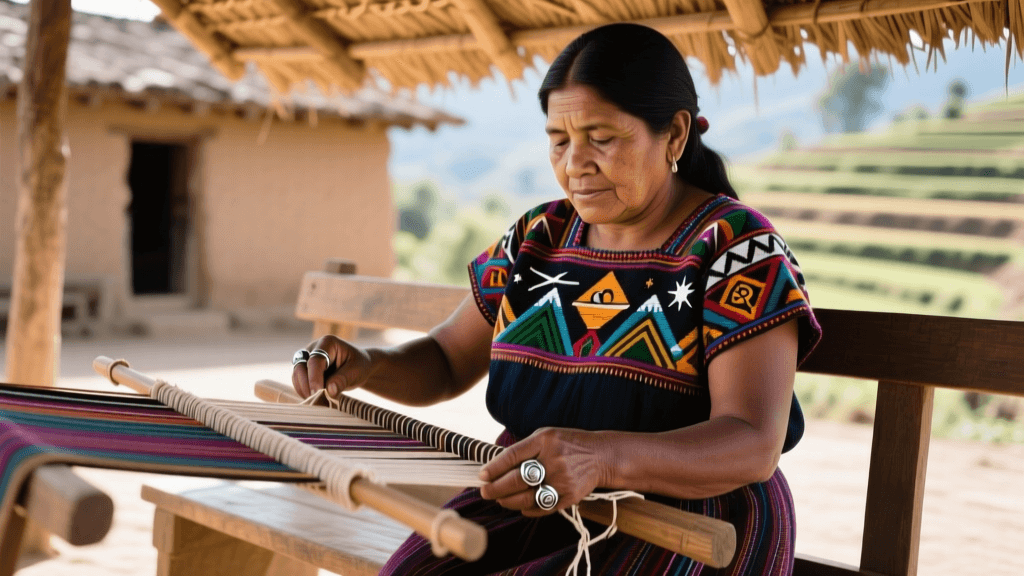
The creation of a huipil relies on the ancient backstrap loom, known locally as the telar de cintura. One end of the loom is tied to a sturdy post or tree, while the other is secured around the weaver’s lower back via a leather or wooden strap. The weaver’s body becomes the tensioning mechanism; by leaning forward or backward, she controls the warp threads. This deeply intimate process means that the rhythm of the weaver’s breath and the physical contours of her body are literally woven into the fabric.
Creating a single, heavily brocaded huipil can take anywhere from three to six months of continuous daily labor. The intricate brocado technique involves adding supplementary weft threads by hand to create the raised, embroidered-looking patterns. Unlike embroidery, which is stitched onto a finished cloth, brocade is woven directly into the textile as it is being created, requiring immense mathematical foresight and memory. This skill is passed down matrilineally, with young girls often beginning to learn the tension and rhythm of the loom by age seven.
The Revival of Natural Dyes in 2026
A major trend defining the Latin American textile arts in 2026 is the aggressive revival and protection of natural dyeing techniques, which had been threatened by cheap synthetic aniline dyes in the late 20th century. Artisans in cooperatives around Lake Atitlán are leading this charge:
- Cochineal (Dactylopius coccus): A parasitic insect found on the nopal cactus. When dried and crushed, it yields a brilliant carminic acid. By altering the pH with lime juice or wood ash, weavers can extract a spectrum of colors ranging from soft pinks to deep purples and vibrant oranges.
- Añil (Indigo): Derived from the Indigofera suffruticosa plant. The leaves are fermented in water to create a vat dye that binds to cotton, producing rich, colorfast blues that only deepen with age and washing.
- Sacatinta: A local plant used to create deep, mourning blacks, often reserved for specific ceremonial garments or older women in the community.
Textiles dyed with these organic materials carry a distinct, earthy scent and a slight irregularity in color saturation that synthetic dyes cannot replicate, making them highly prized by contemporary collectors.
Ethical Sourcing and Fair Trade Pricing in 2026
The ethical fashion landscape of 2026 demands rigorous transparency. Historically, middlemen—often referred to as coyotes—have exploited Indigenous weavers, purchasing hours of painstaking labor for pennies and reselling the garments at massive markups in Western boutique markets. Today, organizations and digital cooperatives are fighting back, allowing weavers to access global markets directly.
When sourcing a huipil, buyers must prioritize direct-to-artisan cooperatives or certified Fair Trade organizations. According to the Fair Trade Federation, genuine fair-trade practices ensure that artisans receive a living wage, work in safe conditions, and maintain ownership of their cultural intellectual property. In 2026, a genuine, newly woven, everyday huipil from a reputable cooperative will generally cost between $200 and $400 USD, reflecting the true cost of organic cotton, natural dyes, and months of labor. Ceremonial huipils, which feature denser brocade and complex iconography, can command prices from $500 to over $900 USD. If you encounter a "handwoven" huipil selling for $40 in a tourist market or online dropshipping site, it is almost certainly machine-embroidered or produced in a sweatshop, as the raw materials alone cost more than that.
Checklist for Authenticating Handwoven Huipils
To ensure you are purchasing an authentic, handwoven garment, examine the textile closely using these criteria:
- Examine the Selvedge: Handwoven panels will have natural selvedge edges where the weft thread turns back. Machine-woven fabrics are cut from large rolls and will show raw, serged, or hemmed edges.
- Look for Irregularities: True backstrap weaving features slight variations in thread tension and motif alignment. Perfect symmetry is a hallmark of computerized jacquard looms.
- Feel the Weight and Drape: Hand-spun or high-quality artisan cotton has a substantial, heavy drape. It should feel dense and robust, not flimsy or sheer.
- Inspect the Reverse Side: In genuine brocade, the pattern threads will float on the back of the fabric. If the design is stitched on with a separate needle and thread (embroidery), it is not a traditional brocaded huipil.
Preserving the Heritage: Care and Maintenance
Owning a handwoven huipil is an act of cultural stewardship. Proper care ensures these textiles survive for generations. Never machine wash or dry clean a handwoven, naturally dyed huipil. The harsh chemicals in dry cleaning will strip natural oils from the cotton and cause organic dyes like cochineal to bleed or fade. Instead, hand wash the garment gently in cold water using a pH-neutral, eco-friendly detergent. Do not wring or twist the fabric; gently press the water out and lay the garment flat to dry in a shaded, well-ventilated area. Direct sunlight will rapidly degrade natural dyes. When storing, fold the huipil with acid-free tissue paper to prevent hard creases from breaking the cotton fibers over time, and keep it in a cool, dry environment away from direct light.
Conclusion
The Guatemalan huipil remains one of the most complex and spiritually significant garments in the Americas. As we move through 2026, the intersection of global fashion and Indigenous rights requires consumers to be more educated and intentional than ever. By understanding the regional symbolism, respecting the immense labor of the backstrap loom, and committing to fair-trade sourcing, collectors and enthusiasts can help ensure that this breathtaking textile tradition continues to thrive for generations to come.