LDS Temple Garments 2026: Complete History & Style Guide
Introduction to Sacred Textiles in the Americas
When exploring the rich tapestry of religious and cultural dress across the Americas, few textile traditions are as deeply personal and historically unique as the temple garments worn by members of The Church of Jesus Christ of Latter-day Saints (often referred to as Mormon garments). Rooted in the early 19th century, this American-born religious tradition developed its own distinct sacred clothing, setting it apart from both Indigenous regalia and European-inherited religious habits. For millions of Latter-day Saints globally, these garments are not merely undergarments; they are a sacred reminder of covenants made in temples, serving as a spiritual shield and a constant physical connection to their faith.
As we navigate through 2026, the design, manufacturing, and distribution of LDS temple garments have evolved significantly. Modern textile innovations, a push toward sustainable fabrics, and an emphasis on inclusive sizing have transformed how these sacred items are produced and worn. This comprehensive guide explores the historical evolution of Mormon temple garments, details the modern styles available in 2026, and provides actionable advice on purchasing, measuring, and caring for these sacred textiles.
The Origins and History of LDS Temple Garments (1840s - 1900s)
The history of the LDS temple garment begins in Nauvoo, Illinois, in the early 1840s. According to church history, founder Joseph Smith introduced the sacred clothing as part of the temple endowment ceremony. The earliest iterations of the garment were heavily influenced by the union suits and long underwear common in the 19th century, but they were modified to include specific, symbolic markings woven or embroidered into the fabric.
These early garments were one-piece, extending to the wrists and ankles, with a high collar and long sleeves. They were designed to be worn day and night, serving as a constant physical reminder of the wearer's spiritual commitments. Throughout the late 19th and early 20th centuries, as Latter-day Saints migrated to the Salt Lake Valley and settled the American West, the garment remained largely unchanged in its modest, full-coverage design. The textile production was often a communal effort, with women in early settlements hand-weaving, cutting, and stitching the garments from locally sourced cotton and wool.
The Mid-Century Shift and Modernization (1950s - 2000s)
As the 20th century progressed, global fashion norms and the realities of modern warfare and industrial labor necessitated changes in the garment's design. During the mid-20th century, the Church leadership authorized a shift from the traditional one-piece union suit to a more practical two-piece design (a separate top and bottom). This transition allowed for greater mobility and comfort, particularly for members serving in the military or working in industrial environments.
Sleeve lengths and inseams were gradually shortened to align with modest contemporary standards while retaining the garment's core symbolic function. By the late 1990s and early 2000s, the introduction of synthetic blends and stretch fabrics revolutionized the comfort of the garments, making them more accessible to members living in diverse, tropical, or highly active climates.
2026 Innovations: Fabric Technology and Sustainable Sourcing
In 2026, the manufacturing of LDS temple garments reflects the broader textile industry's shift toward sustainability and high-performance fabrics. The Church's distribution services have recently introduced several new eco-friendly modal and bamboo-cotton blends. These materials are not only softer and more breathable but also require significantly less water to produce than traditional cotton.
Furthermore, 2026 has seen the expansion of 'performance' lines designed specifically for athletes, laborers, and those in extreme climates. These garments feature advanced moisture-wicking technology, antimicrobial treatments, and four-way stretch capabilities, ensuring that the sacred clothing adapts to the rigorous demands of modern life without compromising modesty or reverence.
Comprehensive 2026 Style and Fit Guide
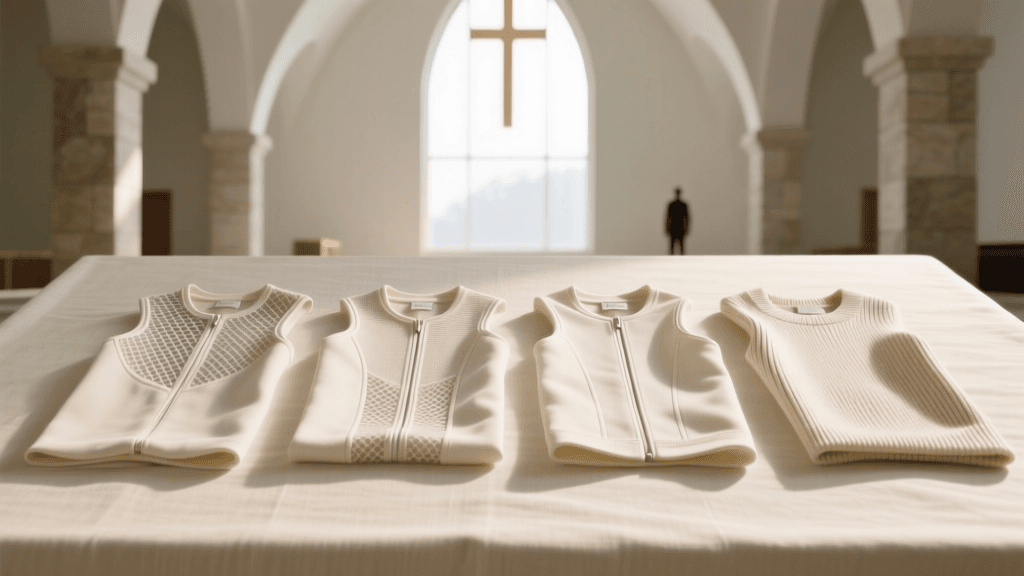
Choosing the right garment style depends on personal comfort, climate, and outerwear requirements. Below is a comparison of the primary styles available through official distribution channels in 2026.
| Style Name | Neckline & Sleeves | Best Fabric for 2026 | Ideal Use Case | Approx. Price (USD) |
|---|---|---|---|---|
| Traditional Crew | Crew neck, cap sleeve | 100% Combed Cotton | Everyday wear, cooler climates | $12.50 |
| V-Neck Classic | V-neck, cap sleeve | Cotton/Modal Blend | Worn under open-collar shirts | $13.00 |
| Scoop Neck | Wide scoop, cap sleeve | Stretch Lace/Mesh | Worn under women's blouses/dresses | $14.50 |
| Athletic Performance | Crew/V-neck, longer sleeve | Moisture-Wicking Microfiber | Sports, heavy labor, hot climates | $16.00 |
| Stretch Mesh | Various necklines | Nylon/Spandex Mesh | Maximum breathability, summer heat | $15.00 |
Note: Prices reflect 2026 Church Distribution pricing and are subsidized to remain accessible to members globally.
Step-by-Step Purchasing and Measurement Guide
Purchasing LDS temple garments is restricted to endowed members of the Church who hold a current temple recommend. According to the General Handbook of The Church of Jesus Christ of Latter-day Saints, garments are considered sacred and should be treated with the utmost respect. Here is how to ensure a proper fit and purchase in 2026:
1. Taking Accurate Measurements
- Chest/Bust: Measure around the fullest part of the chest, keeping the tape measure level under the arms.
- Waist: Measure around the natural waistline (typically just above the belly button) for the top, and the lower waist/hips for the bottom.
- Inseam: For the bottom piece, measure from the crotch down to the desired leg length (knee, mid-thigh, or ankle, depending on the style chosen).
2. Where to Buy
Garments can be purchased in person at Church Distribution centers located near temples and meetinghouses worldwide, or at authorized retailers like Deseret Book. For the most extensive selection, members use the Official Church Distribution Store online. The 2026 online portal features an AI-assisted sizing tool that recommends the best fit based on your measurements and preferred outerwear styles.
Proper Care, Maintenance, and Respectful Disposal
Caring for temple garments involves both practical textile maintenance and spiritual reverence. To extend the life of modern modal and microfiber blends introduced in recent years, it is recommended to wash garments in cold water with a mild, bleach-free detergent. High heat in dryers can degrade the elasticity of spandex and mesh components, so tumble drying on low or air drying is highly recommended.
When garments become worn, torn, or no longer usable, they must be disposed of respectfully. The longstanding practice requires members to carefully cut out the sacred markings (the insignia) and destroy them. The remaining fabric can then be discarded in the regular trash, ensuring that the sacred symbols are never exposed or treated as common refuse. Alternatively, many local distribution centers in 2026 now offer textile recycling drop-offs where old garments are securely broken down and repurposed into industrial insulation, aligning with the Church's newer sustainability initiatives.
Conclusion: A Living Textile Tradition
The Mormon temple garment represents a fascinating intersection of American religious history and evolving textile technology. From the hand-stitched union suits of the 1840s Nauvoo era to the sustainable, moisture-wicking performance fabrics of 2026, the garment has adapted to the needs of its wearers while maintaining its core spiritual purpose. For researchers, cultural historians, and members alike, the ongoing evolution of LDS sacred clothing offers a unique window into how religious dress survives and thrives in the modern era. As the Church continues to expand globally, the garment remains a unifying, deeply personal thread connecting millions of individuals to their faith and to the historical roots of their American-born religion.