Plains Ribbon Skirt Broadcloth Sourcing Guide for 2026
The Cultural Resurgence of the Ribbon Skirt
The ribbon skirt is far more than a simple garment; it is a profound symbol of Indigenous resilience, cultural pride, and spiritual grounding. Originating among the Plains and Woodlands tribes, the ribbon skirt has evolved into a pan-Indigenous emblem worn at powwows, ceremonies, protests, and in everyday life. As we move through 2026, the ribbon skirt continues to experience a massive cultural resurgence, driven by Indigenous youth, fashion designers, and community activists who view the garment as a vital connection to their ancestors. According to the Smithsonian National Museum of the American Indian, the adaptation of European trade materials into distinctly Native artistic expressions represents a profound narrative of survival and innovation.
For Native artisans and those learning to sew traditional regalia, sourcing the correct materials is a critical first step. The drape, weight, and durability of the skirt depend entirely on the base fabric and the quality of the ribbons applied. This comprehensive 2026 sourcing guide will walk you through the best broadcloth options, ribbon selections, and construction techniques to create a traditional Plains ribbon skirt that honors the past while embracing modern textile advancements.
Historical Context: From Trade Cloth to Broadcloth
Before the introduction of European trade goods, Indigenous women crafted skirts and dresses from tanned animal hides, such as deer, elk, and buffalo. These garments were often adorned with porcupine quillwork, shells, and natural dyes. In the 18th and 19th centuries, European traders introduced woven woolens, cotton calicos, and silk ribbons. Native seamstresses quickly adapted these new materials, replacing hide with trade cloth and incorporating bright silk ribbons into their appliqué work.
Today, the traditional base for a ribbon skirt is cotton broadcloth. Broadcloth is favored for its medium weight, tight weave, and ability to hold a crisp hem while still flowing gracefully during movement and dance. In 2026, the textile market offers a wider variety of broadcloth than ever before, including sustainable and organic options that align with traditional Indigenous values of environmental stewardship.
Selecting the Ideal Base Fabric in 2026
Choosing the right base fabric is the foundation of a high-quality ribbon skirt. The fabric must be durable enough to support the weight of multiple tiers of ribbon, yet breathable enough for comfort during long powwow days or summer ceremonies.
100% Cotton Broadcloth
One hundred percent cotton broadcloth remains the gold standard for traditional ribbon skirts in 2026. It is highly breathable, absorbs moisture well, and can withstand the high heat of a steam iron, which is absolutely essential when pressing ribbon hems. High-quality cotton broadcloth typically costs between $9.00 and $14.00 per yard in 2026. When shopping, look for a thread count that feels substantial but not stiff; a fabric that is too thin will sag under the weight of satin ribbons, while a fabric that is too thick will not gather properly at the waistband.
Poly-Cotton Blends and Synthetics
Poly-cotton blends (usually 65% polyester and 35% cotton) are a popular, budget-friendly alternative. Priced around $6.00 to $9.00 per yard, these blends are highly wrinkle-resistant and hold vibrant dyes exceptionally well. However, there is a significant caveat: polyester is sensitive to high heat. When ironing the ribbons onto a poly-cotton base, you must use a lower heat setting or a pressing cloth to prevent the fabric from melting or developing an unwanted synthetic shine. Pure synthetics should generally be avoided for traditional regalia due to their lack of breathability.
Sustainable and Organic Textiles
A major trend in 2026 is the shift toward GOTS-certified (Global Organic Textile Standard) organic cotton broadcloth. Many Indigenous makers are intentionally sourcing organic textiles to reflect traditional ecological knowledge and a commitment to protecting the earth. While organic broadcloth can be slightly more expensive—averaging $15.00 to $22.00 per yard—the environmental benefits and the soft, natural drape make it a highly sought-after material for premium, heirloom-quality skirts.
Choosing Ribbons: Satin, Grosgrain, and Taffeta
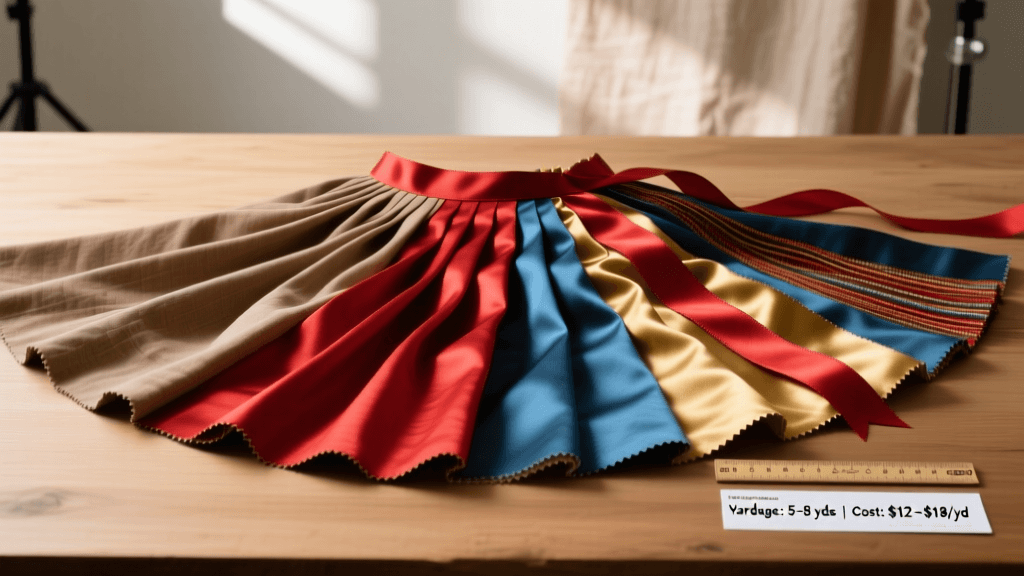
The ribbons are the heartbeat of the skirt, providing color, movement, and personal or clan symbolism. The most common widths used for ribbon skirts are 1-inch, 1.5-inch, and 2-inch. In 2026, makers have access to a vast array of ribbon types, each with its own advantages.
- Double-Faced Satin: This is the most traditional and widely used ribbon. It has a high sheen that catches the sunlight beautifully during dance. However, satin frays easily and requires careful sealing or hemming. Expect to pay $0.40 to $0.80 per yard for high-quality double-faced satin in 2026.
- Grosgrain: Grosgrain features a distinct ribbed texture and a matte finish. It is incredibly durable, resists fraying, and is much easier to sew than slippery satin. It is an excellent choice for everyday wear skirts or for beginners learning the appliqué technique.
- Taffeta: Taffeta ribbons offer a crisp, structured drape with a subtle shimmer. They hold their shape well and are less prone to snagging than satin, making them ideal for skirts that will be worn in crowded environments.
According to recent cultural reports featured in Indian Country Today, modern ribbon skirt makers are also embracing custom digital-printed ribbons in 2026, allowing them to incorporate specific floral beadwork patterns, clan symbols, or landscape motifs directly into the ribbon tiers.
2026 Yardage and Cost Estimation Chart
Calculating the correct yardage is crucial to avoid running short of materials. The standard formula for the base fabric is to multiply your waist measurement by 2.5 to allow for deep, elegant gathers. The length should be measured from your natural waist down to your desired hemline (usually the ankle or mid-calf), plus four inches for the waistband casing and bottom hem. Below is a comprehensive estimation chart based on 2026 material pricing.
| Maker Height | Desired Skirt Length | Base Fabric Yardage | Ribbon Yardage (per tier) | Estimated 2026 Cost |
|---|---|---|---|---|
| Under 5'2" | 34 inches | 3.5 yards | 10 yards | $65 - $85 |
| 5'3" to 5'6" | 38 inches | 4.5 yards | 12 yards | $80 - $105 |
| 5'7" to 5'10" | 42 inches | 5.5 yards | 14 yards | $95 - $125 |
| Over 5'10" | 46 inches | 6.5 yards | 16 yards | $110 - $145 |
Note: Costs are estimated based on purchasing mid-range cotton broadcloth and double-faced satin ribbons. Prices may vary based on vendor location and shipping rates.
Essential Sewing Tools and Construction Techniques
Constructing a ribbon skirt requires patience, precision, and the right tools. To achieve professional, clean lines in 2026, makers should utilize modern sewing aids that honor traditional aesthetics while streamlining the process.
Must-Have Tools for 2026
- Teflon or Roller Presser Foot: Satin ribbons can stick to standard metal presser feet, causing uneven stitching. A Teflon foot glides smoothly over the ribbon, ensuring perfectly straight seams.
- Heavy-Duty Steam Iron: Pressing is the most important step in ribbon appliqué. You must press the fabric over the ribbon edge before sewing to prevent puckering.
- Rotary Cutter and Self-Healing Mat: Broadcloth must be cut perfectly on the grain to ensure the skirt hangs straight. A sharp rotary cutter prevents the fabric from shifting during the cutting process.
The Appliqué Process
The most common method for attaching ribbons is the straight-stitch appliqué. The maker measures and cuts the ribbon, folds the raw edges under, and presses them flat. The ribbon is then pinned or basted to the base fabric and stitched along both the top and bottom edges. Some makers prefer a decorative zig-zag or blanket stitch, but the double straight stitch remains the most durable and traditional method. It is vital to sew in the same direction for all tiers to prevent the base fabric from warping or twisting.
Sourcing Materials from Native-Owned Businesses
As the demand for traditional regalia grows, so does the importance of economic sovereignty within Indigenous communities. Sourcing your broadcloth, ribbons, and sewing notions from Native-owned businesses ensures that your investment directly supports Indigenous families and artisans. While large craft stores are convenient, seeking out specialized Native trading posts provides access to culturally specific colors, patterns, and expert advice. Established suppliers like Crazy Crow Trading Post have spent decades curating materials specifically for Native American craftspeople, offering everything from specialized broadcloth to hard-to-find ribbon widths.
Furthermore, many contemporary Indigenous textile artists now sell hand-dyed broadcloth and custom-loomed ribbons through social media platforms and dedicated online marketplaces. Supporting these small businesses not only guarantees unique, high-quality materials for your skirt but also fosters the continued growth of the Indigenous fashion and textile economy in 2026.
Conclusion
The Plains ribbon skirt is a living, breathing testament to Indigenous adaptability and beauty. By carefully selecting high-quality cotton broadcloth, choosing the right ribbons, and utilizing precise construction techniques, makers can create garments that are both culturally significant and structurally enduring. Whether you are sewing your first skirt for a local powwow or crafting an heirloom piece for a family member, understanding the nuances of 2026 textile sourcing will ensure your creation stands the test of time, honoring the ancestors with every stitch.