Buying Authentic Oaxacan Zapotec Huipils in 2026: A Collector's Guide
The Enduring Legacy of the Zapotec Huipil
The vibrant textile traditions of Latin America represent a living continuum of Indigenous knowledge, mathematics, and artistry. Among the most revered of these traditions is the Zapotec backstrap weaving of Oaxaca, Mexico. As we navigate the global textile market in 2026, the demand for authentic, ethically sourced, and naturally dyed garments has reached unprecedented heights. Collectors, fashion historians, and cultural preservationists are increasingly turning their attention to the traditional Oaxacan huipil—a sleeveless tunic that serves as both a daily garment and a profound canvas of Indigenous identity. However, with rising commercial interest comes the proliferation of synthetic imitations. This comprehensive guide will equip you with the knowledge to identify, evaluate, and care for authentic Zapotec huipils and cochineal-dyed textiles in today’s market.
The huipil (pronounced wee-peel) has been worn by Indigenous women across Mesoamerica for millennia. In the Zapotec communities of the Central Valleys of Oaxaca, such as Teotitlán del Valle and Santo Tomás Jalieza, the huipil is far more than clothing; it is a geographical and spiritual identifier. The motifs woven into the fabric—ranging from stylized agave plants and local fauna to complex geometric representations of the cosmos—tell the story of the weaver’s lineage and village. In 2026, cultural anthropologists and institutions like the Museo Textil de Oaxaca continue to document these shifting patterns, noting how contemporary Zapotec weavers are reviving pre-Columbian brocade techniques that were nearly lost during the industrialization of the late 20th century.
Decoding the Canvas: Common Zapotec Motifs
The visual language of the Zapotec huipil is deeply symbolic, serving as a protective talisman and a marker of cosmic balance. In 2026, textile historians continue to decode these ancient patterns, many of which predate the Spanish conquest. The caracol (snail) represents the cyclical nature of time and the wind god Ehécatl. The rombo (diamond) is a ubiquitous motif symbolizing the universe, with the four points representing the cardinal directions and the center representing the navel of the world or the sun. You will also frequently encounter stylized representations of the árbol de la vida (tree of life) and local wildlife such as the double-headed eagle (a post-colonial adaptation) or the jaguar. Recognizing these motifs not only deepens your appreciation for the garment but also aids in authenticating the piece, as master weavers adhere to strict proportional rules that mass-produced, machine-embroidered imitations often ignore.
Cochineal: The Crimson Heart of Oaxacan Textiles
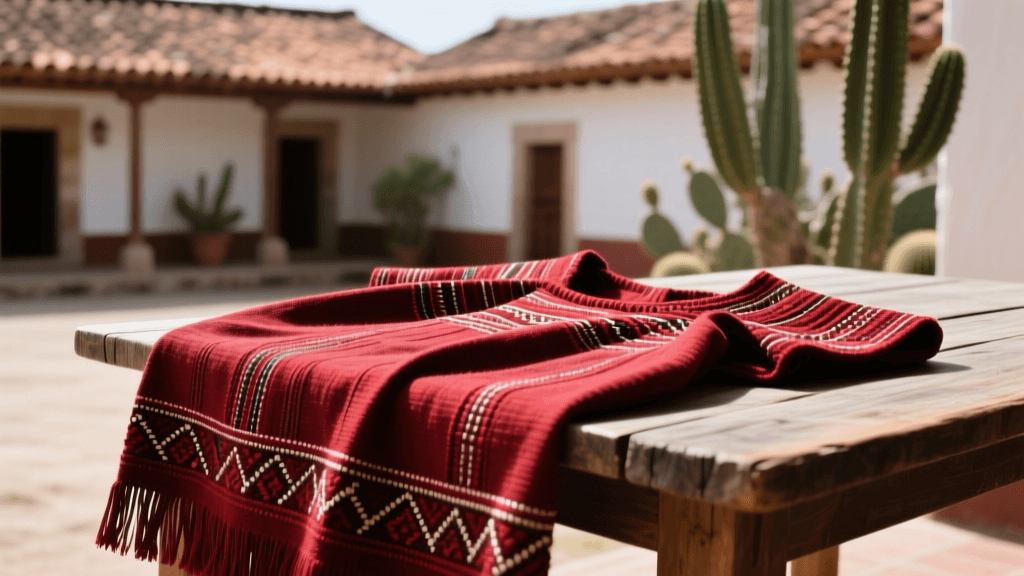
No discussion of Oaxacan textiles is complete without addressing grana cochinilla (cochineal). This brilliant crimson dye is derived from the Dactylopius coccus insect, which lives parasitically on the nopal cactus. Long before European contact, cochineal was a highly prized tribute item in the Aztec Empire. Today, Oaxaca remains one of the world's premier producers of this natural dye. The chemistry of cochineal is fascinating: the core pigment, carminic acid, is highly sensitive to pH levels. By introducing natural mordants and modifiers—such as alum for bright reds, lime juice for vibrant oranges, or wood ash for deep purples and maroons—Zapotec dyers can extract a breathtaking spectrum of colors from a single insect. According to historical and scientific archives documented by Encyclopedia Britannica, cochineal's colorfastness and brilliance remain largely unmatched by early synthetic alternatives, a fact that continues to drive its premium status in the 2026 luxury textile market.
Anatomy of a Masterpiece: Weaving Techniques
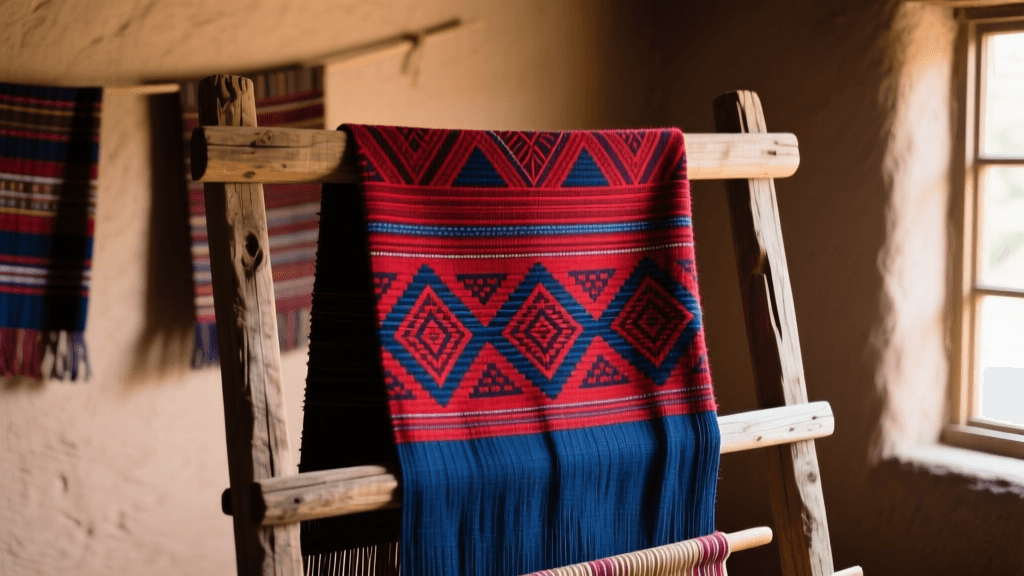
The creation of a traditional Zapotec huipil relies on the backstrap loom, an ancient technology that requires immense physical endurance and spatial intuition. The weaver secures one end of the warp to a fixed post and the other to a strap around her lower back, using her own body weight to maintain tension. This intimate connection between the weaver and the loom allows for the creation of complex supplementary weft brocades. Unlike embroidery, which is applied to the surface of a finished cloth, brocade is woven directly into the fabric structure. The weaver counts warp threads with meticulous precision, often working from memory or oral tradition passed down through generations. A single, finely woven ceremonial huipil featuring full-coverage brocade and natural cotton can take anywhere from four to eight months of daily labor to complete.
Authentication Guide: Natural Cochineal vs. Synthetic Dyes
As the market for Latin American traditional garments expands in 2026, so does the availability of mass-produced, chemically dyed imitations. Distinguishing between authentic cochineal and synthetic aniline dyes is crucial for collectors and ethical consumers. Below is a comparative breakdown to help you evaluate textiles in the field or online.
| Feature | Authentic Cochineal | Synthetic Aniline | Verification Method |
|---|---|---|---|
| Color Depth | Complex, multi-tonal reds with natural variations | Flat, uniform, hyper-saturated reds | Inspect under natural sunlight for depth |
| Scent | Faint earthy, organic aroma when damp | Chemical or odorless | Lightly mist with water and smell |
| Colorfastness | Highly resistant to fading if properly mordanted | Prone to rapid bleeding in water | Rub with a damp white cloth |
| Environmental Impact | Biodegradable, supports local cactus ecosystems | Petroleum-based, toxic runoff | Request artisan cooperative certification |
2026 Market Analysis: Pricing and Ethical Sourcing
Understanding the true cost of these garments is essential for ethical purchasing. In 2026, the price of raw, high-grade Oaxacan cochineal has stabilized but remains a premium commodity due to the labor-intensive harvesting process. Consequently, authentic, naturally dyed huipils command higher prices. A daily-use huipil woven with commercial cotton but featuring natural indigo and cochineal accents typically ranges from $150 to $300 USD. However, a masterwork ceremonial huipil—spun from native coyuche (naturally brown cotton), dyed entirely with wild-harvested cochineal and indigo, and featuring dense, double-sided brocade—can easily fetch between $800 and $2,500 USD from reputable galleries or directly from weaving cooperatives.
When purchasing in 2026, bypass the middlemen in tourist-heavy markets where synthetic knockoffs are prevalent. Instead, seek out established cooperatives and cultural institutions. Organizations supported by FONART (the Mexican National Fund for the Development of Arts and Crafts) often provide certification of origin and natural dye usage, ensuring that your investment directly supports the artisan community. Venues affiliated with the Museo Textil de Oaxaca are exemplary spaces where artisans receive fair compensation, and the provenance of every thread is documented. Buying directly from these sources not only guarantees authenticity but also funds the intergenerational transmission of Zapotec weaving knowledge.
Preservation: Caring for Natural-Dyed Garments
Caring for naturally dyed, hand-woven cotton requires a gentle, deliberate approach. Never machine wash or dry clean a cochineal-dyed huipil. The harsh chemicals in standard dry cleaning will strip the natural mordants, causing the vibrant reds to bleed or fade into dull browns. Instead, hand wash the garment in cold water using a pH-neutral, undyed soap, such as pure castile or specialized textile wash. Submerge the huipil gently, avoiding any aggressive wringing or twisting that could distort the warp tension.
Rinse thoroughly in cold water and roll the garment in a clean, dry towel to absorb excess moisture. Always dry the huipil flat in a shaded, well-ventilated area; direct sunlight will rapidly degrade the carminic acid, leading to irreversible UV fading. For long-term storage, wrap the textile in unbleached, acid-free muslin and keep it in a climate-controlled environment to prevent mold and fiber brittleness.
Conclusion
The Oaxacan Zapotec huipil is a triumph of human ingenuity and a vital expression of Indigenous resilience. By understanding the intricate processes of backstrap weaving and cochineal dyeing, collectors and enthusiasts in 2026 can make informed, respectful purchasing decisions. Preserving these textile arts requires more than mere appreciation; it demands a commitment to ethical sourcing, fair compensation, and meticulous conservation, ensuring that the looms of Oaxaca continue to sing for generations to come.