NYC vs LA Garment Districts 2026: Sourcing Guide
The Evolution of American Fashion Hubs in 2026
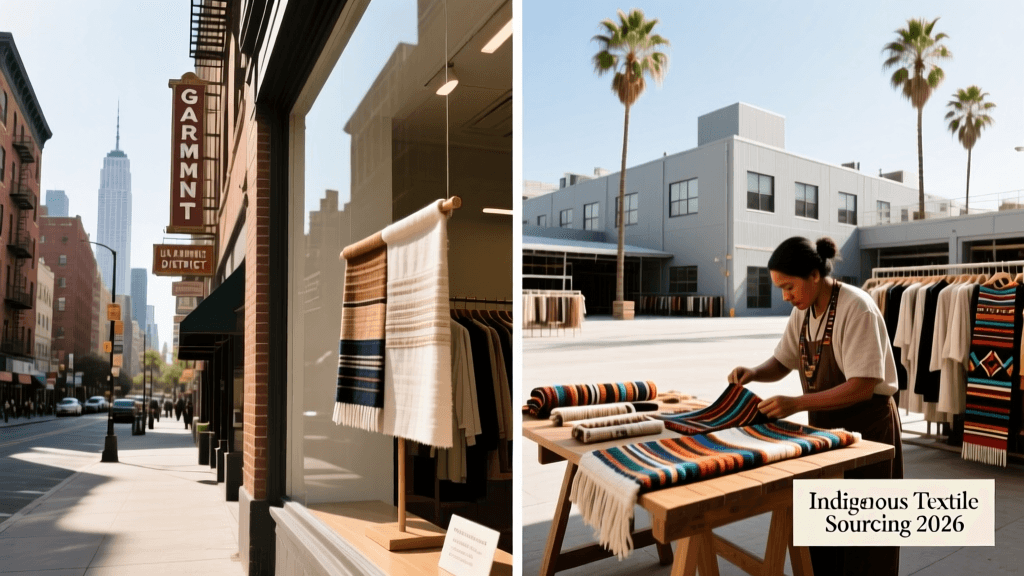
As we navigate the fashion landscape in 2026, the United States remains a critical nexus for textile sourcing, manufacturing, and design innovation. For creators focusing on Americas and Indigenous traditional garments, regalia, and culturally inspired contemporary fashion, understanding the physical hubs of American production is essential. The two undisputed titans of this industry are the New York City Garment District and the Los Angeles Fashion District. While both offer unparalleled access to fabrics, trims, and manufacturing partners, they serve distinctly different purposes, cater to different aesthetics, and operate under unique business rhythms.
In 2026, the push for 'onshoring' and sustainable, transparent supply chains has revitalized these districts. Designers are no longer just looking for the cheapest yardage; they are seeking eco-friendly dyes, ethically sourced wools, and specialized trims that honor traditional craftsmanship without resorting to cultural appropriation. Whether you are sourcing heavy melton wool for traditional Native American ribbon shirts, vibrant embroidery threads for Latin American huipiles, or sustainable selvedge denim for Indigenous streetwear brands, knowing whether to book a flight to JFK or LAX will save you thousands of dollars and hundreds of hours.
Navigating the NYC Garment District: Heritage, Trims, and High-End Textiles
Located in the heart of Midtown Manhattan, roughly between 34th and 42nd Streets, the NYC Garment District is a historic powerhouse. According to the Save the Garment Center initiative, the district has successfully pivoted in 2026 to focus on high-end, low-volume production, bespoke tailoring, and specialized theatrical and traditional garment supplies. For Indigenous and traditional garment makers, NYC is the ultimate destination for premium trims, hardware, and luxury natural fibers.
Top Sourcing Targets in NYC
- Pacific Trimming (W 38th St): An absolute goldmine for creators of Native American powwow regalia and traditional leatherwork. In 2026, their inventory of glass seed beads, brass tacks, leather lacing, and specialized fringe remains unmatched. You can source authentic Czech glass beads and high-grade vegetable-tanned leathers necessary for intricate beadwork and traditional moccasin construction.
- B&J Fabrics (W 38th St): For designers incorporating luxury natural fibers into modern Indigenous formalwear, B&J offers premium silks, raw linens, and high-end wool blends. Their 2026 collection features a robust selection of traceable, ethically sheared wools that serve as excellent base materials for winter garments.
- New York Elegant Fabrics: Known for their extensive library of swatches, this showroom is ideal for designers who need to match specific historical colors for museum-quality reproductions of 18th and 19th-century Indigenous and colonial contact-era garments.
The NYC district operates heavily on a showroom model. You must present a valid resale certificate and business credentials to access wholesale pricing. Retail cuts are available in some stores, but the true value lies in building relationships with account managers who can source specific heritage textiles from European and North American mills.
The Los Angeles Fashion District: Volume, Denim, and Latin American Textiles
Spanning over 100 blocks in Downtown Los Angeles, the LA Fashion District is a sprawling, high-energy hub defined by mass manufacturing, contemporary streetwear, and an incredibly strong pipeline to Latin American textile markets. The California Fashion Association notes that LA's dominance in 2026 lies in its nearshoring capabilities, sustainable denim production, and vast wholesale import markets.
Top Sourcing Targets in LA
- Santee Alley: This bustling, open-air-style marketplace is the beating heart of LA's accessible textile trade. For designers creating traditional Latin American garments, Santee Alley offers massive wholesale quantities of cotton yardage, vibrant rayon, and bulk embroidery floss. It is the premier spot for sourcing the foundational materials needed for large-scale Oaxacan-inspired embroidery or Guatemalan textile reproductions.
- California Market Center (CMC): The CMC is where high-volume wholesale happens. In 2026, the CMC has dedicated entire floors to sustainable and nearshored manufacturing. If you are launching an Indigenous-owned streetwear or denim brand, the CMC connects you with local cut-and-sew factories specializing in waterless denim dyeing and organic cotton knits.
- Cooper Design Space: Located nearby, this hub caters to the contemporary and luxury market. It is an excellent resource for designers blending traditional Indigenous motifs with high-end, modern silhouettes, offering access to premium sustainable knits and eco-friendly hardware.
Unlike NYC's vertical showroom buildings, LA requires a lot of walking and driving. The district is segmented: Santee Alley for bargain fabrics and trims, Maple Street for heavy knits and fleece, and the CMC for finished wholesale apparel and high-end manufacturing contacts.
Ethical Sourcing: Avoiding Appropriation in the Districts
A critical consideration for anyone sourcing in the Americas is the ethical line between appreciation and appropriation. In 2026, consumers and cultural advocates are highly vigilant about the misuse of Indigenous and traditional Latin American patterns. Both the NYC and LA districts are flooded with mass-produced, overseas 'tribal' or 'Southwestern' prints that directly rip off sacred Navajo, Hopi, or Zapotec designs.
As a responsible designer or traditional garment maker, you must use these districts for base materials—plain wools, solid cottons, leather, beads, and hardware—rather than pre-printed cultural motifs. If your brand incorporates traditional patterns, the ethical standard in 2026 is to partner directly with Native and Indigenous artisans, cooperatives, or licensed tribal enterprises to create those textiles. Use the garment districts to buy the blank canvas; use community partnerships to provide the cultural art. Always adhere to the guidelines set forth by the Council of Fashion Designers of America (CFDA) regarding cultural intellectual property and sustainable, equitable partnerships.
Head-to-Head Comparison: NYC vs LA in 2026
| Feature | NYC Garment District | LA Fashion District |
|---|---|---|
| Primary Focus | High-end apparel, bespoke, theater, luxury trims | Contemporary, streetwear, denim, mass wholesale |
| Best For Indigenous Makers | Glass beads, leather fringe, luxury wool, brass hardware | Bulk cotton, embroidery thread, sustainable denim, cut-and-sew |
| Minimum Order Quantities | Low (many shops allow retail or small wholesale cuts) | High (strict wholesale minimums, roll-only purchases) |
| Manufacturing Base | Sample makers, high-end tailoring, small-batch | Large-scale factories, nearshored sustainable production |
| 2026 Industry Trend | Tech-integrated inventory, heritage preservation | Waterless dyeing, Latin American import expansion |
Actionable Sourcing Strategies for 2026
To maximize your sourcing trip to either coast, follow these practical steps:
- Secure Your Resale Certificate: In 2026, almost all legitimate wholesale showrooms in both NYC and LA require a state-issued resale certificate or a registered business license to view wholesale pricing. Apply for this at least a month before your trip.
- Map Your Micro-Districts: Do not wander aimlessly. In NYC, focus strictly on West 38th and 39th Streets for the highest concentration of fabric and trim showrooms. In LA, dedicate one day entirely to Santee Alley for trims and cottons, and a separate day for the CMC and Cooper Design Space for manufacturing contacts.
- Request Swatch Books First: Shipping heavy fabric rolls is expensive. Utilize the 2026 standard of digital inventory portals. Most NYC showrooms will mail you a physical swatch book or provide access to their digital 3D fabric libraries so you can test drape and weight before committing to a minimum order quantity (MOQ).
- Vet Your Supply Chain: When buying 'Native-inspired' or 'Andean' textiles in the districts, demand certificates of origin. If a vendor cannot prove the textile was woven by an Indigenous cooperative or licensed artisan, walk away. The industry standard now demands radical transparency.
Conclusion
Whether you are outfitting a traditional dance troupe, launching a luxury Indigenous fashion label, or preserving historical Latin American garment-making techniques, the NYC and LA garment districts remain indispensable resources in 2026. NYC offers the precision, heritage trims, and luxury fibers required for intricate, high-end traditional work. LA provides the volume, sustainable manufacturing infrastructure, and vibrant cotton markets necessary for scalable, everyday traditional and contemporary wear. By understanding the unique strengths of each hub and committing to ethical, culturally respectful sourcing, you can build a supply chain that honors the rich textile traditions of the Americas while competing on the global fashion stage.