NYC vs LA Garment Districts 2026: Sourcing Indigenous Apparel
The 2026 Landscape of American Domestic Manufacturing
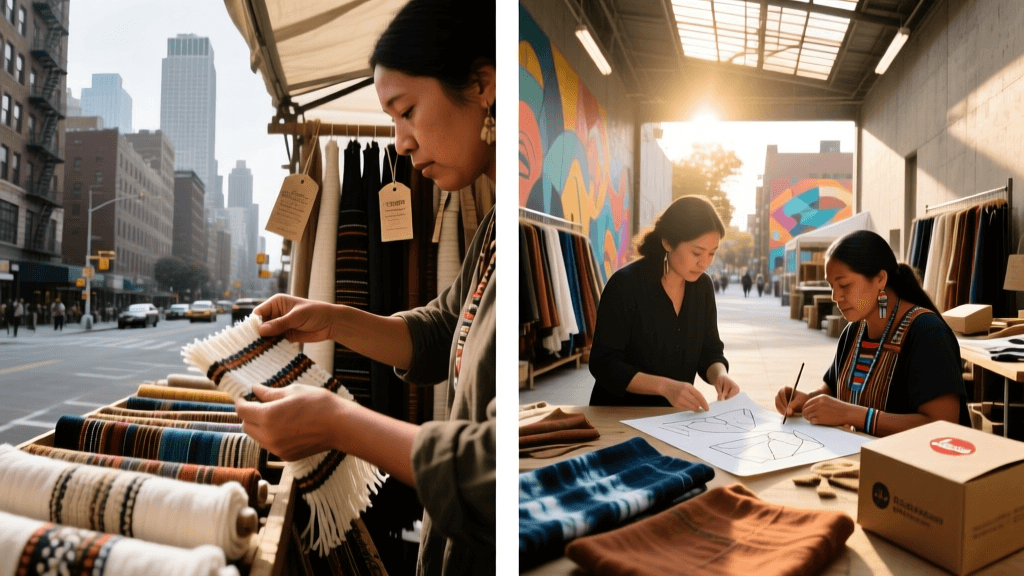
As of 2026, the American fashion industry has experienced a massive resurgence in domestic manufacturing, driven by sustainability mandates, supply chain reshoring, and a powerful movement to protect cultural intellectual property. For Indigenous designers and heritage brands across the Americas, keeping production within the United States is no longer just a logistical choice—it is a vital strategy to prevent the overseas theft and fast-fashion appropriation of traditional motifs, beadwork patterns, and sacred textile designs. When navigating the production of modernized ribbon shirts, wool blanket coats, and indigenous-inspired streetwear, two major hubs dominate the landscape: the New York City Garment District and the Los Angeles Fashion District. This comprehensive 2026 guide breaks down the nuances, costs, and specialties of both hubs to help emerging and established Indigenous designers make informed sourcing decisions.
New York City Garment District: Heritage Tailoring and Heavy Knits
Located in the heart of Manhattan, roughly bounded by 34th and 42nd Streets and from 7th to 9th Avenues, the NYC Garment District remains the premier destination for structured tailoring, luxury outerwear, and complex knitwear. In 2026, ongoing preservation efforts led by organizations like Save the Garment Center have successfully maintained affordable manufacturing zones, ensuring that small-batch designers can still access master pattern-makers and multi-generational sewing contractors.
Best For: Traditional Outerwear and Structured Garments
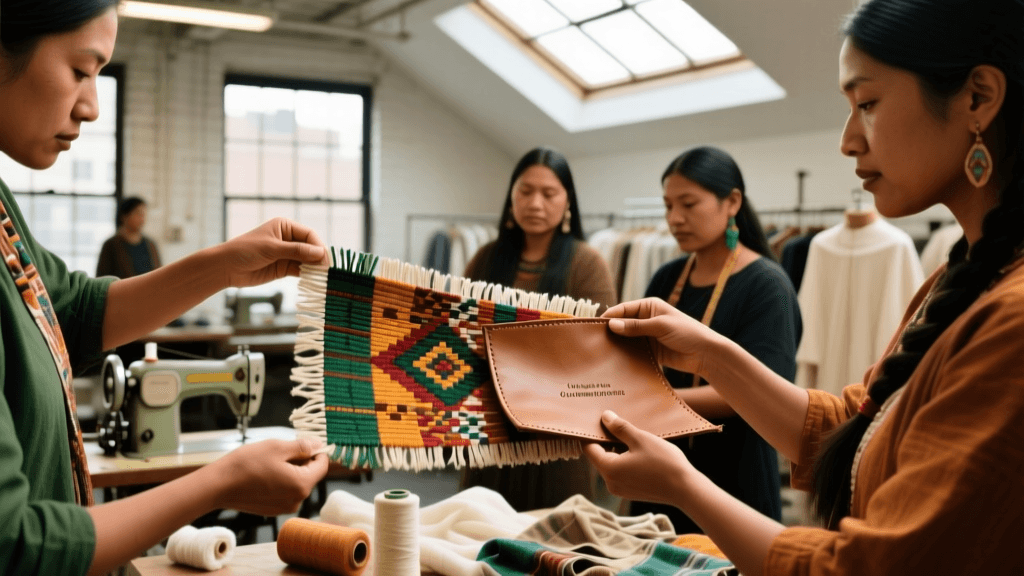
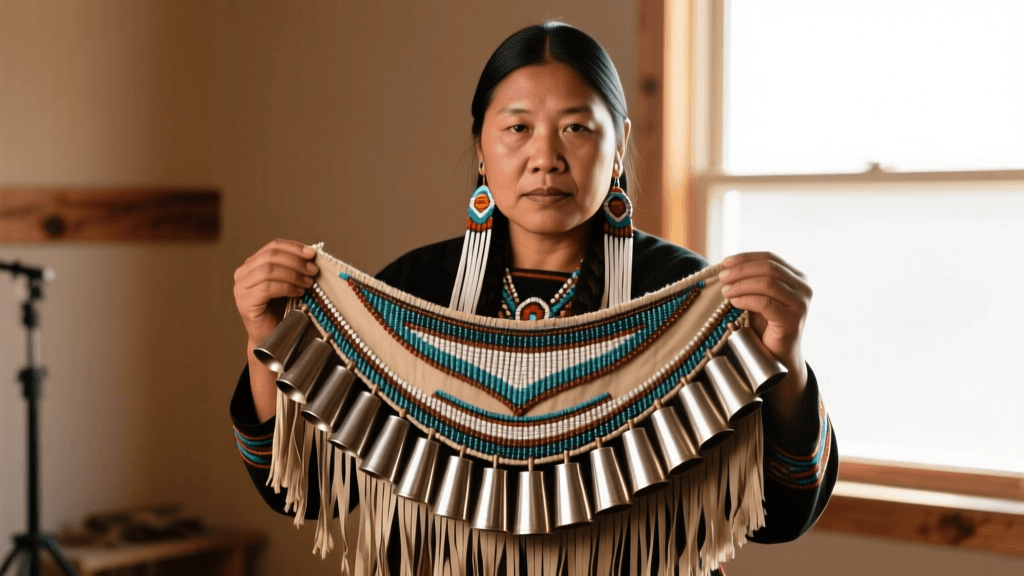
If your brand focuses on heavy Melton wool coats inspired by traditional trade blankets, structured capotes, or intricate tailored pieces that require complex internal canvassing, NYC is your hub. The district excels in handling heavy-weight fabrics and specialized hardware. Furthermore, NYC contractors are highly experienced in integrating delicate, hand-finished elements—such as receiving pre-beaded collars or quillwork patches from Indigenous artisans and seamlessly assembling them into the final garment without damaging the artisanal work.
2026 NYC Sourcing Realities: MOQs and Costs
Due to updated 2026 local labor laws and the high cost of Manhattan real estate, Minimum Order Quantities (MOQs) and Cut, Make, and Trim (CMT) costs in NYC are at a premium. Expect MOQs to range from 150 to 300 units per style for established factories, though some micro-studios in the 38th Street corridor will accept runs as low as 75 units for a higher per-unit fee. CMT costs for heavy outerwear typically range from $85 to $160 per unit, excluding materials.
Los Angeles Fashion District: Denim, Streetwear, and Cut-and-Sew
Spanning a massive footprint south of downtown LA, with epicenters along Pico Boulevard, 9th Street, and Maple Avenue, the LA Fashion District is the undisputed king of casual wear, denim, and cut-and-sew jersey knits. According to the LA Fashion District association, the area has heavily invested in waterless dyeing technologies and sustainable finishing facilities as of 2026, making it a haven for eco-conscious Indigenous streetwear brands.
Best For: Indigenous Streetwear and Sustainable Denim
LA is the ideal sourcing ground for brands blending traditional aesthetics with modern streetwear. If you are producing organic cotton jersey ribbon shirts, heavy-weight fleece hoodies featuring indigenous graphic prints, or selvedge denim jackets designed to be hand-painted or embroidered post-assembly, LA’s vast network of cut-and-sew contractors is unmatched. The district also boasts unparalleled access to sustainable washing and laser-finishing facilities, allowing designers to create distressed, heritage-look denim without the environmental toll of traditional water-heavy laundering.
2026 LA Sourcing Realities: MOQs and Costs
Los Angeles remains highly accessible for emerging brands. In 2026, many LA contractors specialize in small-batch production, with MOQs frequently starting at just 50 to 100 units per style. CMT costs are generally lower than in NYC, ranging from $35 to $95 per unit for cut-and-sew knits and denim. The sheer density of fabric jobbers and importers on 9th Street also means you can source deadstock organic cotton and recycled poly-blends at a fraction of the cost of East Coast suppliers.
Head-to-Head Comparison: NYC vs. LA (2026 Data)
To help you decide which hub aligns with your brand's specific heritage and apparel needs, review the comparative data below based on Q1 2026 industry averages.
| Feature | NYC Garment District | LA Fashion District |
|---|---|---|
| Primary Specialties | Heavy wools, tailored outerwear, complex knits, luxury finishing | Denim, cut-and-sew jersey, streetwear, sustainable washing/dyeing |
| Average MOQ (2026) | 150 - 300 units (Micro-studios: 75+) | 50 - 150 units |
| CMT Cost Range | $85 - $160 per unit | $35 - $95 per unit |
| Standard Lead Time | 8 - 14 weeks | 4 - 8 weeks |
| Best Garment Types | Wool blanket coats, capotes, tailored regalia, structured vests | Ribbon shirts, denim jackets, graphic fleece, casual streetwear |
| Sustainability Focus | Deadstock luxury fabrics, zero-waste pattern cutting | Waterless denim finishing, organic cotton jobbers, recycled poly |
Sourcing Sustainable and Culturally Significant Textiles
A major challenge for Indigenous designers is sourcing textiles that honor traditional aesthetics while meeting modern sustainability standards. In 2026, both districts have adapted to this demand, but in different ways.
- In NYC: Focus on the luxury deadstock market. Stores and specialized jobbers in the 38th Street area frequently carry high-end Italian and British wools, heavy brocades, and melton coatings that are perfect for winter heritage collections. Buying deadstock not only reduces environmental impact but also ensures your garments have a premium, tactile feel that honors the quality of traditional hand-woven trade cloths.
- In LA: Focus on certified organic and recycled basics. The Maple Avenue corridor is packed with wholesalers offering GOTS-certified organic cotton canvas, heavy-weight French terry, and hemp-blend twills. These fabrics are ideal for everyday indigenous streetwear and provide a sturdy, reliable base for post-production embroidery, beadwork, or natural plant-based dyeing.
4 Actionable Steps for First-Time Sourcing in 2026
Navigating these districts can be overwhelming. Follow these actionable steps to ensure a successful production run for your heritage apparel brand.
1. Finalize Culturally Accurate Tech Packs
Factories in both NYC and LA require comprehensive tech packs before quoting a price. For traditional garments like ribbon shirts, your tech pack must include precise measurements for ribbon placement, applique widths, and specific stitch types (e.g., zigzag vs. straight stitch for ribbon edges). Clearly note if certain elements (like beadwork or quillwork) will be completed by external artisans and attached later by the factory.
2. Protect Your Cultural Intellectual Property
One of the primary reasons Indigenous designers choose domestic manufacturing in 2026 is IP protection. Before sharing your tech packs and traditional motif designs with any contractor in either district, require them to sign a robust Non-Disclosure Agreement (NDA). Domestic factories are bound by US copyright and contract law, drastically reducing the risk of your sacred or family-specific patterns being leaked to overseas fast-fashion manufacturers.
3. Schedule Sourcing Trips During Off-Peak Seasons
Timing is everything. To secure the best contractors and fabric allocations, plan your sourcing trips to NYC or LA during the off-peak manufacturing windows. For Fall/Winter collections (heavy wools, outerwear), visit NYC in late January or February. For Spring/Summer collections (lightweight jersey, denim), visit LA in August or September. Walk-ins are rarely successful in 2026; always email factory managers at least two weeks in advance to schedule showroom appointments.
4. Negotiate Tiered MOQs for Sampling
Do not commit to a 300-unit run without a physical sample. Negotiate a tiered contract: pay a premium for a single prototype (usually $250-$500 in NYC, $150-$300 in LA), followed by a 5-piece size-run sample. Only authorize the full bulk production once the size-run samples have been tested for shrinkage, seam durability, and the structural integrity of any integrated traditional textiles.
Conclusion
The choice between the NYC Garment District and the LA Fashion District in 2026 ultimately depends on your brand’s specific garment focus, budget, and production scale. NYC remains the unparalleled choice for luxury heritage outerwear, structured tailoring, and complex knitwear, offering a level of artisanal finishing that justifies its higher price point. Conversely, LA offers agility, lower MOQs, and world-class sustainable denim and cut-and-sew capabilities, making it the perfect incubator for modern Indigenous streetwear and everyday apparel. By leveraging the unique strengths of these American fashion hubs, Indigenous and heritage designers can protect their cultural IP, support local economies, and produce garments that honor the past while shaping the future of American fashion.