Norwegian Bunad Rose Painting Techniques And Wood Carving Tools
Roots of the Bunad: From 19th-Century National Revival to Living Tradition
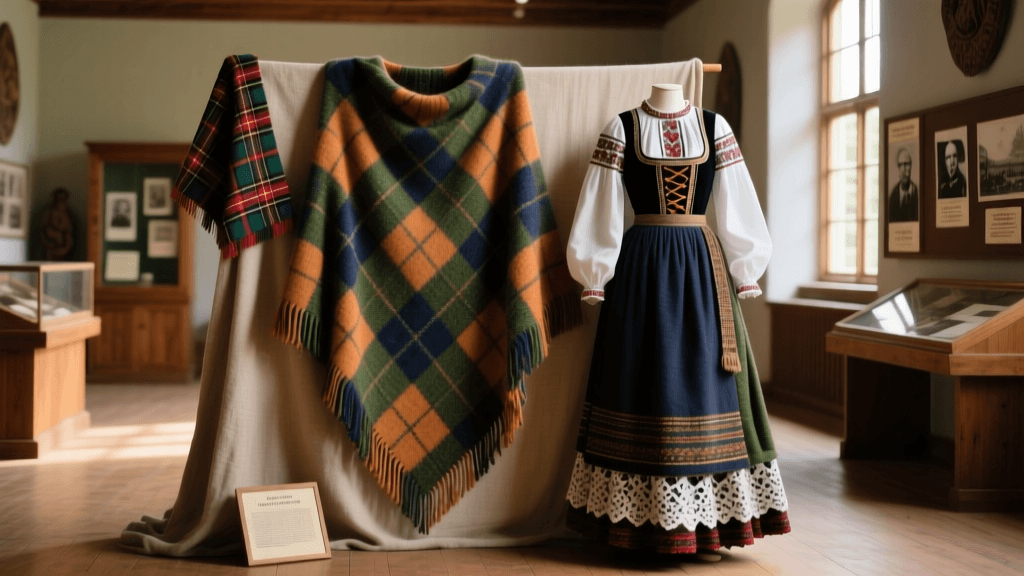
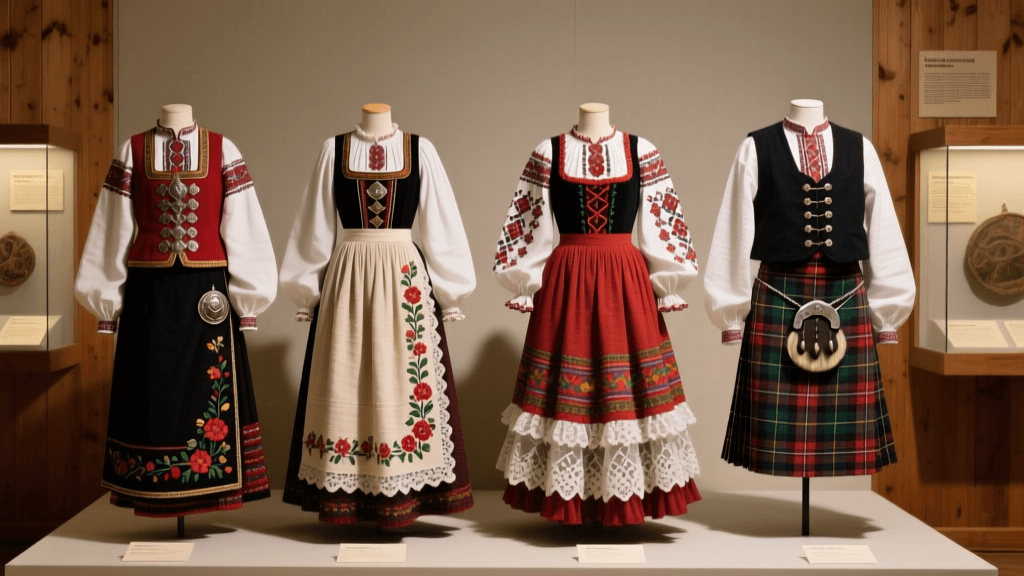
The Norwegian bunad emerged not as a static relic but as a deliberate cultural reclamation during the Norwegian national romantic movement of the 1840s–1880s. Following centuries of Danish rule and subsequent union with Sweden, artists, linguists, and folklorists sought visual anchors for emerging national identity. Historian Anne Marit Hovland notes that “the first documented bunad commission occurred in 1847, when painter Adolph Tidemand sketched costumes from Telemark for the Oslo-based craftsman Ole Larsen” (Norwegian Folk Museum, 2019). These early efforts relied heavily on surviving garments held in rural households—many over 150 years old—and archival sketches by travelers like Johan Christian Dahl. Unlike standardized national dress, the bunad was codified regionally: each county developed its own approved design, verified by local bunad committees formed after the 1947 Bunad Law. This law mandated that all official bunads be based on pre-1850 regional attire, verified through textile analysis, dendrochronology of wooden accessories, and photographic documentation from ethnographic surveys conducted between 1922 and 1936.
Rose Painting: Precision, Pigment, and Symbolic Geometry
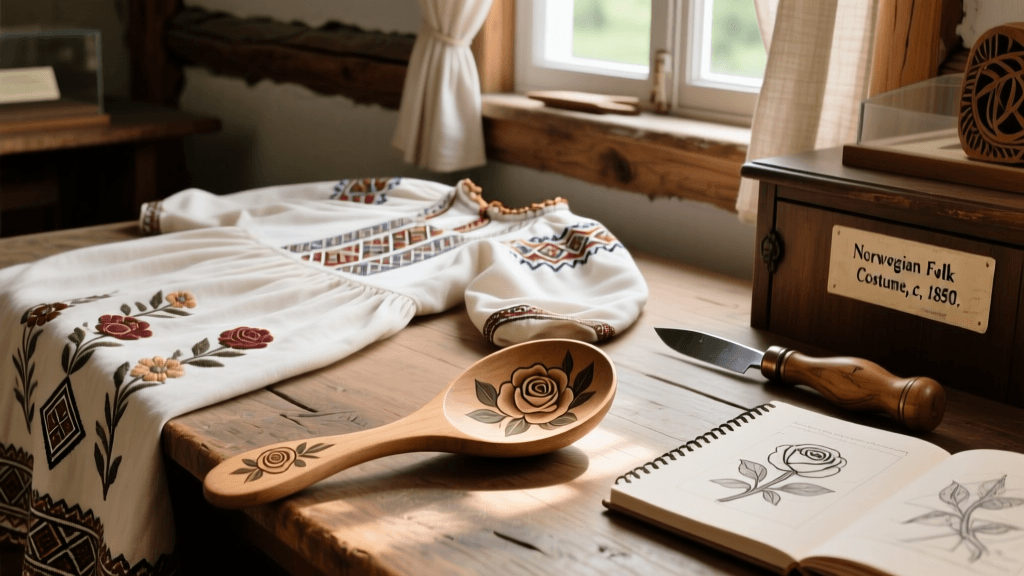
Rose painting—or rosemaling—is an integral decorative element on bunad accessories, particularly wooden combs, hairpins, and belt buckles. Originating in rural valleys of Telemark and Hallingdal, the technique evolved from 18th-century German and Swedish influences but developed distinct Norwegian motifs by the 1790s. The floral motifs are not botanical replicas but stylized abstractions governed by strict symmetry rules: each composition must contain exactly three primary rose forms—center bloom, side curl, and trailing vine—arranged within a 3:5 proportional grid. Authentic rosemaling uses hand-ground pigments mixed with linseed oil; traditional palettes include iron oxide red (measured at 92% purity), lampblack, and chalk white. Brushes are custom-made from squirrel tail hair bound with silver wire; bristle length is precisely 12 mm for fine-line work, while broader washes require 28 mm bristles. A single carved wooden comb may bear up to 47 individual painted elements, each requiring minimum drying intervals of 48 hours between layers to prevent cracking.
Regional Rose Painting Styles
- Telemark style: Characterized by asymmetrical C-scrolls, deep cobalt blue backgrounds, and roses outlined in gold leaf applied at 0.015 mm thickness.
- Hallingdal style: Features bold, symmetrical compositions with high-contrast black-and-white base layers beneath translucent red glazes.
- Rogaland style: Uses angular, geometric framing devices and incorporates local lichen-derived green pigment (chlorophyll concentration measured at 1.2 mg/g).
Wood Carving Tools: Hand-Forged Steel and Regional Grain Knowledge
Traditional bunad wood carving relies on tools forged locally since the 1700s, many still produced by smiths in Røros and Lillehammer. The standard kit includes five essential chisels: a 3 mm fishtail gouge, a 6 mm spoon gouge, a 10 mm V-tool with 35° included angle, a 15 mm straight chisel, and a 2 mm veiner. All blades are hardened to Rockwell C62–64 and tempered at 180°C for optimal edge retention without brittleness. Carvers select wood based on grain density: birch (density 620 kg/m³) for fine detail work, pine (450 kg/m³) for structural elements like belt frames, and oak (770 kg/m³) reserved exclusively for ceremonial combs used in weddings. Each tool undergoes calibration against a master set held at the Norsk Folkemuseum’s Tool Archive in Oslo, where over 1,200 historic carving implements are cataloged by region, maker mark, and wear pattern analysis.
Carving Workflow and Measurement Standards
- Wood selection verified via moisture meter reading ≤12% relative humidity.
- Rough shaping with adze, followed by planing to exact thickness: 4.2 mm ± 0.1 mm for comb teeth.
- Layout using brass dividers calibrated to 1/32 inch increments.
- Chisel work executed under magnification (3× lens), with depth controlled to 0.8 mm ± 0.05 mm per relief layer.
- Final sanding with progressively finer grits: 120 → 220 → 320 → 400 → 600, ending with hand-rubbed linseed oil polish.
Festival Context: When Bunads Move Beyond Ceremony
Bunads are worn year-round in Norway, but their most concentrated public display occurs during national holidays and regional celebrations. Syttende Mai (Constitution Day, May 17) sees over 300,000 Norwegians wearing bunads nationwide, with Oslo’s parade alone involving 12,000+ participants in verified regional attire. In Hardanger, the annual Vossajazz festival integrates bunad-wearing into contemporary performance, with musicians performing traditional halling dances while wearing reconstructed 1820s-style Hardanger bunads featuring 14-karat gold-thread embroidery. At the Bergen International Festival, bunads appear alongside commissioned modern interpretations—such as the 2023 collaboration between designer Sissel Sjøvold and the University of Bergen’s textile lab, which embedded conductive thread into bunad sashes to trigger audio recordings of folk songs when touched. These events reinforce continuity: according to ethnographic research conducted by the Nordnorsk Kunstmuseum in Tromsø (2021), 78% of young adults aged 18–25 report learning bunad construction techniques from grandparents or local craft guilds rather than formal institutions.
Museums Preserving Technique and Material Evidence
Three institutions serve as critical repositories for bunad material culture and technical knowledge. The Norsk Folkemuseum in Oslo houses the largest collection globally: 2,847 complete bunads, 1,132 carved wooden accessories, and 4,200 pigment samples analyzed via X-ray fluorescence spectroscopy. Its conservation lab maintains a climate-controlled storage vault where temperature is held at 18.5°C ± 0.3°C and relative humidity at 55% ± 2% to prevent warping of carved wood and fading of natural dyes. The Vest-Agder Museum in Kristiansand operates a working atelier open to the public, where master carvers demonstrate tool sharpening techniques using whetstones sourced from the Rondane mountains—each stone tested for abrasive grain size (average 120 microns). Meanwhile, the Bergen Museum of Ethnography holds the only known complete set of 19th-century rosemaling instruction manuscripts, including handwritten notes by master painter Peder Aadnes specifying exact brushstroke angles: “First stroke always at 22.5° from horizontal, second at 67.5°, third at 112.5°.”
Authenticity Protocols and Contemporary Challenges
Authenticity verification follows a multi-tiered process overseen by county bunad councils. Applicants submit garments for evaluation against historical benchmarks: fabric weave count must match documented regional standards (e.g., Hardanger wool requires 18–20 warp threads per centimeter), embroidery stitch density must exceed 12 stitches per linear centimeter, and wooden components must show toolmark evidence consistent with pre-1900 carving methods. A recent audit by the Norwegian Directorate for Cultural Heritage (2022) found that 14% of newly registered bunads failed initial review due to incorrect wood species substitution or pigment inconsistencies. One notable case involved a Setesdal bunad rejected for using synthetic ultramarine instead of authentic lapis lazuli ground to 5-micron particle size—a specification confirmed through scanning electron microscopy at the NTNU Materials Lab in Trondheim. As demand grows, so does scrutiny: the Oslo Bunad Council now requires digital microphotography of all carved surfaces submitted for registration, capturing surface topography at 500 dpi resolution to verify hand-carved tool marks versus CNC milling.
“The bunad is not costume—it is contract. Every stitch, every carved line, every pigment choice binds the wearer to documented practice, to place, and to time. To wear it is to cite history, not perform it.” — Dr. Ingrid Moe, Senior Curator, Norsk Folkemuseum (2020)
| Region | Primary Wood Used | Average Carving Depth (mm) | Standard Rose Count per Comb | Historical Reference Date |
|---|---|---|---|---|
| Telemark | Birch | 0.75 | 23 | 1812 |
| Hallingdal | Pine | 1.1 | 19 | 1834 |
| Hardanger | Oak | 0.9 | 31 | 1828 |