Authentic Norwegian Bunads 2026: Regional Styles Guide
The Resurgence of Authentic Regional Dress in 2026
As we navigate through 2026, the European folk dress revival has reached unprecedented levels of cultural pride and sustainable craftsmanship. Nowhere is this more evident than in Norway, where the traditional folk costume, known as the bunad, is not merely a historical relic but a living, breathing garment worn at weddings, national holidays, and family milestones. Unlike generic 'folk costumes' sold in tourist shops, an authentic bunad is deeply tied to a specific geographic region, governed by strict historical guidelines, and represents a significant financial and cultural investment.
In 2026, the demand for authentic, locally sourced bunads has surged, driven by a younger generation prioritizing sustainable fashion and heritage preservation. According to recent cultural heritage reports, the waitlist for a custom-tailored bunad from official retailers now averages between 10 and 14 months. This guide explores the intricate regional variations of the Norwegian bunad, the strict rules surrounding traditional silver jewelry, and how to navigate the market for authentic pieces this year.
Understanding the Bunad- og folkedraktrådet
To understand the bunad, one must understand the authority that protects it. The Bunad- og folkedraktrådet (The National Council for Bunad and Folk Costume) operates under the Norwegian Folk Art and Craft Association. This council is the ultimate arbiter of what constitutes an 'authentic' bunad. They base their approvals on rigorous historical research, examining surviving garments, estate inventories, and historical paintings from the 18th and 19th centuries.
'A bunad is not a costume you simply pick because you like the colors. It is a geographical anchor, traditionally tied to the region where you were born, where your family originates, or where you have made your permanent home.' — Guidelines from the Bunad Council, updated for 2026 craftsmanship standards.
The council categorizes garments into different groups, ranging from exact reconstructions of historical folk costumes to newer designs based on regional historical textiles. In 2026, the council has placed a heavy emphasis on material traceability, encouraging the use of climate-neutral, locally spun Norwegian wool and organic European flax linen.
Key Regional Variations: Hardanger, Telemark, and Nordland
With over 400 distinct regional variations documented by the Norwegian Museum of Cultural History, choosing a bunad requires an understanding of regional aesthetics. Below are three of the most iconic and historically significant regional styles.
The Hardangerbunad
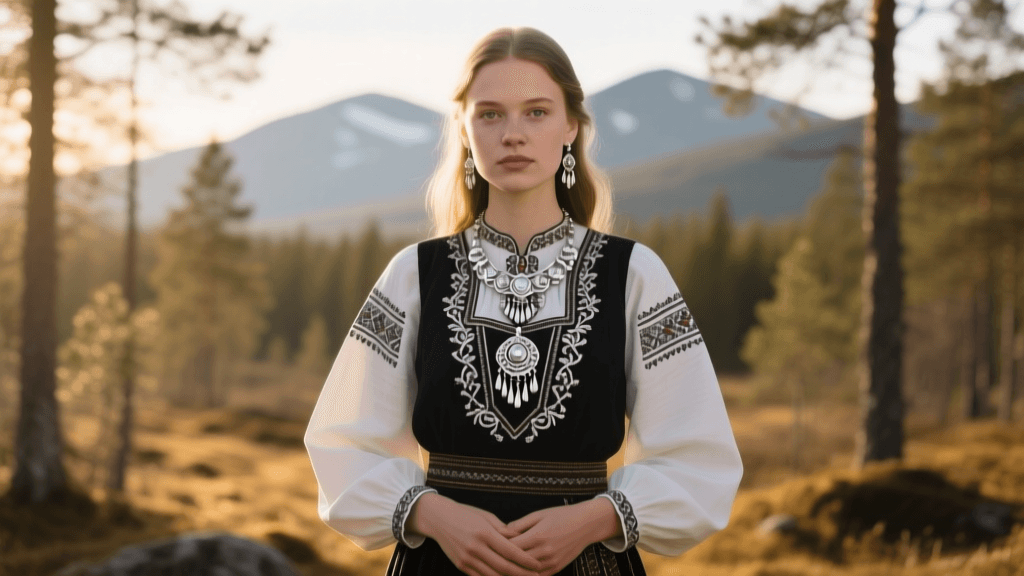
Often referred to as the 'first bunad,' the Hardangerbunad originates from the Hardanger fjord region in Vestland county. It was popularized during the National Romantic period in the early 20th century as a symbol of Norwegian independence. The women's garment typically features a black or dark blue wool bodice and skirt, paired with a white linen apron adorned with intricate hvitsøm (white-on-white Hardanger embroidery). The men's version features a striking white or natural wool vest with floral embroidery, black wool breeches, and a distinctive red or blue wool jacket.
The Telemarksbunad
Telemark is renowned for its vibrant folk art, particularly rosemaling (rose painting), and this translates directly into its textile traditions. The Telemarksbunad is characterized by its rich, deep colors—often dark blue, black, or deep red—and elaborate, multi-colored floral embroidery on the bodice, skirt, and apron. The women's shirt features exquisite cross-stitch or drawn-thread work at the collar and cuffs. In 2026, master embroiderers in Telemark are utilizing naturally dyed wool threads to achieve historical color accuracy that synthetic dyes cannot replicate.
The Nordlandsbunad
Representing Northern Norway, the Nordlandsbunad is inspired by the textile traditions of the Salten and Helgeland regions. The women's bunad is famous for its vibrant blue or black wool base, featuring a distinctive floral brocade or embroidered panel on the bodice that mimics 18th-century imported silk fabrics. The apron is typically made of fine wool or silk, often featuring a woven or embroidered border at the hem. It is a favorite among those with Northern Norwegian heritage due to its striking elegance and the unique, heavier silver jewelry required to accompany it.
The Crucial Role of Traditional Silver (Bunadsølv)
A bunad is incomplete without its accompanying silver, known as bunadsølv. The silver is not merely decorative; historically, it served as a portable bank account and a display of a family's wealth and social standing. In 2026, with the fluctuating global price of precious metals, a full set of high-quality, hand-forged bunad silver represents a massive portion of the total investment, often costing between $1,500 and $4,000 USD.
The specific silver pieces required vary strictly by region:
- Halssølje (Neck Pin): A large, often circular filigree piece worn at the collar of the linen shirt.
- Brystsmykke (Breast Piece): A chain or brooch that secures the bodice, often featuring hanging 'spoons' or leaves that catch the light.
- Maljer (Buckles): Used to fasten the skirt or bodice, varying in size and oxidization depending on the region.
- Skospenner (Shoe Buckles): Silver or brass buckles attached to traditional leather bunad shoes.
- Beltestøler (Belt Fittings): Essential for regions like Telemark and Setesdal, where wide leather belts are heavily studded with silver plates.
In regions like Hordaland and Telemark, the silver is traditionally heavily oxidized (darkened) to contrast with the white linen and dark wool. Conversely, in Sunnmøre and parts of Trøndelag, the silver is polished to a bright, mirror-like shine. Mixing oxidized and shiny silver within the same regional outfit is considered a major faux pas in traditional circles.
2026 Pricing, Sourcing, and Authenticity
Purchasing an authentic bunad in 2026 requires diligence. The market has seen an influx of mass-produced, imported garments that mimic regional styles but fail to meet the material and construction standards set by the Bunad Council. To ensure authenticity, buyers are strongly advised to purchase through official Husfliden (Folk Art and Craft) retail stores or certified local artisans.
Below is a comparative breakdown of the estimated costs and requirements for three major regional bunads in 2026.
| Regional Bunad | Primary Colors | Apron Style | Avg. 2026 Cost (Garment Only) | Required Silver Pieces |
|---|---|---|---|---|
| Hardangerbunad | Black/Dark Blue | White Linen with Hvitsøm | $2,800 - $3,500 USD | Neck pin, breast brooch, cufflinks, belt buckle |
| Telemarksbunad | Deep Blue/Black/Red | Wool with Rosemaling Embroidery | $3,200 - $4,500 USD | Neck pin, breast piece, belt fittings, shoe buckles, hair pins |
| Nordlandsbunad | Blue/Black | Wool/Silk with Woven Border | $2,500 - $3,200 USD | Neck pin, bodice buckles, apron pin, shoe buckles |
Note: Prices reflect custom-tailored garments using approved Norwegian wool and hand-embroidery. Adding a full set of traditional hand-forged silver will typically add $1,500 to $4,000 to the total cost.
The Foundation: Undergarments and Headwear
While the wool skirt and embroidered bodice draw the eye, the foundation of the bunad is equally important. The skjorte (linen shirt) is a masterpiece of textile art in its own right. In regions like Valdres and Gudbrandsdal, the shirts feature complex drawn-thread work (dragsaum) and cutwork. In 2026, the shift toward 100% organic, unbleached European flax linen has improved both the durability and historical accuracy of these garments. A high-quality, hand-embroidered linen shirt can cost upwards of $800 USD.
Headwear is another strictly regulated element. Historically, unmarried women wore their hair in braids, often adorned with a floral crown or a simple ribbon, while married women were required to cover their hair with a skaut (linen headdress) or a lue (embroidered cap). While modern wearers in 2026 are more relaxed about these marital status indicators, wearing the correct regional headwear is still expected at formal events like weddings and National Day (Syttende Mai) celebrations.
Caring for Your Heritage Garment
An authentic bunad is an heirloom meant to be passed down through generations. Proper care is essential to preserve the wool, linen, and silver.
- Storage: Never store a bunad in plastic, as this traps moisture and promotes mold. Use a breathable cotton garment bag and store it in a cool, dark, and dry environment. Cedar blocks are recommended in 2026 as a natural, non-toxic moth deterrent.
- Cleaning: Wool bunads should rarely be washed. Instead, air them out outdoors on a dry, breezy day. Spot clean with a damp cloth and mild wool detergent. For deep cleaning, always use a professional dry cleaner who specializes in historical textiles.
- Silver Maintenance: Oxidized silver should never be polished with standard silver dips, as this will strip the intentional darkening from the filigree crevices. Use a soft, untreated polishing cloth only on the raised, shiny surfaces. Bright silver can be cleaned with specialized, non-abrasive silver foams recommended by master jewelers.
Conclusion
The Norwegian bunad is a triumph of regional identity, historical preservation, and sustainable craftsmanship. As we move through 2026, the commitment to authentic materials, ethical silver sourcing, and strict adherence to regional guidelines ensures that these garments remain powerful symbols of cultural heritage. Whether you are tracing your ancestry to the fjords of Hardanger or the northern lights of Nordland, investing in an authentic bunad is a commitment to wearing your history with pride and respect.