Norwegian Bunad Guide 2026: Hardanger, Telemark & Setesdal Costs
Introduction to the Norwegian Bunad in 2026
The Norwegian bunad represents one of the most vibrant and strictly regulated folk dress traditions in Europe. As we navigate the cultural landscape of 2026, the distinction between a true folkedrakt (an unbroken, rural clothing tradition) and a bunad (a 20th-century reconstruction based on historical garments) remains a cornerstone of Scandinavian textile heritage. According to the Store Norske Leksikon, over 70% of Norwegian women and a growing percentage of men own a bunad, wearing them primarily for Constitution Day (Syttende Mai), weddings, and milestone anniversaries.
In 2026, the demand for historically accurate, region-specific bunads has surged, driven by a younger generation's interest in sustainable, multi-generational fashion. However, acquiring an authentic piece requires navigating strict regional guidelines, lengthy tailoring waitlists, and significant financial investment. This guide provides a comprehensive, up-to-date breakdown of three of Norway's most iconic regional costumes: the Hardangerbunad, the Telemarksbunad, and the Setesdalsbunad.
Regional Deep Dive: Hardanger, Telemark, and Setesdal
The Hardangerbunad: The "National" Costume
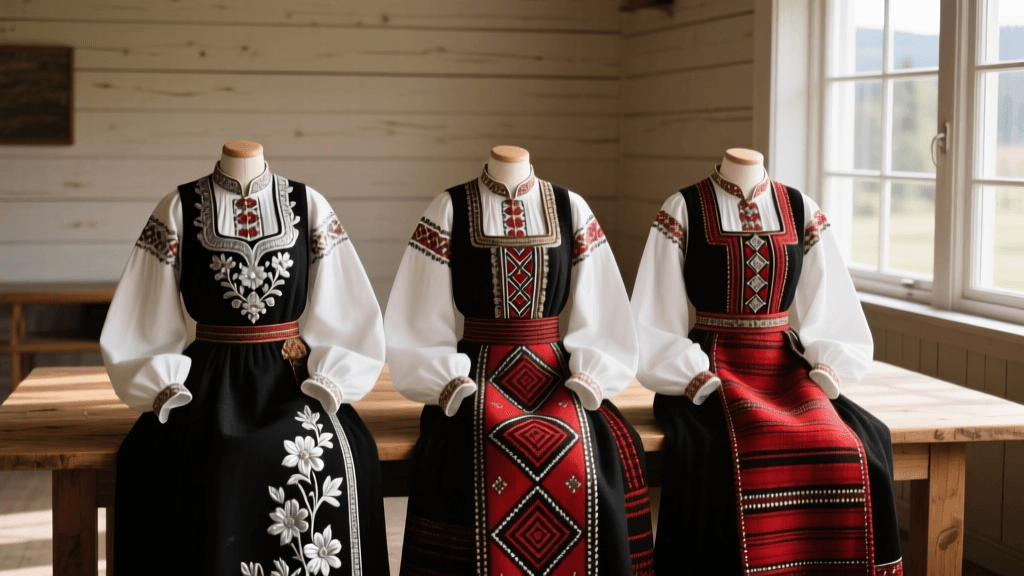
Often referred to as the "national bunad," the Hardangerbunad originates from the Hardanger fjord region in Vestland county. It was one of the first costumes to be revived during the National Romantic period of the late 19th and early 20th centuries. The women's costume is instantly recognizable by its black wool skirt (stakk) featuring a broad green velvet border, paired with a white linen apron adorned with intricate cross-stitch embroidery (korssting) in red, yellow, and green threads.
For 2026, sourcing materials for the Hardangerbunad requires planning. Authentic Heimen Husfliden embroidery kits, which include the pre-printed linen, DMC wool yarns, and structural patterns, currently retail for approximately 8,500 NOK ($810 USD). Because the cross-stitch is traditionally done by the wearer or a family member, the "sweat equity" involved makes this bunad a deeply personal garment. The bodice (liv) is typically black wool with green velvet trim and silver lacing hooks.
The Telemarksbunad: Rosemaling and Beadwork
Telemark county boasts a rich variety of folk costumes, but the most prominent for contemporary wearers is the Øst-Telemark bunad, heavily influenced by the region's famous rosemaling (decorative rose painting). The 2026 standard for the women's Telemarksbunad features a dark blue or black wool skirt and a bodice characterized by elaborate bead embroidery (perlebroderi) that mimics the swirling, floral motifs of painted wooden furniture.
The Telemark bunad is notoriously difficult to construct. The beadwork requires specialized silk threads and glass beads that must be sourced from approved heritage suppliers. In 2026, professional artisans charge upwards of 25,000 NOK ($2,380 USD) solely for the bead embroidery on the bodice and pockets. The shirt (skjorte) features distinct Telemark white-work embroidery (hvitsøm), which requires a master-level understanding of tension and fabric grain to prevent puckering.
The Setesdalsbunad: Heavy Wool and Filigree Silver
The Setesdal valley in Southern Norway preserved its clothing traditions longer than most, meaning the Setesdalsbunad borders closely on a true folkedrakt. The women's costume is constructed from exceptionally heavy, dark wool, designed to withstand harsh mountain winters. The defining visual elements are the striking white and black woven bands (bånd) that trim the skirt and bodice, and the sheer volume of oxidized silver jewelry required.
According to guidelines maintained by the Norsk Folkedraktforum, the Setesdal bunad demands a specific silhouette that does not conform to modern fashion tailoring. The bodice is cut straight and boxy, and the skirt is heavily pleated to accommodate the thick wool. Men's Setesdal costumes are equally iconic, featuring the distinctive gray and black striped trousers and elaborately embroidered suspenders.
2026 Tailoring Costs, Measurements, and Lead Times
Commissioning a custom bunad in 2026 is a significant undertaking. Due to a shortage of certified heritage tailors (bunad-tilvirkere), the average lead time from initial measurement to final fitting is now 14 to 18 months. It is highly recommended to book your consultation at least two years before a major life event like a wedding.
Proper measurement is critical. Unlike modern clothing, a bunad bodice requires negative ease or zero ease; it must fit like a corset to support the heavy silver brooches. Tailors typically allow exactly 2 cm of ease for breathing, while the skirt length is measured from the natural waist to the ankle bone, minus 5 cm to ensure the hem clears the ground when wearing traditional leather bunad shoes.
Estimated 2026 Pricing Breakdown
- Hardangerbunad (Women's, fully assembled by tailor): 45,000 - 52,000 NOK ($4,280 - $4,950 USD)
- Telemarksbunad (Women's, including beadwork): 60,000 - 75,000 NOK ($5,710 - $7,140 USD)
- Setesdalsbunad (Women's, heavy wool construction): 55,000 - 65,000 NOK ($5,230 - $6,180 USD)
- Silver (Sølv) Sets: 15,000 - 45,000 NOK depending on weight and filigree complexity.
Regional Bunad Specifications Comparison
| Region | Primary Fabric | Signature Embroidery / Trim | Avg. Silver Weight | 2026 Base Tailoring Cost (NOK) |
|---|---|---|---|---|
| Hardanger | Black Wool / Linen | Cross-stitch, Green Velvet | 150g - 200g | 45,000 |
| Øst-Telemark | Dark Blue / Black Wool | Beadwork, Rosemaling motifs | 200g - 250g | 60,000 |
| Setesdal | Heavy Dark Wool | Woven Bands, White-work | 300g - 450g | 55,000 |
Sourcing and Caring for Authentic Sølv (Silver)
No Norwegian bunad is complete without its accompanying sølv (silver). The silver is not merely decorative; historically, it represented a family's portable wealth and was often used as collateral. In 2026, the price of raw silver has driven the cost of bunad silver up by approximately 12% compared to previous years. A complete Setesdal set, which includes a large neck ring (halssmykke), multiple breast pins (brystknapper), cufflinks, and a waist belt, can easily weigh over 400 grams.
When purchasing silver, always look for the maker's mark and the official Norwegian control stamp (the kontrollstempel featuring a crown and the letter 'N'). Retailers like Heimen Husfliden and specialized silversmiths in Oslo and Bergen provide certified pieces. Avoid imported, mass-produced "bunad-style" jewelry found on general e-commerce platforms, as these often use silver-plated brass and will tarnish irreparably, violating the heritage standards of the costume.
Care Instructions: Never use harsh chemical dips on oxidized bunad silver, as this will strip the intentional dark patina that highlights the filigree work. Instead, use a soft polishing cloth to gently buff only the raised surfaces. Store the silver in anti-tarnish flannel bags, separated from the wool garments to prevent moisture transfer and fabric discoloration.
Preserving Heritage for the Next Generation
The European folk dress revival is not merely about wearing a costume; it is about participating in a living textile history. Whether you are stitching the cross-patterns of a Hardanger apron or commissioning the intricate beadwork of a Telemark bodice, the investment of time and capital in 2026 ensures that these regional masterpieces will survive for generations to come. Always consult with your local Husflidslag (craft association) before making alterations to vintage pieces, as preserving the original structural integrity is paramount to the garment's historical value.