Norwegian Bunad Regional Folk Costumes 2026: Complete Guide
The Living Heritage of the Norwegian Bunad in 2026
When discussing European folk dress, few traditions command the respect, financial investment, and daily cultural relevance of the Norwegian bunad. As we navigate 2026, the bunad is far from a static museum relic; it is a vibrant, living textile tradition worn by a significant portion of the population for weddings, national holidays, and milestone celebrations. Unlike many regional costumes across Europe that faded into obscurity or survive only in theatrical performances, the Norwegian bunad remains a cornerstone of national and regional identity. In 2026, the intersection of historical preservation and modern sustainable textile practices has sparked a renewed interest in the intricate craftsmanship required to produce these garments.
It is vital for enthusiasts and collectors to distinguish between a folkedrakt and a bunad. A folkedrakt refers to the original, historical rural clothing worn by Norwegian peasants up until the late 19th century. A bunad, conversely, is a 20th and 21st-century reconstruction or revival garment, meticulously designed based on historical folkedrakt textiles, but standardized for modern ceremonial wear. Understanding this distinction is the first step in appreciating the rigorous standards that govern Norwegian folk dress today.
The Guardians of Tradition: Bunad- og folkedraktrådet
The authenticity of regional costumes is fiercely protected. The Bunad- og folkedraktrådet (The National Council for Bunad and Folk Costume) serves as the ultimate authority on what constitutes an official bunad. According to the Bunad- og folkedraktrådet, there are over 400 distinct regional bunad variations in Norway. The council rigorously reviews historical garments, old photographs, and textile fragments to approve new designs or modifications. In 2026, the council has placed a heavy emphasis on material traceability, urging manufacturers to source wool and linen from local Norwegian farms and spinning mills rather than importing mass-produced textiles, thereby supporting the domestic agricultural and craft economy.
Key Regional Variations: A Deep Dive into Textile Mastery
Hardangerbunaden: The Pioneer of the Revival
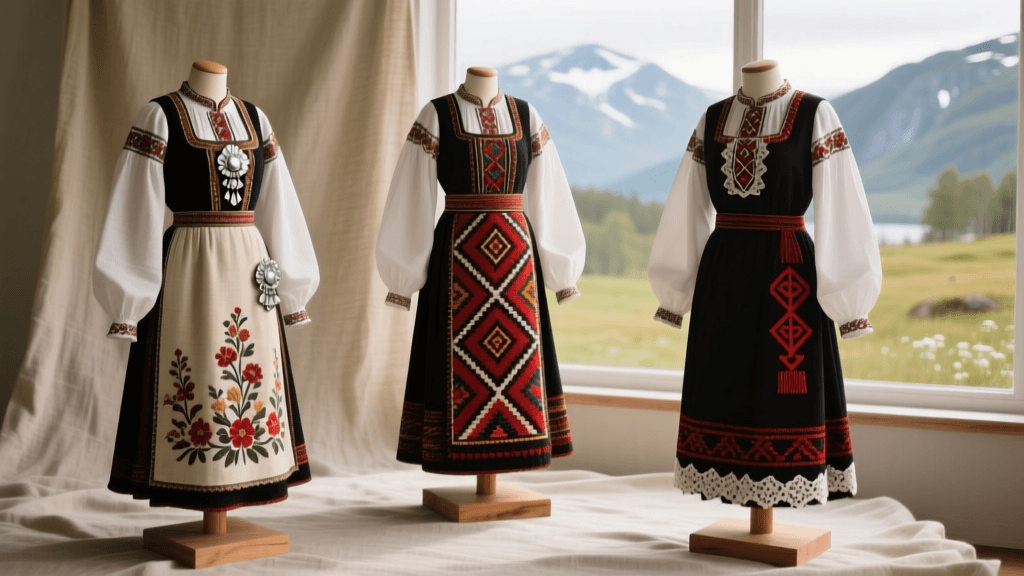
Often cited as the very first bunad, the Hardangerbunad originates from the Hardanger fjord region in Vestland county. Its creation in the early 1900s was heavily influenced by the national romanticism movement. The women's costume is iconic for its stark contrast: a black wool bodice and skirt paired with a crisp white linen apron and shirt. The defining feature is the intricate cross-stitch embroidery (korssting) featuring geometric and floral motifs in vibrant red, green, blue, and yellow threads. In 2026, master embroiderers in the region are reviving natural plant-based dyes for these threads, utilizing madder root for reds and weld for yellows, returning the garment to its pre-industrial color palette.
Telemarkbunaden: Dark Wools and Floral Opulence
The Telemark region is renowned for its deeply rich, dark-colored bunads, often utilizing deep navy, burgundy, or black wool. The Telemarkbunaden is heavily influenced by the 18th and 19th-century rural fashion, characterized by elaborate velvet trims and exquisite floral embroidery known as rosesøm. The women's bunad features a heavily pleated skirt and a bodice adorned with intricate silver lacing. The men's Telemarkbunad is equally striking, featuring knee-breeches, a richly embroidered vest, and a distinctive wide-brimmed hat. The textile weight of the Telemark wool is notably heavier, designed to withstand the harsh inland winters, making it a highly durable investment piece.
Setesdalsbunaden: Viking Echoes and Heavy Silver
Setesdal, an isolated valley in Southern Norway, preserved its unique clothing traditions longer than most, meaning the Setesdalsbunad is one of the few that transitions almost seamlessly from historical folkedrakt to modern bunad. The garments are characterized by heavy, dark wool and striking white embroidered cuffs. However, the true hallmark of the Setesdal costume is its massive, ornate silverwork. As documented by the Norsk Folkemuseum, the silver clasps, belts, and brooches (sølje) of Setesdal often feature Viking-era motifs, including dragon heads and intricate filigree. A fully accessorized Setesdal bunad can feature over a kilogram of solid sterling silver, making it one of the most expensive and visually commanding regional costumes in the country.
2026 Textile Trends: Sustainability and Ethical Silver
The year 2026 has brought a massive shift toward ethical sourcing within the bunad community. Consumers are no longer satisfied with merely authentic patterns; they demand authentic, sustainable materials. Local Norwegian wool breeds, such as the Spælsau and Steigar, are highly sought after for their durable, lustrous fibers. Furthermore, the silverwork industry has adapted to modern ethical standards. Silversmiths are now providing certificates of origin for their metals, ensuring that the silver used in traditional filigree and cast brooches is recycled or ethically mined. This transparency has driven up the baseline cost of raw materials but has deeply resonated with a younger generation of buyers who view the bunad as an heirloom aligned with their environmental values.
Cost and Investment Guide for 2026
Commissioning a bunad is a significant financial undertaking. Due to the hand-embroidery, custom tailoring, and precious metals involved, prices have adjusted in 2026 to reflect the true cost of artisanal labor and material inflation. Below is a comparative overview of three major regional bunads, detailing their core components and current market pricing.
| Regional Bunad | Primary Textile | Embroidery Style | Silver Weight (Avg) | 2026 Est. Price (NOK) | 2026 Est. Price (USD) |
|---|---|---|---|---|---|
| Hardanger (Women) | Black Wool / Linen | Cross-stitch (Korssting) | 150g - 250g | 45,000 - 55,000 | $4,200 - $5,100 |
| Telemark (Women) | Navy/Burgundy Wool | Floral (Rosesøm) | 200g - 350g | 55,000 - 70,000 | $5,100 - $6,500 |
| Setesdal (Men) | Heavy Dark Wool | Minimal / White Cuffs | 800g - 1.2kg | 65,000 - 85,000 | $6,000 - $7,900 |
Note: Prices represent a complete outfit including base garments, apron/breeches, shirt, and standard silver accessories. Custom tailoring fees and premium silver upgrades will increase the final cost.
How to Source and Commission Authentic Pieces
For those looking to acquire an authentic bunad in 2026, the most trusted route is through the Husfliden (Norwegian Craft Association) retail network. Husfliden shops employ trained bunad consultants who guide clients through the complex process of selecting the correct regional variation based on their family ancestry or place of residence. It is a strict cultural norm that you should wear a bunad from a region to which you have a tangible connection, such as your birthplace, your parents' hometown, or your spouse's ancestral village.
The commissioning process requires precise measurements. Because a bunad is tailored to fit perfectly and is meant to last a lifetime, it is constructed with generous seam allowances to accommodate future weight fluctuations. Key measurements include the bust, waist, hips, back length, and shoulder width. For men, the inseam, chest, and neck circumference are critical. Expect a wait time of 12 to 18 months from the initial consultation to the final fitting, as the embroidery is often done by hand by specialized artisans working on a waitlist basis.
Care, Maintenance, and Storage
Proper care is essential to preserve these heirloom garments. The wool skirts and bodices should never be machine washed. Instead, they require professional dry cleaning by specialists who understand historical textiles, or careful spot cleaning and vigorous airing out in a damp, misty environment—a traditional Norwegian method for refreshing wool. The silver accessories require regular maintenance to prevent tarnishing. In 2026, conservators recommend using non-abrasive, eco-friendly silver dips and specialized polishing cloths rather than harsh chemical pastes that can degrade the delicate oxidized details in the filigree work. When not in use, the bunad should be stored in a breathable cotton garment bag in a cool, dark, and dry environment, with the silver pieces wrapped in anti-tarnish flannel and stored separately to prevent snagging the delicate embroidery.
Conclusion
The Norwegian bunad stands as a testament to the enduring power of regional identity in a globalized world. As of 2026, the meticulous attention to historical accuracy, combined with a modern commitment to sustainable and ethical material sourcing, ensures that these garments will continue to be cherished for generations. Whether it is the geometric precision of the Hardanger cross-stitch, the lush floral velvet of Telemark, or the heavy silver heritage of Setesdal, each bunad tells a deeply personal and profoundly national story woven into the very fabric of European folk dress.