Nishijin-ori vs. Yuzen: A Guide to Kimono Silk Craftsmanship
The Heart of Japanese Silk: Understanding Kimono Textiles
When exploring the magnificent world of traditional Japanese clothing, the kimono stands as a masterclass in textile engineering and artistic expression. Unlike Western tailoring, which relies heavily on cutting and shaping fabric to fit the human form, the kimono is constructed from straight, uncut bolts of fabric known as tanmono. Because the structure is relatively uniform, the true artistry, value, and cultural significance of a kimono lie entirely in its textile craftsmanship. According to The Metropolitan Museum of Art's Heilbrunn Timeline of Art History, Japanese textiles have long been revered globally for their complex weaving structures and innovative dyeing techniques, serving as potent markers of social status, seasonality, and regional identity.
For collectors, enthusiasts, and those looking to invest in authentic Japanese garments, understanding the distinction between woven textiles and dyed textiles is paramount. The two most prestigious pillars of formal kimono craftsmanship are Nishijin-ori (woven brocade) and Kyo-Yuzen (resist-dyeing). This guide will dissect these techniques, compare their base fabrics, and provide actionable advice on purchasing, commissioning, and caring for these masterpieces.
The Foundation: Base Silk Fabrics
Before exploring surface decoration, one must understand the canvas. High-end kimono are primarily crafted from silk (ginu), with three main weaves serving as the foundation for both Nishijin and Yuzen techniques:
- Chirimen (Crepe Silk): Characterized by a matte finish and a subtle, pebbled texture created by over-twisting the weft threads. Chirimen drapes beautifully, resists wrinkling, and is the absolute standard for Yuzen dyeing because its texture grips the dye and rice-paste resist perfectly.
- Rinzu (Satin Damask): A glossy, lustrous silk featuring woven geometric or floral patterns in the base fabric itself. Rinzu is highly formal and frequently used as a base for both luxurious Yuzen painting and intricate Nishijin weaving.
- Ro and Sha (Summer Gauze): Lightweight, breathable silk leno-weaves featuring intentional gaps in the fabric. These are strictly reserved for the sweltering months of July and August and are often dyed using Yuzen techniques to depict cooling motifs like flowing water or morning glories.
Nishijin-ori: The Pinnacle of Woven Brocade
Craftsmanship and Technique
Originating in the Nishijin district of Kyoto, Nishijin-ori is not a single fabric but a collective term for a variety of complex, multi-colored woven textiles. The hallmark of Nishijin-ori is that the pattern is woven directly into the fabric, rather than applied to the surface afterward. As detailed by the Nishijin Textile Industry Association, the creation of a single Nishijin textile involves over twenty distinct, highly specialized steps, often requiring the collaboration of multiple artisan workshops.
The most famous Nishijin products are Fukuro obi (the wide, formal sashes worn with kimono) and Obijime (decorative cords). Artisans use traditional Jacquard looms—some operated by hand with the assistance of a weaver pulling harness cords, and others modernized with computerized punch cards—to interlace silk threads with precious metals. Kinran (gold brocade) and Ginran (silver brocade) incorporate actual strips of gold or silver leaf applied to washi paper or synthetic film, which are then woven as weft threads to create breathtaking, three-dimensional relief patterns.
Practical Guide: Buying and Wearing Nishijin
Because the pattern is woven into the structure, Nishijin-ori fabrics are thick, stiff, and highly structured. This makes them ideal for obi, which require rigidity to hold complex knots (musubi), but less common for the kimono itself, which requires fluid drape. When purchasing a vintage or new Nishijin Fukuro obi, expect to pay between $800 and $3,500 for high-quality pieces featuring real gold thread. Custom commissions for a bridal obi can easily exceed $8,000 and take 8 to 14 months to complete due to the meticulous loom setup required.
Kyo-Yuzen: The Art of Hand-Painted Silk Dyeing
Craftsmanship and Technique
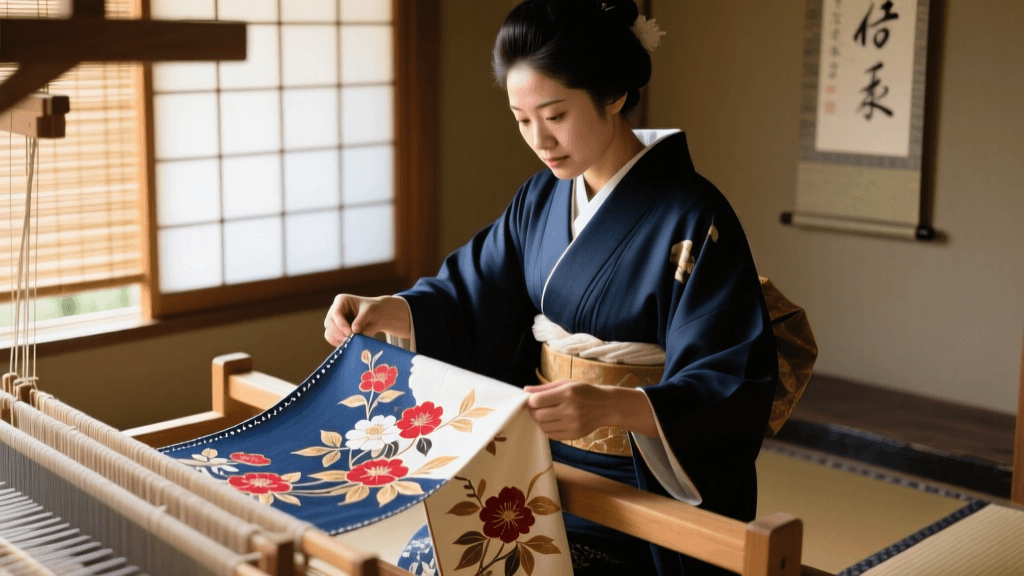
If Nishijin-ori represents structural mastery, Kyo-Yuzen represents pictorial freedom. Developed in the late 17th century by Miyazaki Yuzensai, this resist-dyeing technique allowed artisans to paint expansive, sweeping, and highly detailed pictorial scenes directly onto silk, free from the geometric constraints of the loom.
The process begins with the artisan sketching a design onto the silk using aobana (dayflower juice), which washes out later. The outlines are then traced with itome-nori, a water-resistant rice bran paste. Once the paste dries, it acts as a dam, preventing colors from bleeding into one another. Artisans hand-paint the motifs using brushes, applying vibrant synthetic or natural dyes. After steaming to set the colors, the fabric is washed—historically in the flowing waters of Kyoto's Kamo River, a practice now replaced by specialized studio washing tanks to protect the local ecosystem. Finally, gold leaf, silver dust, or embroidery may be applied to elevate the design.
Practical Guide: Commissioning and Caring for Yuzen
Kyo-Yuzen is the premier technique for formal women's kimono, including the Kurotomesode (black formal kimono for married women) and Furisode (long-sleeved kimono for unmarried women). The fluid, painterly nature of Yuzen allows for seasonal motifs that span across the back and sleeves of the garment. According to cultural heritage resources highlighted by the Japan National Tourism Organization, visiting Kyoto's textile centers reveals the staggering amount of human labor involved in these pieces. A bespoke, hand-painted Kyo-Yuzen kimono requires a minimum investment of $4,000 to $12,000, with a production timeline of 6 to 18 months. For those on a budget, Kata-Yuzen (stencil-dyed Yuzen) offers a similar aesthetic using hand-cut paper stencils and chemical dyes, reducing costs to the $1,500–$3,000 range.
Comparison Chart: Nishijin-ori vs. Kyo-Yuzen
| Feature | Nishijin-ori (Woven Brocade) | Kyo-Yuzen (Resist-Dyed) |
|---|---|---|
| Primary Technique | Jacquard weaving with multi-colored and metallic threads | Rice-paste resist dyeing and hand-painting |
| Visual Texture | Textured, raised relief, structural, heavy | Smooth, flat, painterly, fluid drape |
| Best Garment Application | Fukuro Obi, Maru Obi, Obijime, Haori | Homongi, Furisode, Kurotomesode, Uchikake |
| Price Range (New/Bespoke) | $1,500 – $10,000+ (primarily for Obi) | $4,000 – $15,000+ (for full Kimono) |
| Production Time | 6 – 14 months | 8 – 18 months |
| Formality Level | Determined by metallic thread density and pattern scale | Determined by motif placement (e.g., Eba-moyo continuous patterns) |
Actionable Advice: Selecting the Right Fabric for Your Occasion
When building a kimono wardrobe or purchasing a vintage piece, applying the Japanese concept of TPO (Time, Place, Occasion) is critical. Here is how to navigate fabric choices practically:
1. Navigating Formality and Motifs
For weddings and tea ceremonies, a Yuzen-dyed Homongi (visiting wear) featuring an eba-moyo pattern—a design that flows continuously across the seams when the kimono is laid flat—is the gold standard. Pair this fluid, painted garment with a stiff, woven Nishijin Fukuro obi featuring auspicious motifs like cranes or pine trees. The contrast between the soft, painted silk of the kimono and the rigid, metallic sheen of the woven obi is the cornerstone of formal Japanese aesthetics.
2. Vintage Shopping and Measurements
If you are buying vintage Nishijin or Yuzen pieces online, pay strict attention to the tanmono bolt width. Traditional kimono are woven on narrow looms, resulting in a maximum fabric width of about 36 cm (14.2 inches). If you are taller or have a wider hips-to-waist ratio, you must look for garments labeled as hiro-haba (wide-width) or check the specific hip measurements (okumi and maigoro panels) to ensure the front panels overlap sufficiently. A standard overlap should be at least 15-20 cm to ensure proper closure and modesty.
3. Inspecting Condition and Authenticity
When evaluating vintage Nishijin obi, inspect the metallic threads. Pre-1970s pieces often used real gold leaf on paper, which may show beautiful, authentic patina or minor flaking. Modern pieces use synthetic films that do not age but lack the depth of traditional materials. For Yuzen, check the reverse side of the fabric. Genuine hand-painted Yuzen will show dye penetrating deeply through to the back of the silk, whereas cheap, mass-printed imitations will have a stark white reverse side.
Preservation and Modern Care
Silk is a protein fiber that requires specialized care. Never attempt to wash a Yuzen or Nishijin garment at home. Water will dissolve the rice paste resist remnants, cause the dyes to bleed, and permanently ruin the structural integrity of the woven obi. Instead, rely on professional kimono cleaners who offer maru-arai (a specialized full-garment dry cleaning process using petroleum-based solvents) and shiminuki (targeted stain removal). For long-term storage, wrap your garments in tatou-shi (acid-free washi paper) and store them in a cool, dry place, avoiding cedar wood which can sometimes transfer acidic oils to delicate silk brocades.
By understanding the profound differences between the structural mastery of Nishijin-ori and the pictorial freedom of Kyo-Yuzen, you can appreciate the kimono not merely as clothing, but as a wearable canvas of Japanese history, engineering, and artistic devotion.