Nishijin-Ori vs Song Brocade: 2026 Silk Textile Guide
The Evolution of East Asian Silk Brocades in 2026
As we navigate the bespoke tailoring landscape of 2026, the demand for authentic, heritage-rich textiles has reached an all-time high. Discerning collectors and modern fashion enthusiasts are increasingly turning away from mass-produced synthetic blends, favoring instead the profound cultural resonance and superior tactile qualities of traditional Asian silk brocades. At The Garment Atlas, we recognize that the foundation of any exceptional traditional garment—be it a Japanese kimono, a Chinese cheongsam, or a Korean hanbok—lies in its textile. Among the most prestigious and highly sought-after fabrics in East Asian sartorial history are Japan’s Nishijin-Ori and China’s Song Brocade. Both represent the zenith of silk weaving technology, yet they possess distinctly different structural properties, visual aesthetics, and draping behaviors. Understanding these nuances is critical for anyone commissioning bespoke traditional wear in 2026, as the choice of fabric dictates not only the garment's silhouette but also its longevity and ceremonial appropriateness.
According to The Metropolitan Museum of Art, the historical development of silk weaving in East Asia was driven by a complex interplay of imperial patronage and technological innovation. Today, these ancient techniques have been refined with modern sustainable practices, making 2026 an exceptional year to invest in heritage textiles. This comprehensive guide will dissect the structural differences, modern applications, and current market realities of Nishijin-Ori and Song Brocade, providing you with the actionable knowledge needed to make informed sourcing decisions.
Understanding Nishijin-Ori: Japan's Pinnacle of Silk Weaving
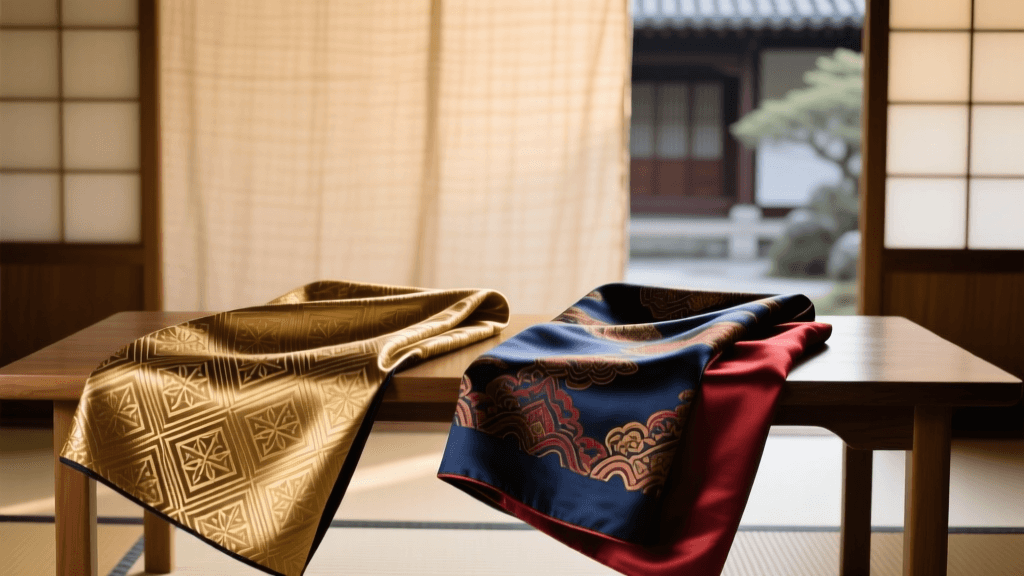
Nishijin-Ori, originating from the Nishijin district of Kyoto, is a woven textile renowned for its opulent, heavy, and highly structured characteristics. The name translates to 'woven in Nishijin,' and the tradition dates back to the Onin War in the 15th century, when displaced weavers returned to Kyoto and established the guilds that still operate today. Unlike printed or dyed silks, Nishijin-Ori is a yarn-dyed brocade, meaning the threads are colored before they are placed on the loom, allowing for incredibly complex, multi-layered patterns that are integrated directly into the fabric's structure.
Weave Structure and 2026 Innovations
Traditionally, Nishijin-Ori utilizes a warp-faced weave structure, which gives the fabric its signature stiffness and lustrous surface. The dense packing of warp threads creates a sturdy canvas that is highly resistant to wrinkling but offers limited drape. In 2026, Kyoto's weaving cooperatives have introduced significant eco-friendly innovations. The degumming process—where sericin is removed from the raw silk—now utilizes closed-loop water recycling systems and enzyme-based treatments that drastically reduce the environmental footprint without compromising the silk's tensile strength.
Furthermore, the integration of AI-assisted jacquard programming in 2026 has allowed master weavers to visualize complex kinran (gold leaf thread) patterns before committing to the physical loom setup. However, the final weaving, particularly for high-end obi sashes and ceremonial kimono fabrics, remains entirely manual. The tactile feedback of the hand-operated loom is essential for managing the tension of metallic threads, a skill that machines have yet to replicate perfectly.
Exploring Song Brocade: China's Tapestry of Elegance
Song Brocade, or Songjin, traces its origins to the Song Dynasty (960–1279 AD) and is historically associated with the silk weaving hub of Suzhou. While Nishijin-Ori is celebrated for its bold, structural opulence, Song Brocade is revered for its refined elegance, intricate geometric frameworks, and sophisticated color palettes. It is often characterized by its 'three unique weaves'—heavy, medium, and light—allowing it to be used for everything from rigid ceremonial hangings to fluid, wearable garments.
Historical Significance and 2026 Revival
As documented by the Victoria and Albert Museum, Chinese silk brocades have long been a medium for conveying social status and cosmological symbolism through meticulous motif placement. Song Brocade typically employs a weft-faced compound weave. This structure allows for a smoother, more matte finish on the reverse side and a brilliant, yet less aggressive, sheen on the face. The patterns often feature interlocking geometric lattices filled with delicate floral or auspicious motifs, creating a sense of depth and movement that shifts beautifully under ambient light.
The 2026 revival of Song Brocade in Suzhou has been marked by a return to natural, plant-based dyes. Master dyers are utilizing indigo, madder root, and pagoda tree buds to achieve the muted, historically accurate 'antique' colorways that are currently dominating the high-end cheongsam market. Additionally, modern Suzhou mills have developed a proprietary silk-blending technique that introduces a micro-percentage of spider-silk protein, enhancing the fabric's natural thermoregulation properties, making it significantly more comfortable to wear in varying climates.
Direct Comparison: Nishijin-Ori vs. Song Brocade
To assist tailors, designers, and collectors in selecting the appropriate textile for their 2026 bespoke projects, we have compiled a direct comparison of the physical and market attributes of both brocades.
| Feature | Nishijin-Ori (Japan) | Song Brocade (China) |
|---|---|---|
| Primary Weave Structure | Warp-faced, dense jacquard | Weft-faced compound tapestry |
| Surface Finish & Sheen | High luster, prominent metallic threads | Soft sheen, subtle matte contrasts |
| Drape and Weight | Heavy, stiff, highly structured | Medium to light, fluid, graceful |
| Primary Garment Application | Obi sashes, outer uchikake, ceremonial collars | Full cheongsam dresses, hanbok jeogori, robes |
| 2026 Average Price (Per Yard) | $350 - $800+ | $180 - $450 |
| Maintenance Requirement | Strictly professional conservation cleaning | Specialized dry cleaning, gentle hand-care possible |
Sourcing and Authenticating Silk Brocades in 2026
Sourcing authentic heritage textiles requires navigating a market saturated with power-loom imitations. In 2026, the most reliable method for authenticating high-grade Nishijin-Ori and Song Brocade is through the newly standardized blockchain textile registries. The UNESCO Intangible Cultural Heritage frameworks have encouraged regional cooperatives to embed near-field communication (NFC) threads into the selvedge of authentic bolts. By scanning the selvedge with a smartphone, buyers can instantly access the fabric's complete provenance, including the specific loom used, the master weaver's credentials, and the exact date of completion.
Pricing and Availability
The cost of authentic brocade has seen a steady increase in 2026, driven by the rising cost of premium mulberry silk and the shrinking pool of master weavers. A standard bolt of authentic Nishijin-Ori, measuring approximately 13 to 15 yards, can range from $4,500 to over $12,000 depending on the density of the gold leaf (kinran) and silver threads. Song Brocade remains slightly more accessible, with premium Suzhou bolts ranging from $2,500 to $6,000. For those seeking smaller quantities, specialized textile merchants in Tokyo's Nihonbashi district and Shanghai's Luwan district now offer 'cut-piece' services, allowing buyers to purchase specific yardages for cheongsam tailoring or accent pieces, though the per-yard cost increases by roughly 20% compared to full-bolt purchases.
Garment Matching: Choosing the Right Fabric
Selecting between Nishijin-Ori and Song Brocade depends entirely on the intended garment and its functional requirements. If you are commissioning a traditional Japanese kimono, Nishijin-Ori is the undisputed choice for the obi (sash). The stiffness of the warp-faced weave provides the necessary structural integrity to hold the complex knots of a taiko musubi or fukura suzume without collapsing. However, using Nishijin-Ori for the body of a kimono is generally discouraged, as its rigidity restricts movement and adds excessive weight.
Conversely, if you are tailoring a modern or traditional Chinese cheongsam (qipao), Song Brocade is the superior choice. Its weft-faced structure allows the fabric to drape elegantly over the body's natural contours, providing a flattering silhouette while maintaining enough body to hide structural imperfections. The subtle sheen of Song Brocade also translates beautifully in modern photography and evening lighting, making it the preferred textile for 2026 bridal cheongsams and high-society gala wear. For Korean hanbok, specifically the outer robes (durumagi) or ceremonial wonsam, a medium-weight Song Brocade offers the perfect balance of regal volume and comfortable wearability.
Specialized Care and Preservation
Investing in heritage silk brocades necessitates a rigorous preservation strategy. In 2026, textile conservators emphasize that improper storage is a greater threat to silk than wear and tear. Both Nishijin-Ori and Song Brocade must be stored in climate-controlled environments, ideally at 50% relative humidity and 65°F (18°C). Fluctuations in humidity can cause the metallic threads in Nishijin-Ori to tarnish or the silk fibers to become brittle.
- Storage Materials: Never store silk brocades in plastic, which traps moisture and off-gasses harmful chemicals. Use unbleached, acid-free cotton muslin or specialized archival tissue paper to wrap the garments.
- Folding vs. Rolling: Heavy Nishijin-Ori obi should be rolled around acid-free cardboard tubes to prevent permanent creasing of the metallic threads. Lighter Song Brocade garments can be loosely folded, but the fold lines should be padded with tissue to prevent stress on the warp and weft intersections.
- Cleaning Protocols: Avoid conventional dry cleaning, as the harsh solvents used in standard commercial processes can strip the natural sericin remnants and dull the fabric's luster. Seek out specialized heritage textile conservators who utilize liquid carbon dioxide (CO2) cleaning technologies, a standard in 2026 that safely removes organic soils without degrading delicate silk fibers or metallic accents.
Conclusion
The choice between Nishijin-Ori and Song Brocade is not merely a matter of aesthetic preference; it is a decision rooted in structural engineering, cultural history, and functional design. As the bespoke tailoring market continues to prioritize sustainability and heritage in 2026, understanding the distinct properties of these master-woven textiles ensures that your traditional garments will not only look spectacular but will endure as wearable heirlooms for generations to come. Whether you are drawn to the bold, architectural brilliance of Kyoto's Nishijin-Ori or the fluid, poetic elegance of Suzhou's Song Brocade, sourcing responsibly and caring meticulously will honor the centuries of artisanship woven into every thread.