Nishijin-Ori vs Jacquard Silk: 2026 Kimono Fabric Guide
The Evolution of Kimono Textiles in 2026
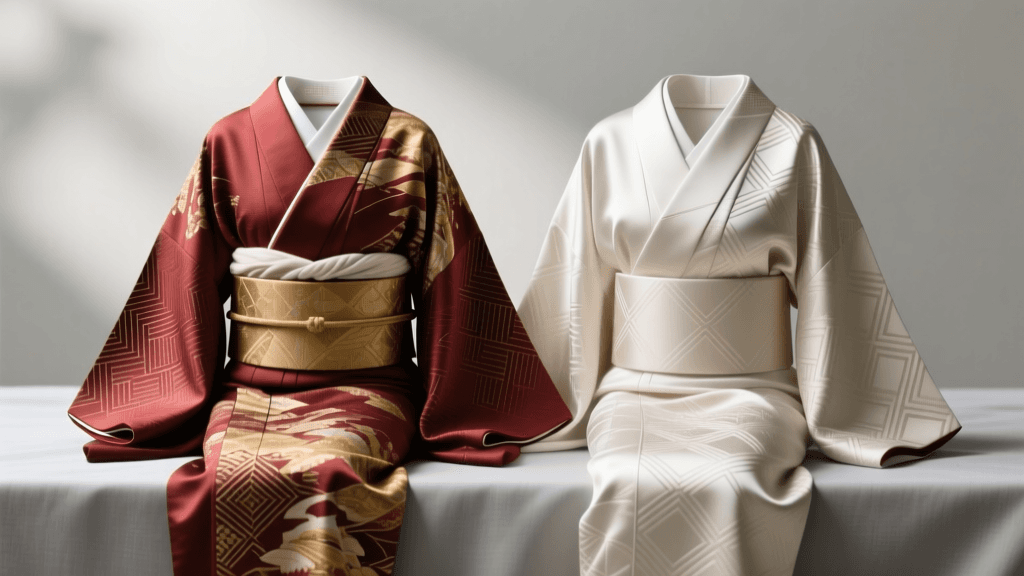
As we navigate the sartorial landscape of 2026, the global appreciation for Japanese traditional garments continues to surge, driven by a renewed interest in heritage craftsmanship and sustainable fashion. For collectors, brides, and everyday enthusiasts, selecting the right fabric is the most critical decision when commissioning or purchasing a kimono or obi. The debate frequently centers on two distinct textile categories: the legendary, hand-loomed Nishijin-ori brocade and the technologically advanced modern Jacquard silk. Understanding the nuanced differences between these fabrics is essential for making an informed investment in your 2026 wardrobe.
According to the Victoria and Albert Museum, the structural integrity and aesthetic evolution of kimono textiles are deeply tied to the loom technology and dyeing methods used in their creation. While purists often gravitate toward the historic weight and prestige of Nishijin-ori, the remarkable advancements in computerized Jacquard weaving have democratized access to complex, beautiful patterns without compromising the luxurious feel of pure mulberry silk. This comprehensive guide will break down the technical specifications, current market pricing, and styling applications of both fabrics to help you make the perfect choice.
The Legacy and Luxury of Nishijin-Ori
Nishijin-ori is not merely a fabric; it is a designated traditional Japanese craft originating from the Nishijin district of Kyoto. The defining characteristic of authentic Nishijin-ori is its use of the saki-zome (yarn-dyed) technique. Unlike fabrics that are woven first and dyed later, the silk threads are meticulously dyed before they are placed on the loom. This allows for the creation of intricate, multi-colored brocade patterns that are woven directly into the structure of the fabric, resulting in a textile that is incredibly durable and visually striking from both the front and the back.
The Metropolitan Museum of Art notes that the historical foundations of Japanese silk weaving, particularly the complex drawboy and tapestry techniques, require an astonishing level of manual dexterity and mathematical precision. In 2026, true hand-loomed Nishijin-ori remains a rare commodity. The artisan shortage in Kyoto has driven the value of these textiles to unprecedented heights. A master weaver may spend several months completing a single tan (the standard bolt of fabric measuring approximately 38 centimeters wide and 12 meters long).
Technical Specifications and 2026 Pricing
- Weight: Nishijin brocade is exceptionally dense, often ranging from 28 to over 40 momme (the traditional unit of silk weight). This gives the fabric a stiff, structured drape that holds its shape impeccably.
- Texture: The warp-faced weaving technique creates a slightly raised, textured surface that catches the light dynamically.
- 2026 Market Cost: Due to the intensive labor and premium silk imports, a standard tan of authentic Nishijin-ori fabric starts at approximately ¥450,000, with highly complex, gold-leaf threaded variations exceeding ¥1,500,000. For a finished, tailored obi, expect to pay between ¥600,000 and ¥2,000,000.
The 2026 Evolution of Modern Jacquard Silk
While Nishijin-ori represents the pinnacle of heritage craftsmanship, modern Jacquard silk represents the triumph of 2026 textile engineering. The Jacquard loom, originally invented in the 19th century, has evolved into a highly sophisticated, AI-assisted digital weaving system. Today's advanced looms can replicate the complex, multi-layered brocade patterns of traditional Nishijin weaves with microscopic precision, utilizing sustainably sourced, high-grade mulberry silk threads.
Modern Jacquard silks often employ a blend of saki-zome and ato-zome (piece-dyed) techniques to achieve vibrant color gradients that would be impossibly time-consuming on a traditional hand loom. Furthermore, 2026 eco-friendly dyeing innovations have significantly reduced the water footprint of these textiles, appealing to a new generation of environmentally conscious kimono wearers. The Japan National Tourism Organization (JNTO) highlights that the integration of modern technology with traditional craft aesthetics is vital for the survival and global expansion of Japanese textile arts.
Technical Specifications and 2026 Pricing
- Weight: Modern Jacquard silks are highly customizable. They are typically engineered to be lighter than traditional brocades, ranging from 16 to 24 momme, offering a softer, more fluid drape that is comfortable for extended wear.
- Texture: The surface is generally smoother, with a high-luster finish that mimics the sheen of satin, though matte finishes are also available for subdued elegance.
- 2026 Market Cost: The efficiency of digital looms makes these fabrics highly accessible. A standard tan of premium Jacquard silk ranges from ¥40,000 to ¥120,000. A beautifully finished, ready-to-wear Jacquard silk obi can be purchased for ¥60,000 to ¥180,000.
Head-to-Head Fabric Comparison
To help you decide which textile aligns with your needs, budget, and styling goals, refer to the detailed comparison table below.
| Feature | Authentic Nishijin-Ori | Modern Jacquard Silk (2026) |
|---|---|---|
| Weaving Technique | Hand-loomed or semi-hand-loomed, traditional drawboy | Computerized digital Jacquard loom |
| Dyeing Method | Strictly Saki-zome (yarn-dyed) | Mixed Saki-zome and Ato-zome |
| Average Weight | Heavy (28 - 40+ momme) | Light to Medium (16 - 24 momme) |
| Drape and Structure | Stiff, highly structured, holds rigid shapes | Fluid, soft, conforms easily to the body |
| Price per Tan (2026) | ¥450,000 - ¥1,500,000+ | ¥40,000 - ¥120,000 |
| Production Time | 3 to 8 months per bolt | 1 to 3 weeks per bolt |
| Best Used For | Heirloom Obi, Kurotomesode, Royal/Formal events | Everyday Kimono, Furisode, Tsukesage, Semi-formal |
Styling and Occasion Guide for 2026
Choosing between Nishijin-ori and Jacquard silk is not just a matter of budget; it is a matter of sartorial etiquette and practical comfort. The formality of Japanese dress is strictly governed by the fabric's weight, pattern, and weave.
When to Choose Nishijin-Ori
If you are attending a highly formal event, such as a traditional wedding, a tea ceremony of the highest rank, or an imperial audience, Nishijin-ori is the undisputed choice. The heavy weight of the fabric is particularly suited for Maru obi or Fukuro obi (the most formal sashes). The stiffness of the brocade allows for the creation of the taiko musubi (drum knot) or elaborate fukura-suzume (sparrow knot) that will not collapse or wrinkle over the course of a long ceremony. The subtle, woven-in gold and silver threads provide a dignified, understated brilliance that respects the solemnity of formal occasions.
When to Choose Modern Jacquard Silk
For semi-formal gatherings, graduation ceremonies, theater visits, or high-end dining, modern Jacquard silk is the superior option for 2026. Its lighter weight makes it ideal for Houmongi (visiting kimono) or Tsukesage. Because the fabric is softer, it drapes beautifully over the shoulders and hips, offering a more forgiving and comfortable fit for all-day wear. Jacquard silk is also the preferred choice for Furisode (long-sleeved kimono worn by unmarried women), as the fluid drape allows the long sleeves to sway elegantly with movement, a visual effect that would be hindered by the rigidity of heavy Nishijin brocade.
Care, Maintenance, and Climate Considerations
Silk is a protein fiber that requires meticulous care, and the structural differences between these two fabrics dictate their maintenance routines. In 2026, with shifting global humidity patterns, proper storage is more critical than ever.
- Nishijin-Ori Care: Due to its dense weave and high metallic thread content, Nishijin-ori should never be folded tightly for long periods, as the metallic threads can crease or snap. It must be stored in a climate-controlled cedar chest (tansu) with a strict humidity level maintained between 45% and 55%. Dry cleaning should only be performed by specialists certified in heritage textile preservation, utilizing 2026-approved, non-toxic solvent baths that protect gold leaf.
- Jacquard Silk Care: The lighter, more uniform weave of modern Jacquard silk makes it slightly more resilient to standard folding. However, it is still highly susceptible to water spotting. Modern arai-hari (the traditional service of un-stitching, washing, and re-stretching silk) has been optimized in 2026 with ultrasonic cleaning technologies that remove microscopic oils without degrading the eco-friendly dyes used in contemporary Jacquard production.
Final Verdict: Investing in Your 2026 Wardrobe
The choice between Nishijin-ori and modern Jacquard silk ultimately depends on your relationship with the garment. If you view your kimono as a generational heirloom, a piece of living history, and an investment in Kyoto's artisan legacy, the steep financial and temporal cost of Nishijin-ori is entirely justified. It is a masterpiece of human engineering and cultural preservation.
Conversely, if your goal is to build a versatile, vibrant, and wearable 2026 wardrobe that allows for frequent styling, travel, and modern comfort, high-grade Jacquard silk is the pragmatic and beautiful choice. The technological leaps in digital weaving ensure that you no longer have to sacrifice the breathtaking complexity of traditional Japanese patterns to achieve a lightweight, accessible, and sustainable garment. By understanding the distinct properties of both textiles, you can curate a kimono collection that perfectly balances historic reverence with contemporary elegance.