Mastering Nishijin-Ori Jibata Loom Weaving in 2026
The Enduring Legacy of Nishijin-Ori in 2026
The intricate world of Japanese traditional garments is anchored by the breathtaking textiles of Kyoto, none more prestigious than Nishijin-ori. As we navigate through 2026, the revival of traditional hand-weaving methods has moved from a niche preservation effort to a vibrant, contemporary movement. Younger artisans and international textile enthusiasts are increasingly drawn to the Jibata (traditional handloom), seeking to understand the rhythmic, meditative, and highly technical process that creates the luxurious obi sashes and kimono fabrics prized across the globe. According to the Nishijin Weaving Industry Association, 2026 has seen a 15% increase in apprenticeship applications for handloom weaving, signaling a robust future for this ancient craft.
This comprehensive guide explores the anatomy of the Jibata, the meticulous step-by-step methodology of Nishijin hand-weaving, and actionable advice for sourcing authentic materials and finding workshops in Kyoto today.
Anatomy of the Traditional Jibata Handloom
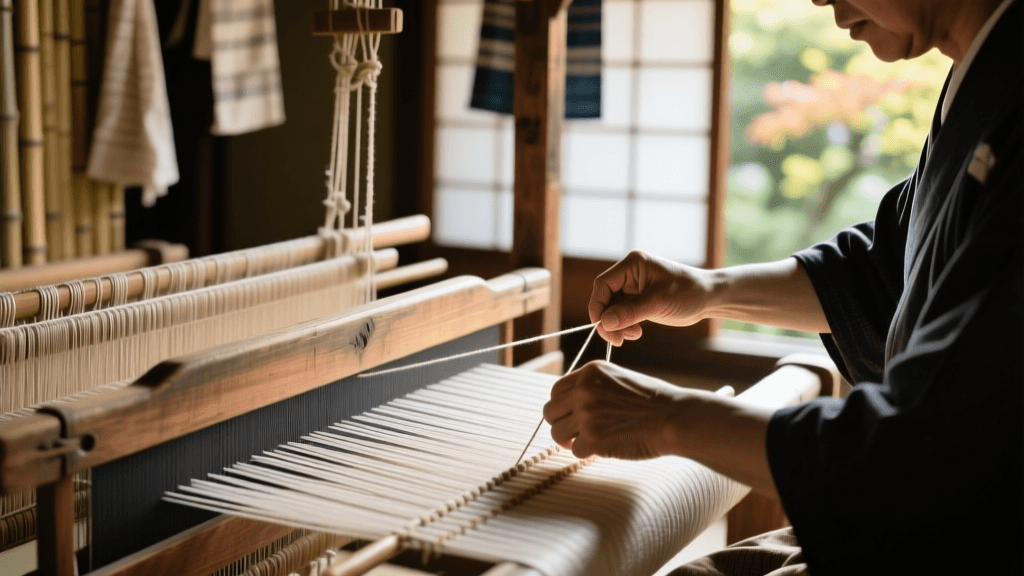
Unlike the loud, high-speed electronic Jacquard looms that dominate mass production, the Jibata is a masterpiece of wooden engineering and human ergonomics. Operating a Jibata requires the weaver to use their entire body, creating a physical connection between the artisan and the silk. The primary components include:
- Chijimi (Warp Beam): The large wooden cylinder at the back of the loom that holds the warp threads under precise, adjustable tension.
- Soukou (Heddles): Delicate wire or thread loops that separate the warp yarns to create the 'shed' (the opening through which the shuttle passes). Complex Nishijin patterns may require dozens of heddle frames.
- Osa (Reed): A comb-like structure used to beat the weft thread tightly against the newly woven fabric, determining the textile's density and width.
- Hi (Shuttle): The boat-shaped wooden tool that carries the weft yarn (the nu-ito) through the shed. In Nishijin-ori, multiple shuttles are often used simultaneously to introduce different colored silk or metallic threads.
- Ashibumi (Treadles): The foot pedals connected to the heddles. The weaver's footwork dictates the pattern's structural foundation.
Step-by-Step Nishijin-Ori Hand-Weaving Method
Mastering the Jibata is a multi-year endeavor. The process is generally divided into preparation and the active weaving phase.
1. Warping and Drafting (Seikei and Soukou-Toshi)
Before a single weft thread is thrown, the warp must be prepared. In 2026, while some preliminary winding is assisted by small electric bobbin winders, the actual warping (measuring and aligning thousands of silk threads) is done by hand to ensure zero tension discrepancies. The threads are then 'drafted' through the heddles and the reed. A single mis-threaded heddle will ruin the geometric precision of a Nishijin pattern, making this the most mentally taxing phase of the process.
2. The Weaving Rhythm (Battan and Osa-Uchi)
The physical act of weaving on a Jibata follows a strict, rhythmic sequence:
1. Shedding: The weaver depresses the treadles with their feet, raising specific heddles to open the shed.
2. Picking: The weaver throws the shuttle carrying the weft thread through the shed with a swift flick of the wrist.
3. Beating: The weaver pulls the battan (the frame holding the reed) forward with both hands to pack the weft tightly against the fell of the cloth.
4. Returning: The battan is pushed back, the treadles shift, and the next shed is opened.
"The sound of the wooden battan striking the silk is the heartbeat of Nishijin. In 2026, as our digital lives become overwhelmingly noisy, the acoustic rhythm of the Jibata offers a profound, grounding silence between the beats." — Master Weaver Hiroshi Tanaka, Kyoto Artisan Guild.
2026 Sourcing Guide: Silk Yarns and Loom Components
For international weavers and domestic hobbyists looking to source authentic Nishijin materials this year, the supply chain has adapted to modern e-commerce while retaining strict quality controls. The Ministry of Economy, Trade and Industry (METI) Traditional Crafts portal remains the best directory for verified suppliers.
- Raw Silk (Nama-Ito): Unprocessed silk threads used for the warp. In 2026, a standard 500g cone of premium domestically spun Gunma silk costs approximately 18,500 JPY ($125 USD).
- Kinran (Gold Thread): Traditional Nishijin brocade relies on gold-leafed paper or synthetic film wrapped around a silk core. Authentic hon-kinran (real gold) remains a luxury investment, priced at around 45,000 JPY ($300 USD) per 100-meter spool, primarily sourced from specialized Kyoto spinners like Ito-ya.
- Loom Maintenance: Replacement wooden shuttles (hi) crafted from polished persimmon wood can be ordered from traditional woodworking studios in the Nishijin district for roughly 12,000 JPY ($80 USD) each.
Comparison: Jibata Handloom vs. Electronic Jacquard (2026 Data)
Understanding the market distinction between hand-woven and machine-woven textiles is crucial for collectors, buyers, and weavers. The table below outlines the primary differences as of 2026.
| Feature | Jibata (Traditional Handloom) | Modern Electronic Jacquard |
|---|---|---|
| Production Speed | 2 to 5 centimeters per hour | 50 to 100 meters per day |
| Obi Market Value (2026) | $3,500 - $15,000+ USD | $300 - $1,200 USD |
| Artisan Skill Level | Minimum 5-10 years apprenticeship | 1-2 years technical training |
| Texture & Handfeel | Dense, sculptural, organic tension variations | Uniform, flat, perfectly consistent |
| Pattern Complexity | Limited by heddle count and human memory | Virtually unlimited via digital CAD files |
While electronic Jacquard looms ensure the survival and accessibility of Nishijin-ori patterns for the global market, the Jibata handloom produces a textile with a 'living' quality. The microscopic variations in tension and the sheer physical force applied during the beating process give hand-woven obi a three-dimensional, sculptural drape that machines simply cannot replicate.
Preservation and 2026 Workshops in Kyoto
For those wishing to experience the Jibata firsthand, Kyoto offers several immersive opportunities in 2026. The Kyoto City Tourism Association highly recommends booking artisan studio visits well in advance, as the shift toward small-group, high-quality cultural tourism has made these slots highly competitive.
The Nishijin Textile Center remains the premier hub for introductory workshops, offering half-day courses where visitors can weave small coasters or table runners on simplified table-top Jibata looms. For serious students, the Kyoto City University of Arts and several private Nishijin masters offer intensive 3-month residency programs. These 2026 residencies focus heavily on the mathematics of pattern drafting and the physical conditioning required to operate a full-scale floor loom for eight hours a day.
Ultimately, the survival of the Jibata handloom relies on a global appreciation for slow fashion and heritage craftsmanship. By understanding the immense technical skill, physical labor, and material costs involved in Nishijin-Ori, weavers and collectors alike can ensure that the rhythmic clack of the wooden battan continues to echo through the streets of Kyoto for generations to come.