2026 NYC & LA Garment District Guide: Indigenous Textile Sourcing
The Evolution of American Fashion Hubs in 2026
As we navigate the 2026 fashion landscape, the intersection of modern American manufacturing and traditional Indigenous garment creation has never been more vital. For independent designers, Indigenous artisans, and heritage brands, sourcing authentic, ethical, and high-quality materials is the foundation of cultural preservation and sustainable fashion. The United States boasts two primary epicenters for textile sourcing: the historic New York City Garment District and the sprawling Los Angeles Fashion District. While both hubs offer vast resources, they cater to distinctly different needs when it comes to crafting traditional regalia, Southwestern weaves, and Indigenous-inspired contemporary apparel.
This comprehensive 2026 guide breaks down how to navigate these iconic American fashion hubs, comparing their specialties, current pricing, and ethical sourcing protocols. Whether you are seeking heavy melton wools for Northern Plains-inspired winter garments or sustainable agave-based fibers for Mesoamerican textile arts, understanding the nuances of these districts is essential for your supply chain.
New York City: The Heritage and Heavyweight Textile Capital
Manhattan’s Garment District, nestled between 34th and 42nd Streets, remains the undisputed heavyweight champion of traditional tailoring supplies, luxury wools, and intricate trimmings. In 2026, the district has seen a massive revitalization focused on heritage craftsmanship, making it an ideal destination for creators of Powwow regalia, traditional Métis sashes, and historical Indigenous reproduction garments.
Key Sourcing Streets for Traditional Garments
When sourcing materials for traditional North American garments, location within the district is everything. West 38th Street is the undisputed hub for trims, beads, and ribbons. Here, designers can find wholesale glass seed beads, synthetic sinew, and high-quality rayon ribbons essential for ribbon shirt and dress making. The vendors on this street have adapted to 2026's demand for colorfast, UV-resistant dyes, ensuring that ceremonial and competition regalia maintains its vibrancy under harsh outdoor lighting.
For heavyweight textiles, West 39th Street houses the premier wool and canvas showrooms. Sourcing broadcloth and melton wool—staples for traditional capotes and wrap skirts—requires a tactile approach. Many showrooms now offer swatch books featuring certified recycled wools, aligning with the growing Indigenous ethos of environmental stewardship. Expect minimum order quantities (MOQs) to range from 15 to 50 yards for wholesale pricing, though many vendors offer 'cut-table' rates for independent artisans purchasing under 10 yards.
Los Angeles: Sustainable Weaves and Indigenous-Inspired Fibers
The Los Angeles Fashion District, centered around Downtown LA and the California Market Center (CMC), offers a vastly different sourcing experience. LA is the premier destination for sustainable cottons, natural dyes, and textiles that draw inspiration from the Indigenous cultures of the American Southwest, Mexico, and Central America. The district's proximity to Latin American trade routes and its aggressive 2026 sustainability mandates make it a haven for eco-conscious designers.
Navigating Pico Boulevard and the CMC
Pico Boulevard is the beating heart of LA’s textile market, famous for its vibrant, multi-colored cottons, gauzes, and embroidered fabrics. For designers creating contemporary garments that honor Mesoamerican and Southwestern traditions, Pico offers access to lightweight, breathable cottons ideal for huipil-inspired blouses and warm-weather regalia. In 2026, many Pico vendors have introduced organic, GOTS-certified cottons, responding to consumer demand for pesticide-free fibers that respect the earth.
For high-end, sustainable weaves, the showrooms inside the California Market Center are indispensable. Here, you can source innovative plant-based textiles, including agave-derived rayons and hemp-cotton blends. These materials are increasingly popular among Indigenous fashion collectives looking to merge ancestral weaving techniques with modern, sustainable yarns. The CMC operates on a strict trade-only basis, so independent designers must present a valid business license and resale certificate to access the showrooms.
Comparative Analysis: NYC vs. LA Garment Districts
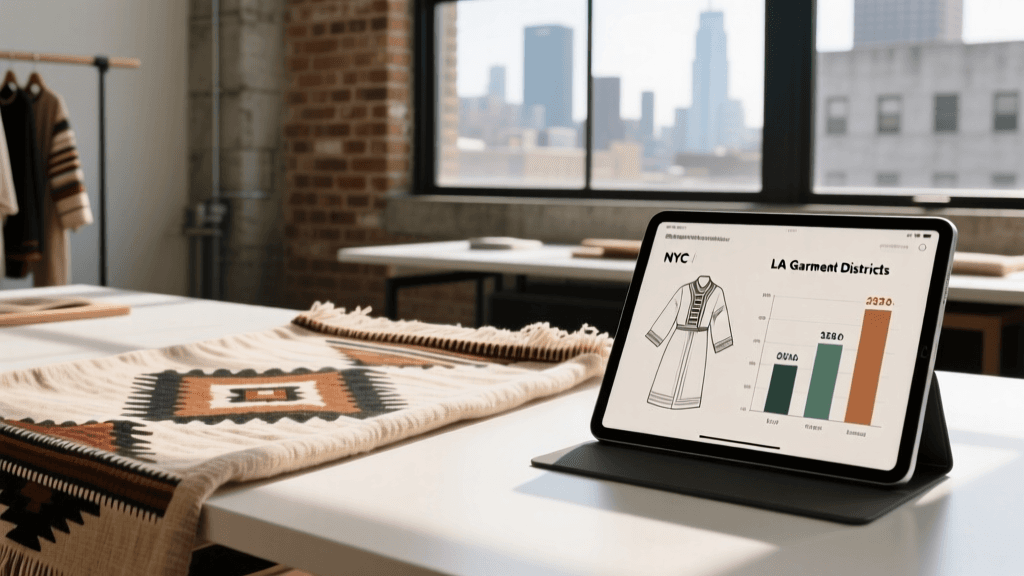
Choosing between New York and Los Angeles depends entirely on the specific requirements of your traditional or Indigenous-inspired garment line. Below is a 2026 comparison chart to help you plan your sourcing trips.
| Feature | NYC Garment District | LA Fashion District |
|---|---|---|
| Primary Textile Focus | Heavy wools, broadcloth, luxury silks, trims | Organic cottons, agave fibers, lightweight weaves |
| Best For Regalia Type | Northern Plains, Woodlands, Winter Garments | Southwestern, Mesoamerican, Warm-Climate Apparel |
| Average MOQ (Wholesale) | 20 - 50 yards | 10 - 30 yards |
| Trim & Beadwork Access | Exceptional (West 38th St) | Moderate (Scattered throughout DTLA) |
| Sustainable Options | Recycled wools, deadstock programs | Organic cottons, plant-based innovations |
| Avg. Cost per Yard (Cotton) | $12.00 - $18.00 | $7.00 - $14.00 |
Ethical Sourcing, Cultural Appreciation, and Legal Standards
As the demand for Indigenous-inspired fashion grows, so does the critical need for ethical sourcing and cultural respect. In 2026, the line between cultural appreciation and appropriation is heavily scrutinized by consumers and regulatory bodies alike. Designers operating within these garment districts must ensure their supply chains do not exploit Indigenous motifs or traditional knowledge without proper compensation and collaboration.
When manufacturing garments that feature traditional Native American designs, it is imperative to understand the legal frameworks protecting Indigenous arts. While the garment districts provide the raw materials, the final product's marketing and labeling must comply with federal standards. For instance, if you are producing garments domestically and wish to leverage the 'Made in USA' label to highlight local Indigenous craftsmanship, you must strictly adhere to federal guidelines. The Federal Trade Commission's Made in USA standard dictates that 'all or virtually all' of the product must be made in the United States, a crucial detail for heritage brands marketing their authenticity.
Furthermore, designers are encouraged to partner directly with Indigenous artisans and collectives rather than merely mimicking their work. Organizations like the National Endowment for the Arts provide extensive resources and grant opportunities for Native artists, and collaborating with these recognized entities ensures that the economic benefits of traditional garment creation flow back into Indigenous communities.
"True sustainability in fashion is not just about the environmental impact of the textile; it is about the cultural sustainability of the communities whose traditional designs inspire the modern market." — 2026 CFDA Sustainability & Heritage Report.
Sustainable Sourcing: Deadstock and Recycled Textiles
Indigenous cultures have long practiced the philosophy of taking only what is needed and wasting nothing. In 2026, this ancestral wisdom aligns perfectly with the modern fashion industry's push toward circularity. Both NYC and LA offer robust deadstock and textile recycling programs that allow designers to source high-quality materials without contributing to new textile production.
In New York, FabScrap has revolutionized sustainable sourcing. This non-profit organization collects excess fabric from major fashion houses and makes it available to independent designers and students at a fraction of the retail cost. For an Indigenous designer creating a small-batch capsule collection of traditional ribbon shirts, FabScrap’s Brooklyn warehouse is a goldmine for high-end silk ribbons and cotton broadcloth remnants that would otherwise end up in landfills.
Los Angeles has seen a similar boom in deadstock marketplaces, particularly in the Arts District, where pop-up warehouses sell surplus organic cottons and denim. Utilizing these resources not only reduces the carbon footprint of your garment line but also provides a compelling narrative of environmental stewardship that resonates deeply with modern consumers.
Step-by-Step Sourcing Strategy for Independent Designers
Navigating these massive districts can be overwhelming for first-time buyers. Follow this actionable 2026 checklist to maximize your sourcing efficiency:
- Prepare Your Tech Packs: Before visiting any showroom, have a clear tech pack detailing your required fabric weight (in GSM), weave type, and yardage needs. Vendors prioritize buyers who speak the technical language of textiles.
- Request Swatches First: Never commit to a bulk order without testing the fabric. Request hangers (swatch cards) to test for shrinkage, colorfastness, and drape, especially if you plan to apply traditional beadwork or quillwork to the material.
- Negotiate 'Cut-Table' Rates: If you are an independent artisan who cannot meet the 50-yard MOQ, politely ask for the 'cut-table' or 'sample yardage' price. Expect to pay a 20% to 30% premium over the wholesale rate, but it allows you to purchase smaller quantities legally.
- Verify Certifications: If a vendor claims a fabric is GOTS-certified organic or recycled, ask to see the physical transaction certificate. Greenwashing is prevalent, and authentic heritage brands must verify their eco-claims.
- Build Long-Term Relationships: The garment district runs on relationships. Bring business cards, remember your sales representatives' names, and follow up with thank-you emails. A strong relationship can lead to first access to rare deadstock rolls and favorable payment terms in the future.
Conclusion
The NYC and LA Garment Districts remain the lifeblood of American fashion manufacturing in 2026. For designers and artisans dedicated to creating traditional Indigenous garments and heritage apparel, these hubs offer unparalleled access to the materials necessary to keep cultural traditions alive. By understanding the distinct advantages of each district, prioritizing ethical and sustainable sourcing, and respecting the legal and cultural frameworks of Indigenous artistry, creators can build supply chains that honor the past while innovating for the future.