NYC & LA Garment District Sourcing Guide 2026: Textiles & Trims
The Evolution of American Fashion Hubs in 2026
As we navigate the fashion landscape of 2026, the American apparel industry has undergone a massive transformation driven by nearshoring, sustainability mandates, and a profound respect for cultural heritage. For independent designers, sourcing agents, and creative directors, the twin pillars of domestic apparel production—the New York City Garment District and the Los Angeles Fashion District—remain indispensable. However, the way we source materials in these historic hubs has evolved dramatically. Today, these districts are not just centers for mass-market roll goods; they are vital nexuses for sustainable deadstock, eco-friendly innovations, and authentic Indigenous and Latin American textile collaborations.
According to recent industry insights from the Council of Fashion Designers of America (CFDA), domestic sourcing has surged over the past three years as brands seek to reduce carbon footprints and ensure supply chain transparency. This guide will walk you through the exact streets, showrooms, and strategies required to navigate the NYC and LA garment districts in 2026, with a special emphasis on ethically sourcing traditional and Indigenous textiles from the Americas.
Navigating the New York City Garment District
The NYC Garment District, historically bounded by 34th and 42nd Streets between Broadway and Ninth Avenue, is a dense, walkable labyrinth of fabric stores, trim suppliers, and sample makers. Thanks to the ongoing efforts of the Save the Garment Center initiative, the area has successfully preserved its manufacturing zoning, ensuring that independent designers still have access to small-batch production and artisanal materials right in the heart of Manhattan.
Key Streets and Showrooms for 2026
- 38th Street (The Fabric Hub): This street remains the artery of the district. Mood Fabrics (225 W 38th St) continues to be a cornerstone for indie designers, offering an expansive selection of natural fibers and a dedicated deadstock section that rotates weekly. Across the street, Spandex House (222 W 38th St) is essential for activewear and stretch-woven foundations.
- 39th Street (Trims and Notions): For hardware, zippers, and custom labeling, 39th Street is unparalleled. In 2026, many trim shops here have integrated 3D-printing services for custom, biodegradable buttons and aglets, catering to the eco-conscious market.
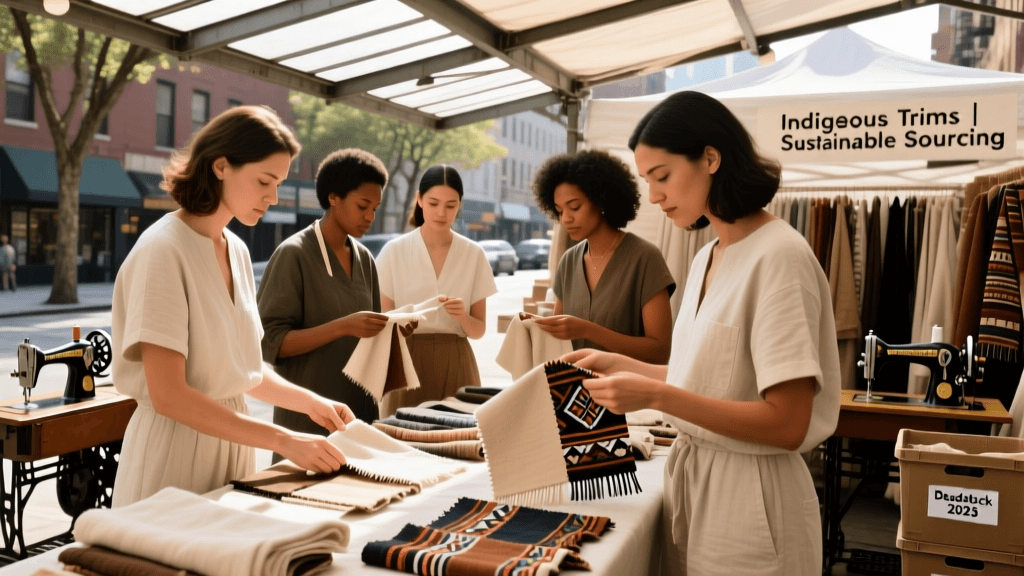
- Artisan Brokers and Indigenous Textiles: A growing trend in the NYC district is the presence of ethical brokerage showrooms that represent Native American and Latin American weaving cooperatives. Designers can source authentic Navajo (Diné) wool yardage and Zapotec cotton textiles through verified urban brokers who ensure fair-trade compensation and cultural attribution.
Mastering the Los Angeles Fashion District
While NYC is dense and vertical, the LA Fashion District is sprawling and horizontal, stretching roughly from 9th Street to Pico Boulevard, and from Main Street to Maple Avenue. LA is the undisputed capital of American denim, streetwear, activewear, and contemporary casualwear. In 2026, the district has heavily pivoted toward waterless denim finishing technologies and closed-loop recycling systems.
Key Buildings and Sourcing Zones
- The California Market Center (CMC): The California Market Center remains the epicenter of wholesale and sourcing in LA. In 2026, the CMC hosts dedicated floors for sustainable and upcycled textiles, connecting indie brands directly with mills that utilize recycled ocean plastics and regenerative cotton.
- Cooper Design Space & The New Mart: These showrooms are vital for finding high-end contemporary fabrics and establishing relationships with cut-and-sew factories that specialize in small-batch, high-quality garment construction.
- Latin American Textile Importers: LA's proximity to Latin America and its rich local demographic make it a premier hub for sourcing traditional Mexican and Guatemalan textiles. Showrooms in the southern end of the district specialize in authentic Oaxacan embroidery, Chiapas brocades, and Andean alpaca wools, imported through direct-trade partnerships that bypass exploitative middlemen.
Sourcing Authentic Indigenous & Traditional Textiles
One of the most critical responsibilities for modern designers sourcing in American fashion hubs is ensuring the ethical procurement of Indigenous and traditional textiles. The line between cultural appreciation and cultural appropriation is defined by transparency, compensation, and legal compliance.
When sourcing Native American textiles—such as Pendleton wools, Diné weavings, or Pueblo-inspired prints—through urban garment district brokers, designers must be acutely aware of the Indian Arts and Crafts Act. The Indian Arts and Crafts Board strictly prohibits the marketing of any art or craft product in a way that falsely suggests it is Indian-produced, an Indian product, or the product of a particular Indian or Indian Tribe. In 2026, reputable showrooms in both NYC and LA provide full chain-of-custody documentation for Indigenous textiles, proving that the materials were woven, dyed, and finished by enrolled members of recognized tribes or certified indigenous cooperatives.
Similarly, when sourcing Latin American traditional garments and textiles in LA, look for suppliers who partner directly with artisan cooperatives (such as the Mujeres Artesanas de las Comunidades de Oaxaca). Authentic brokers will provide transparency reports detailing the living wages paid to the weavers and the use of natural, traditional dyes like cochineal and indigo.
Comparison Chart: NYC vs. LA Garment Districts (2026)
| Feature | NYC Garment District | LA Fashion District |
|---|---|---|
| Geography & Transit | Dense, vertical, walkable. Best navigated on foot or via subway. | Sprawling, horizontal. Requires a car, rideshare, or the DASH bus. |
| Primary Specialties | High-end fashion, tailoring, trims, theatrical, and sample-making. | Denim, activewear, streetwear, contemporary casual, and cut-and-sew. |
| Average Fabric MOQs | Lower MOQs (often 10-50 yards) for deadstock and in-stock rolls. | Higher MOQs (100-300+ yards) for mill-direct and custom knits/denim. |
| Indigenous Sourcing | Specialty ethical brokers representing North American tribal weavers. | Direct-trade importers specializing in Latin American and Mesoamerican textiles. |
| Sustainability Focus | Deadstock, upcycling, and small-batch zero-waste pattern cutting. | Waterless denim finishing, regenerative agriculture cotton, and closed-loop recycling. |
Your 5-Step Action Plan for a 2026 Sourcing Trip
Whether you are launching a new collection or scaling an existing indie label, preparation is the key to maximizing your time in these bustling districts. Follow this actionable itinerary to ensure a successful sourcing trip.
- Digitize Your Tech Packs and Swatch Books: Before hitting the pavement, ensure your tech packs are stored on a tablet. Most showrooms in 2026 utilize QR-code-based digital swatch requests to minimize paper waste and speed up the sampling process.
- Pre-Register for Showroom Access: Many high-end sustainable fabric showrooms and Indigenous textile brokers in the CMC and NYC's Cooper Design Space operate by appointment only. Use industry platforms to verify your business credentials and book slots at least two weeks in advance.
- Map Your Route by Specialty: In NYC, group your days by category (e.g., Day 1 for 38th St fabrics, Day 2 for 39th St trims). In LA, map your route by building (CMC in the morning, The New Mart in the afternoon) to avoid backtracking through heavy downtown traffic.
- Verify Chain-of-Custody for Cultural Textiles: If you are purchasing traditional Navajo, Zapotec, or Andean textiles, explicitly request the supplier's chain-of-custody documentation and fair-trade certifications to ensure compliance with federal laws and ethical standards.
- Utilize Local Freight Forwarders: Both districts are surrounded by specialized local freight and shipping services that cater to designers. Instead of hauling heavy deadstock rolls onto a plane, use district-based shippers to palletize and freight your materials directly to your studio or factory.
Conclusion
The NYC and LA garment districts remain the beating heart of American fashion manufacturing. In 2026, they offer far more than just convenience; they provide a gateway to sustainable practices, innovative materials, and deeply respectful collaborations with Indigenous and traditional artisans across the Americas. By approaching these hubs with preparation, cultural awareness, and a commitment to ethical sourcing, independent designers can build resilient, transparent, and culturally rich supply chains that resonate with the modern consumer.