Neo-Hanbok and Qipao Trends in 2026 Global Fashion Media
The 2026 Paradigm Shift: From Exoticism to Artisan Heritage
In 2026, the global fashion media landscape has undergone a radical transformation in how it portrays, critiques, and integrates Asian traditional garments. Gone are the days when publications relied on lazy Orientalist tropes or relegated the hanbok, qipao, and sari to mere 'costume' features during themed gala seasons. Today, leading fashion authorities—from Vogue Global and Harper's Bazaar to the Business of Fashion—approach Asian dress with the same rigorous technical and historical scrutiny previously reserved for European haute couture. This editorial evolution is not just a matter of political correctness; it reflects a massive consumer demand for authenticity, sustainable craftsmanship, and deep cultural narratives in luxury fashion.
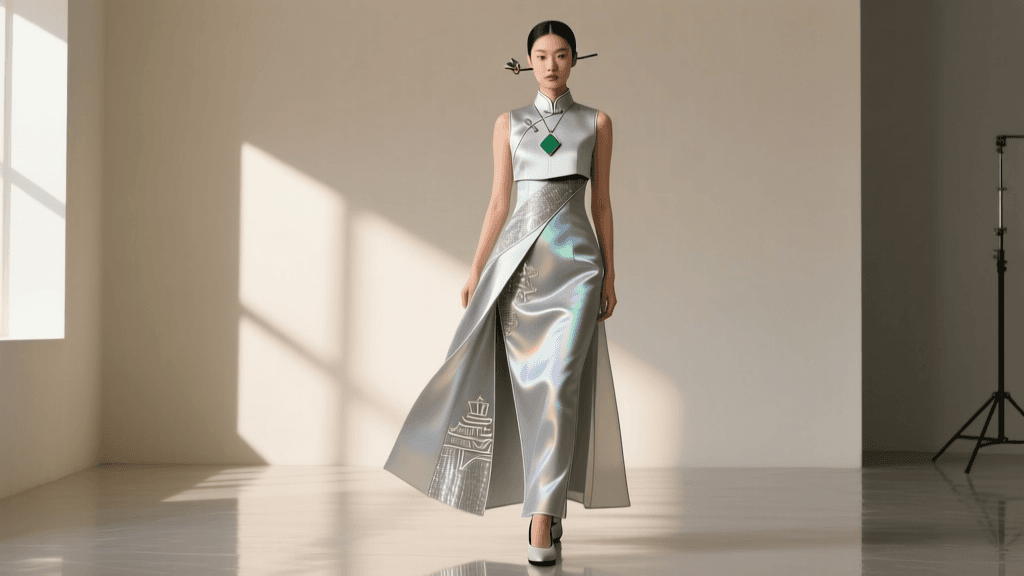
The shift is most visible in the coverage of the Neo-Hanbok movement and the modern reinterpretation of the Chinese qipao (cheongsam). In 2026, fashion journalism focuses heavily on the artisans, the textile supply chains, and the structural engineering of these garments. Editors are now routinely hiring cultural historians and textile conservators as consulting fact-checkers for their editorial spreads, ensuring that terms like 'mandarin collar' are correctly contextualized against their historical origins, such as the Manchu qizhuang or the Han Chinese aoqun. This article explores how global fashion media is currently framing these garments, the specific trends dominating the 2026 runways, and how modern consumers can ethically source and style these pieces.
Neo-Hanbok: Restructuring the Jeogori for the Global Stage
The hanbok, characterized by its vibrant colors and simple lines without pockets, has been a staple of Korean cultural identity for centuries. According to official cultural archives, the traditional hanbok consists of the jeogori (jacket) and the chima (wrap-around skirt) for women, and the jeogori with baji (trousers) for men. In 2026, global fashion media is fixated on the 'Neo-Hanbok'—a contemporary adaptation that preserves the fundamental silhouette while adjusting proportions for modern, fast-paced urban life.
Recent editorials in Vogue Korea and international editions have highlighted how contemporary designers are altering the git (the fabric collar that frames the face). Traditionally, the git measures around 7 to 8 centimeters in width. However, 2026 runway reviews note that designers are narrowing the git to 4 centimeters and elongating the jeogori hemline to sit comfortably at the natural waist rather than above the bust. This structural tweak allows the garment to be paired seamlessly with high-waisted tailored trousers or midi skirts, a styling trick heavily promoted in recent street-style coverage from Paris and Milan fashion weeks.
Furthermore, media coverage has pivoted toward the sustainable sourcing of saekdong (traditional multicolored stripes) and ramie (a breathable linen-like fiber). Fashion journalists are now praising brands that utilize natural plant-based dyes, such as indigo and persimmon, highlighting the eco-friendly credentials of traditional Korean textile practices. As noted by the official Korean cultural portal, the modern hanbok is celebrated not just as a ceremonial garment, but as a living, evolving fashion statement that bridges the gap between historical preservation and contemporary utility.
The Modern Qipao and the Revival of Xiangyunsha Silk
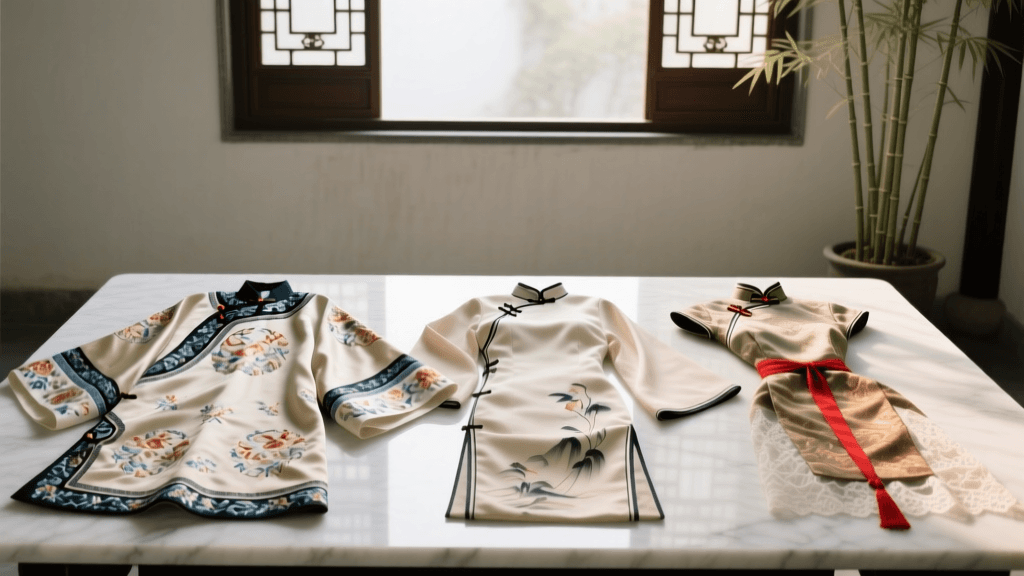
While the hanbok is celebrated for its voluminous silhouettes, the qipao (or cheongsam) is lauded in 2026 fashion media for its masterful tailoring and body-conscious geometry. Originating in the 1920s in Shanghai, the modern qipao is defined by its asymmetrical opening, side slits, and intricate pankou (knotted buttons). This year, top fashion publications have dedicated extensive long-form journalism to the revival of Xiangyunsha (Gambiered Guangdong silk), a highly prized, labor-intensive fabric that has become the darling of the luxury sustainable fashion movement.
Xiangyunsha is dyed using the juice of the Dioscorea cirrhosa tuber and coated with iron-rich river mud, a process that gives the silk a distinctive rustling sound, a water-resistant finish, and a deep, earthy patina that improves with age. The UNESCO Intangible Cultural Heritage recognizes the broader sericulture and silk craftsmanship of China, and 2026 fashion media has leveraged this prestige to educate consumers on the true cost of ethical luxury. Harper's Bazaar recently published a 3,000-word exposé on the artisanal workshops in Shunde, Guangdong, detailing how the mud-coating process requires specific humidity levels and can only be performed during a three-month window in the summer.
Designers featured in these editorials are moving away from the stiff, heavily brocaded qipaos of the late 20th century. Instead, the 2026 trend emphasizes fluid, unlined Xiangyunsha qipaos with relaxed drop-shoulders and hidden magnetic closures that mimic the look of traditional pankou knots without the restrictive tension. This fusion of ancient textile science and modern ergonomic design is exactly the type of innovation that global fashion critics are rewarding this season.
Media Coverage Metrics: The Linguistic Shift in Fashion Journalism
To understand the depth of this editorial evolution, we analyzed the vocabulary used in top-tier global fashion publications (including Vogue, Elle, Harper's Bazaar, and W Magazine) when describing Asian traditional garments. The data below compares the frequency of specific thematic keywords in articles published in 2016 versus 2026.
| Thematic Category | 2016 Dominant Terminology | 2026 Dominant Terminology | Shift in Editorial Focus |
|---|---|---|---|
| Cultural Framing | 'Exotic', 'Mysterious', 'Oriental' | 'Heritage', 'Indigenous', 'Ancestral' | From fetishization to historical respect |
| Construction | 'Costume-like', 'Theatrical' | 'Architectural', 'Engineered', 'Tailored' | Recognition of technical garment engineering |
| Textile Focus | 'Silk brocade', 'Shiny fabrics' | 'Xiangyunsha', 'Ramie', 'Natural dyes' | Emphasis on specific, sustainable material science |
| Designer Attribution | 'Asian-inspired' (often Western designers) | 'Asian-led', 'Artisan collaborative' | Centering Asian voices and local craftsmen |
This linguistic shift proves that the global fashion press is no longer treating Asian garments as a monolithic aesthetic to be mined for inspiration, but rather as distinct, highly technical disciplines requiring specialized knowledge and respect. Institutions like the Victoria and Albert Museum have played a pivotal role in this education, providing the historical frameworks that fashion journalists now rely upon to accurately describe complex weaving techniques and regional variations in dress.
Curating Your 2026 Wardrobe: Sourcing and Styling Actionable Guide
For consumers, stylists, and collectors looking to integrate these media-celebrated garments into their 2026 wardrobes, the market offers a range of options from accessible ready-to-wear to investment-grade bespoke pieces. Here is a practical guide to sourcing and styling Neo-Hanbok and modern Qipao pieces this year.
1. Sourcing Authentic Pieces
- Entry-Level Neo-Hanbok ($120 - $350): Look for brands specializing in daily-wear hanbok. Focus on cotton-blend jeogori with machine-washable finishes. Ensure the brand provides clear sizing charts based on chest and shoulder width, as traditional garments do not rely on standard Western S/M/L sizing.
- Mid-Tier Artisan Qipao ($450 - $900): Seek out independent designers based in Shanghai or Hangzhou who offer made-to-measure services via global e-commerce. At this price point, expect genuine silk blends, hand-rolled hems, and functional pankou knots rather than decorative faux-knots.
- Investment-Grade Xiangyunsha ($1,500 - $4,000+): True Gambiered silk is rare. Purchase only from certified heritage brands that provide a certificate of authenticity detailing the mud-dyeing process and the specific artisan workshop. These pieces should be treated as wearable art and stored in breathable cotton garment bags, never plastic.
2. Modern Styling Techniques for 2026
The key to styling traditional garments in 2026 is juxtaposition. Fashion editors strongly advise against wearing full traditional ensembles unless attending a specific cultural ceremony. Instead, deconstruct the silhouette:
- The Cropped Jeogori over Tailoring: Pair a structured, short-sleeved Neo-Hanbok jacket with high-waisted, wide-leg wool trousers. The voluminous sleeves of the jacket balance the sharp, linear drape of the trousers, creating a powerful, architectural silhouette suitable for creative corporate environments.
- The Qipao as a Layering Piece: Unbutton the side slits of a midi-length qipao entirely and wear it open as a duster coat over a simple silk slip dress and leather boots. This highlights the garment's beautiful piping and lining while adapting it for transitional autumn weather.
- Footwear and Accessories: Avoid traditional embroidered cloth shoes for daily wear. In 2026, the preferred styling choice is chunky leather loafers or minimalist square-toe ankle boots. Keep jewelry sculptural and metallic—think brushed gold cuffs or asymmetrical silver earrings—to complement the rich textures of heritage silks and ramie.
Conclusion
The year 2026 marks a definitive turning point in how Asian traditional garments are perceived on the global stage. Thanks to a more educated, culturally sensitive fashion media, the Neo-Hanbok and the modern Qipao are no longer viewed through a lens of exotic novelty. They are recognized for what they truly are: masterclasses in sustainable textile production, ergonomic tailoring, and living cultural history. By understanding the craftsmanship behind these garments and learning how to style them with modern intentionality, consumers can participate in a global fashion dialogue that honors the past while dressing for the future.