Authentic Navajo & Pueblo Garments: 2026 Sourcing Guide
The Indigenous Textile Renaissance of the American Southwest
The Indigenous Peoples of the American Southwest have cultivated some of the most recognizable and technically complex textile traditions in North America. As we navigate the fashion and textile landscape in 2026, the demand for authentic Native American garments has surged, driven by a global appreciation for sustainable, slow fashion and indigenous sovereignty. However, this heightened interest has also led to an influx of mass-produced imitations. For collectors, cultural institutions, and ethical fashion enthusiasts, understanding the nuances of Diné (Navajo) weaving and Pueblo ceremonial garments is more critical than ever. This comprehensive guide explores the regional dress traditions of the Southwest and provides actionable advice for sourcing authentic pieces in today's market.
The Diné (Navajo) Weaving Tradition and Churro Wool
The foundation of Diné textile artistry is the Navajo-Churro sheep, a breed brought to the Americas by Spanish colonizers in the 16th century and subsequently integrated into the very spiritual and economic fabric of the Navajo Nation. Unlike modern commercial sheep breeds, the Churro produces a dual-coated fleece: a soft, insulating undercoat and a long, lustrous outer coat that provides exceptional durability and weather resistance.
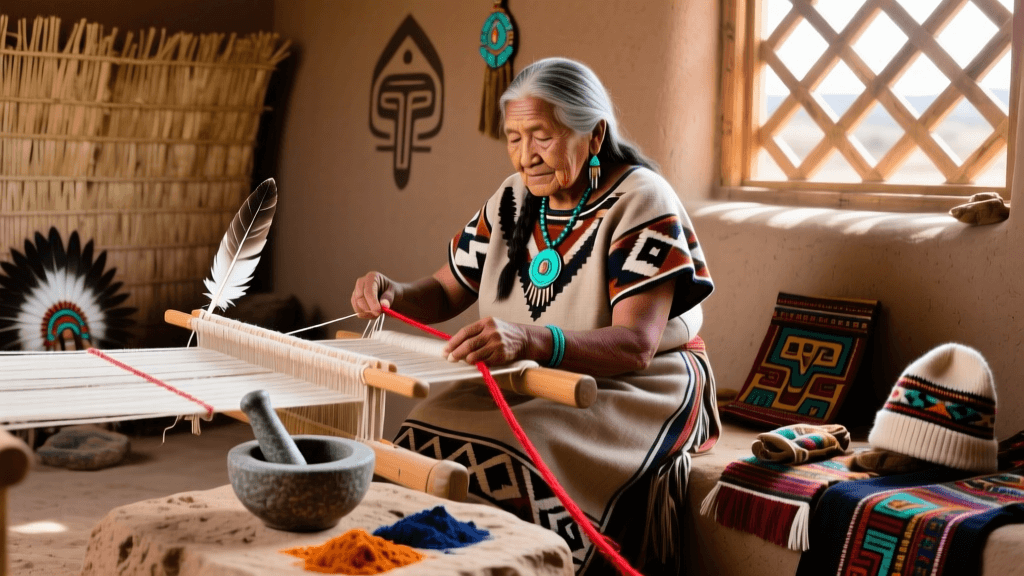
In 2026, the preservation of the Navajo-Churro breed remains a triumph of indigenous agricultural resilience. Following the near-extinction of the breed during the US government's livestock reduction programs in the 1930s, contemporary Diné shepherds and organizations have successfully revitalized the flocks. Today, master weavers utilize hand-carded and hand-spun Churro wool to create wearing blankets, rugs, and traditional garments such as the biil (a two-piece woven dress).
The spinning process, typically done using a drop spindle, introduces a unique Z-twist that gives Diné textiles their characteristic diagonal ribbing and structural integrity. When sourcing authentic Diné woven garments or textiles in 2026, buyers must look for this distinct hand-spun irregularity. Commercially spun yarns, even those made from Churro wool, lack the microscopic air pockets and uneven tension that give hand-woven indigenous garments their unparalleled drape and thermal regulation.
Natural dyeing remains a hallmark of high-end Diné textiles. While synthetic aniline dyes are historically significant and widely used, the 2026 market shows a strong premium for botanical dyes. Artisans harvest rabbitbrush for vibrant yellows, wild walnut hulls for deep browns, and Juniper berries for soft greens. The extraction and mordanting processes are closely guarded family secrets, passed down through generations, making each botanically dyed garment a unique geographic and temporal artifact.
Pueblo Manta Dresses and Ceremonial Regalia
Moving east from the Navajo Nation to the Rio Grande Valley, the Pueblo peoples—including the Hopi, Zuni, Taos, and Acoma—maintain distinct weaving and garment traditions. The quintessential Pueblo garment is the manta dress, a rectangular, black woolen blanket worn wrapped around the body, leaving one shoulder bare, and secured with a woven belt or sash.
Historically, manta dresses were woven from the naturally dark brown or black wool of the Churro sheep. The edges are often finished with an intricate cross-knit stitch or adorned with red and green yarn embroidery. In 2026, authentic Pueblo manta dresses are rarely sold to the general public as everyday fashion; they are primarily woven for ceremonial use, weddings, and coming-of-age rituals within the community. However, smaller variations, such as Pueblo woven shawls and ceremonial sashes, are available through direct-artisan cooperatives.
Another vital element of Pueblo dress is the turkey feather blanket. Once widespread across the ancestral Puebloan world, the art of wrapping yucca cordage with thousands of clipped turkey feathers to create a waterproof, insulating mantle has seen a dedicated cultural revival among contemporary artisans. In 2026, a master-crafted turkey feather blanket requires over 10,000 feathers and up to a year of meticulous labor, making it one of the rarest and most expensive indigenous garments in the North American market, with museum-quality pieces appraising well over $15,000.
2026 Market Guide: Sourcing Authentic Pieces
The proliferation of Southwestern style fast fashion has made it increasingly difficult to distinguish between authentic indigenous craftsmanship and cultural appropriation. The Indian Arts and Crafts Act is a federal truth-in-advertising law that prohibits misrepresentation in the marketing of Indian arts and crafts products within the United States. Under this law, it is illegal to offer or display for sale any art or craft product in a manner that falsely suggests it is Indian-produced.
When purchasing Navajo or Pueblo garments, textiles, or regalia components in 2026, adhere to the following verification checklist:
- Provenance Documentation: Authentic pieces sold by reputable galleries or cooperatives will include a certificate of authenticity detailing the artist's name, tribal affiliation, and materials used.
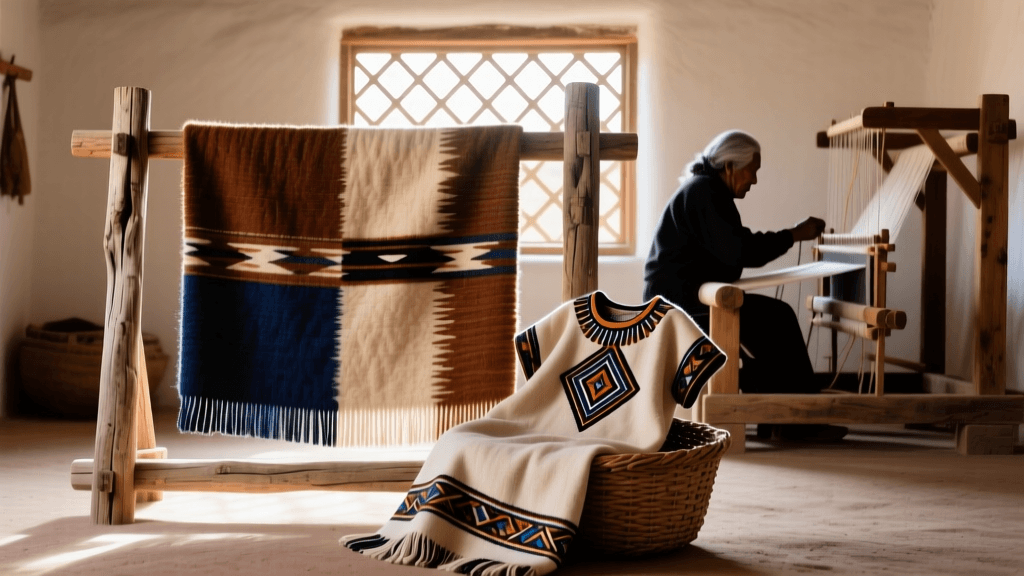
- Warp and Weft Analysis: Traditional Diné weavings use a continuous warp, meaning the textile is finished at both the top and bottom without fringes. If a Navajo rug or garment has cut fringes, it is likely a mass-produced imitation woven on a mechanical loom.
- Selvage Cords: Authentic Pueblo and Navajo weavings often feature reinforced selvage cords (extra threads running along the edges) to prevent stretching. This is a hallmark of hand-loomed indigenous textiles.
- Direct-to-Artisan Platforms: Bypass third-party e-commerce giants. Purchase directly from established entities like the Navajo Arts and Craft Enterprise or during recognized events like the Santa Fe Indian Market.
Material Comparison: Authentic vs. Imitation Textiles
To assist buyers, collectors, and costume archivists in evaluating Southwest indigenous garments, the table below contrasts the physical and market properties of authentic hand-spun Navajo-Churro wool against common commercial and synthetic alternatives seen in the 2026 marketplace.
| Material Type | Fiber Source & Prep | Average Micron Count | Dye Absorption & Fastness | 2026 Market Price (Per Yard/Blanket) |
|---|---|---|---|---|
| Authentic Hand-Spun Churro | 100% Navajo-Churro, hand-carded, Z-twist drop spindle | 28-35 (Dual-coated) | Excellent; absorbs botanical dyes deeply with slight variegation | $800 - $3,500+ (Woven Garment/Blanket) |
| Commercial Churro Yarn | Churro fleece, machine-carded, S-twist mill-spun | 25-30 (Blended) | Good; uniform color uptake, lacks hand-spun character | $150 - $400 (Woven Item) |
| Commercial Merino Wool | Merino sheep, machine-processed | 18-22 (Fine) | High; takes acid dyes brilliantly but lacks structural drape | $40 - $120 (Mass-produced imitation) |
| Synthetic Acrylic Blend | Petroleum-based polymers | N/A | Poor; requires disperse dyes, prone to pilling and static | $15 - $45 (Fast fashion imitation) |
Ethical Purchasing and Supporting Artisan Sovereignty
Investing in authentic Indigenous North American dress traditions is not merely an aesthetic choice; it is an act of economic support for tribal sovereignty and cultural preservation. In 2026, the most ethical way to acquire Southwest garments is through direct relationships with the weavers or through tribally owned enterprises.
When commissioning a custom biil dress or a ceremonial Pueblo sash, be prepared for extended timelines. A master weaver may spend three months shearing, washing, carding, spinning, and dyeing the wool before the first thread is placed on the loom. The weaving process itself can take another two to six months, depending on the complexity of the storm pattern or the diamond twill.
Furthermore, buyers must respect the sacred nature of certain garments. Items such as Hopi wedding sashes, Zuni ceremonial kilts, and specific clan-affiliated regalia are not meant for commercial sale or secular wear. Understanding the boundary between shareable textile arts (like rugs, shawls, and outer blankets) and restricted ceremonial dress is paramount for ethical collectors.
By prioritizing provenance, understanding the material science of indigenous fibers, and respecting cultural boundaries, enthusiasts and institutions can help ensure that the magnificent textile traditions of the Navajo and Pueblo peoples continue to thrive for generations to come. For further reading on the legal protections surrounding Native American arts, consult the National Park Service guidelines on the Indian Arts and Crafts Act.