Buying Authentic Myeongju Silk Hanbok Online: 2026 Marketplace Guide
The Evolution of Online Hanbok Shopping in 2026
The landscape of purchasing traditional Asian garments has undergone a massive digital transformation over the last decade. As we navigate 2026, the demand for authentic, artisan-crafted traditional wear has surged, moving buyers away from mass-produced, synthetic costumes and toward bespoke, heritage-rich textiles. For the Korean hanbok, this shift is most evident in the global pursuit of Myeongju, a premium traditional silk. However, sourcing genuine Myeongju hanbok online requires navigating a complex web of international marketplaces, verifying artisan credentials, and understanding precise custom-fitting metrics.
Historically, acquiring a high-quality hanbok required a physical visit to specialized boutiques in Seoul's Insadong or Bukchon Hanok Village. Today, digital platforms have democratized access to master artisans. Yet, this accessibility brings challenges: distinguishing between genuine hand-woven silk and factory-made polyester blends, managing cross-border tailoring communications, and ensuring secure international shipping. This comprehensive guide will walk you through the most reliable online marketplaces in 2026, how to verify the authenticity of Korean silk, and the exact measurements required for a flawless custom fit.
Understanding Myeongju Silk in the Digital Age
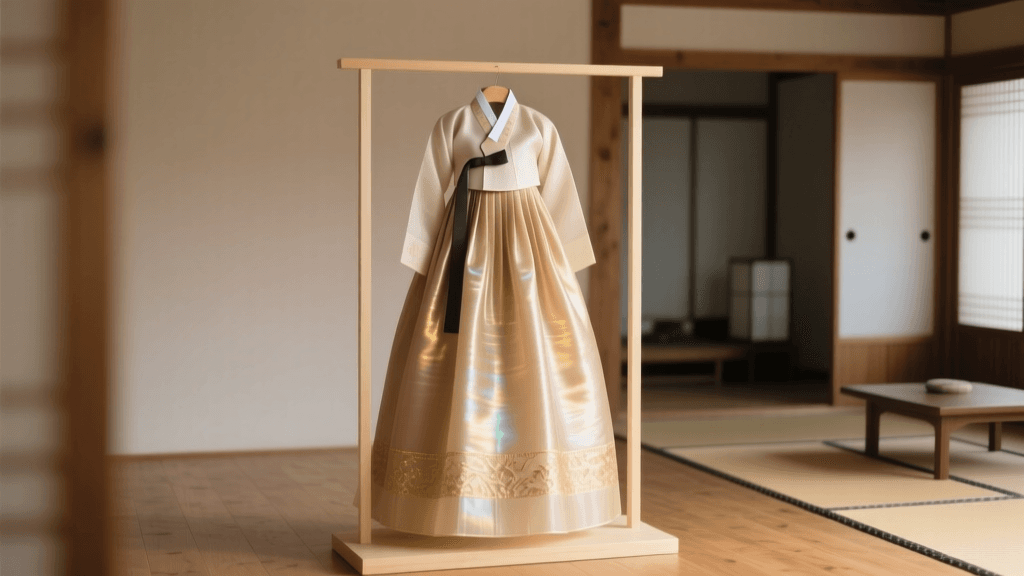
Myeongju is a traditional Korean silk fabric woven from pure silk threads, renowned for its subtle, elegant sheen, exceptional breathability, and soft drape. Unlike the highly reflective, stiff silks often used in modern stage costumes, authentic Myeongju possesses a refined, matte-like luster that signifies true luxury and historical accuracy.
When shopping online in 2026, buyers must be vigilant. Many mass-market retailers use terms like 'Korean silk blend' or 'silk-feel polyester' to mimic the texture of Myeongju at a fraction of the cost. Genuine Myeongju is typically priced between 350,000 KRW and 800,000 KRW (approximately $260 to $600 USD) just for the raw fabric, meaning a complete, authentic custom hanbok set will generally start around 800,000 KRW ($600 USD) and can exceed 2,000,000 KRW ($1,500 USD) for master-crafted pieces. To verify authenticity online, look for detailed macro-photography of the fabric weave, artisan video testimonials, and official certification badges from recognized Korean cultural heritage organizations.
Top Online Marketplaces for Authentic Hanbok
1. Idus (아이디어스)
As of 2026, Idus Handmade Marketplace remains the premier digital destination for authentic Korean crafts. Originally a mobile app connecting local artisans with domestic buyers, Idus has expanded its global shipping infrastructure, making it an invaluable resource for international hanbok enthusiasts. The platform strictly vets its sellers, meaning you are purchasing directly from independent tailors and weavers. The interface allows for direct, real-time translation messaging with artisans, enabling you to request specific color combinations for the jeogori (jacket) and chima (skirt).
2. Gmarket Global Traditional Craft Pavilion
For international buyers seeking a more familiar e-commerce experience, Gmarket Global's dedicated Traditional Craft Pavilion offers a curated selection of verified hanbok ateliers. While Gmarket is a general marketplace, their 2026 initiative to highlight government-certified traditional craft sellers ensures a layer of buyer protection. Shipping is often consolidated, and customer service is available in English, Japanese, and Chinese, bridging the communication gap that often complicates custom tailoring orders.
3. Direct KCDF-Certified Atelier Portals
The most secure method for acquiring museum-quality Myeongju hanbok is purchasing directly from ateliers certified by the Korea Craft & Design Foundation (KCDF). The KCDF maintains a digital registry of master artisans. By visiting the individual portals of these certified masters, buyers bypass third-party marketplace fees and ensure their investment directly supports the preservation of intangible cultural heritage. These direct orders often include a certificate of authenticity and detailed care manuals.
Marketplace Comparison Chart
| Platform | Best For | Avg. Custom Lead Time | Global Shipping | Artisan Verification |
|---|---|---|---|---|
| Idus | Direct artisan communication & unique designs | 3-5 Weeks | Yes (EMS / DHL) | Platform-vetted sellers |
| Gmarket Global | Buyer protection & consolidated shipping | 2-4 Weeks | Yes (Multiple options) | KCDF badges on select stores |
| Direct Atelier Portals | Museum-quality & master artisan pieces | 6-10 Weeks | Varies by atelier | Direct KCDF / Gov. certification |
The Custom Fitting Process: Essential Measurements
Ordering a bespoke hanbok online requires precise measurements. Unlike Western garments that rely on standard sizing charts, a traditional hanbok is constructed using a flat-pattern cutting method that relies on specific body landmarks. When communicating with your online tailor, you will need to provide the following metrics in centimeters:
- Hwajang (Sleeve Length): Measured from the base of the neck, over the shoulder, and down to the wrist bone. This dictates the elegant drape of the jeogori sleeves.
- Dae (Chest/Bust Circumference): Measured around the fullest part of the chest. Because the jeogori wraps across the front, an accurate Dae measurement ensures the garment sits flat without pulling at the goreum (ribbon ties).
- Somaemooli (Cuff Width): The circumference of the wrist. Traditional cuffs are slightly wider than modern shirt cuffs to allow for ease of movement and to showcase the white inner lining.
- Chima Waist (Skirt Waist): Measured high, just beneath the bust line, as the traditional chima sits on the underbust rather than the natural waist.
- Chima Length: Measured from the underbust down to the desired hemline, typically resting just above the ankle bone to prevent tripping.
Verifying Artisan Credentials
To avoid inadvertently funding mass-produced factory items, buyers must learn to verify artisan credentials. The highest tier of authenticity belongs to Isuza (holders of Important Intangible Cultural Heritage). The Cultural Heritage Administration of Korea maintains a public database of these master artisans. While purchasing directly from an Isuza can be prohibitively expensive and involve multi-year waitlists, many certified masters operate online storefronts or employ senior apprentices who sell their work on platforms like Idus.
Always look for the KCDF seal of approval on product listings. In 2026, the KCDF introduced a blockchain-verified digital tag for high-end textiles, allowing international buyers to scan a QR code upon delivery to verify the exact origin of the silk, the weaving mill, and the tailor who constructed the garment.
Navigating International Shipping and Customs in 2026
Cross-border textile shipping has become highly streamlined, yet buyers must remain aware of their local customs thresholds. When ordering from Korean platforms, EMS (Express Mail Service) remains the most reliable and cost-effective shipping method for garments, typically delivering within 7 to 14 days globally. For high-value Myeongju silk sets exceeding $500 USD, upgrading to DHL or FedEx is highly recommended for real-time tracking and climate-controlled handling.
Be prepared to pay import duties. Silk garments are often classified under specific textile tariff codes. To ensure a smooth customs clearance process, request that the artisan accurately declare the item as 'Traditional Silk Garment (Personal Use)' rather than a generic 'Costume,' which can sometimes trigger unnecessary inspections or higher commercial tariff rates.
Post-Delivery Care for Myeongju Silk
Once your bespoke Myeongju hanbok arrives, proper care is essential to maintain the integrity of the silk and the structural elements of the garment. Never machine wash or hand wash Myeongju; the water will strip the silk of its natural sericin proteins, causing it to lose its shape and subtle luster. Always rely on professional dry cleaners who have specific experience with traditional Asian garments.
For storage, avoid wire hangers which will distort the shoulders of the jeogori. Instead, fold the garment along its original seam lines and store it in a breathable cotton pouch or a traditional paulownia wood box. Paulownia wood naturally regulates humidity and repels insects, making it the ultimate storage solution for preserving heirloom-quality silk for future generations.
Conclusion
The digital marketplace of 2026 offers unprecedented access to the master artisans keeping the tradition of Myeongju silk hanbok alive. By utilizing vetted platforms like Idus, verifying credentials through the KCDF, and providing meticulous custom measurements, international buyers can confidently invest in authentic, heirloom-quality traditional garments. Whether for a wedding, a cultural ceremony, or a profound personal appreciation of Asian textile history, the effort required to source genuine hanbok online is richly rewarded by the unparalleled beauty and craftsmanship of the final piece.