Museum-Grade Archival Storage for Silk Kimonos & Hanboks in 2026
The Unique Vulnerability of Silk Fibroin in Asian Heritage Garments
As the market for vintage Meiji and Taisho-era kimonos, alongside mid-century silk hanboks, reaches unprecedented heights in 2026, collectors and heritage custodians face a critical challenge: long-term preservation. Unlike plant-based cellulose fibers such as cotton or linen, silk is a protein fiber composed primarily of fibroin and sericin. This protein structure makes Asian silk garments exceptionally vulnerable to hydrolysis, photo-oxidation, and alkaline degradation. A vintage silk kimono or a delicately embroidered hanbok chima (skirt) cannot simply be folded and placed in a standard cedar chest or plastic bin. Doing so invites permanent crease damage, acid migration, and catastrophic pest infestations.
In 2026, the intersection of traditional textile appreciation and modern conservation science has established rigorous new standards for home archivists. Whether you are safeguarding a family heirloom or a newly acquired antique, implementing museum-grade archival storage protocols is essential to ensure these garments survive for future generations.
Step 1: Pre-Storage Preparation and Surface Assessment
Before any garment enters long-term storage, it must be meticulously assessed and surface-cleaned. Never store a silk garment that has been worn without professional cleaning, as invisible organic residues (sweat, skin oils, food particles) will oxidize and attract pests.
- UV Inspection: Use a 365nm UV flashlight in a dark room to scan the silk. Hidden biological stains, mold spores, and previous amateur restorations will fluoresce under ultraviolet light.
- Surface Dusting: Lay the garment flat on a clean, scoured muslin sheet. Using a traditional Japanese hake brush (made of soft goat or horsehair) or a museum-grade micro-duster, gently brush the surface in one direction to lift particulate soil without stressing the fibers.
- Hardware Check: Inspect metallic threads, obi clasps, and hanbok goreum (ties) for early signs of verdigris or rust. Metal corrosion can rapidly stain adjacent silk.
According to the Canadian Conservation Institute, protein-based fibers require specialized handling, and wet cleaning should only ever be performed by certified textile conservators using pH-neutral, non-ionic surfactants.
Step 2: The Golden Rule of Silk Storage Materials
The most common mistake made by amateur collectors is using buffered acid-free tissue paper. While buffered tissue (which contains an alkaline reserve like calcium carbonate) is excellent for cotton and linen, it is highly destructive to protein fibers. The alkalinity will break down the silk fibroin over time, leading to severe embrittlement and shattering. You must exclusively use unbuffered, acid-free, lignin-free tissue paper for all silk kimonos and hanboks.
2026 Archival Storage Material Comparison
| Material | Best Use Case | Pros | Cons | 2026 Avg. Cost |
|---|---|---|---|---|
| Unbuffered Acid-Free Tissue | Padding folds, wrapping garments | pH neutral, prevents crease stress | Requires replacement every 3-5 years | $18 per 100 sheets |
| Archival Coroplast Boxes | Primary outer enclosure | Rigid, inert, stackable, pest-resistant | Bulky, higher initial investment | $45 - $85 per box |
| Washed Unbleached Muslin | Dust covers, outer wrapping | Breathable, reusable, washable | Must be scoured to remove factory sizing | $12 per yard |
| Tyvek Envelopes | Flat storage of obi and sashes | Water-resistant, tear-proof, inert | Not breathable, traps existing moisture | $3 per envelope |
Step 3: Folding vs. Rolling Techniques
The physical manipulation of the garment dictates its structural longevity. Sharp, permanent creases will eventually cause the silk fibers to snap along the fold line. The American Institute for Conservation (AIC) Wiki emphasizes that rolling is always preferred over folding for large, heavy textiles. However, due to the complex construction of kimonos and hanboks, modified folding with extensive padding is often the only practical solution for home archives.
Preserving the Kimono Structure
While the traditional tatou folding method is culturally significant, it creates harsh, repetitive creases. For archival storage, use a modified flat-fold approach:
- Lay the kimono face down on a sheet of unbuffered tissue.
- Fold the sleeves inward, but place a 'tissue snake' (a tightly rolled cylinder of acid-free tissue) inside the fold to prevent a sharp crease.
- Fold the body in half lengthwise, again padding the center seam with a tissue snake.
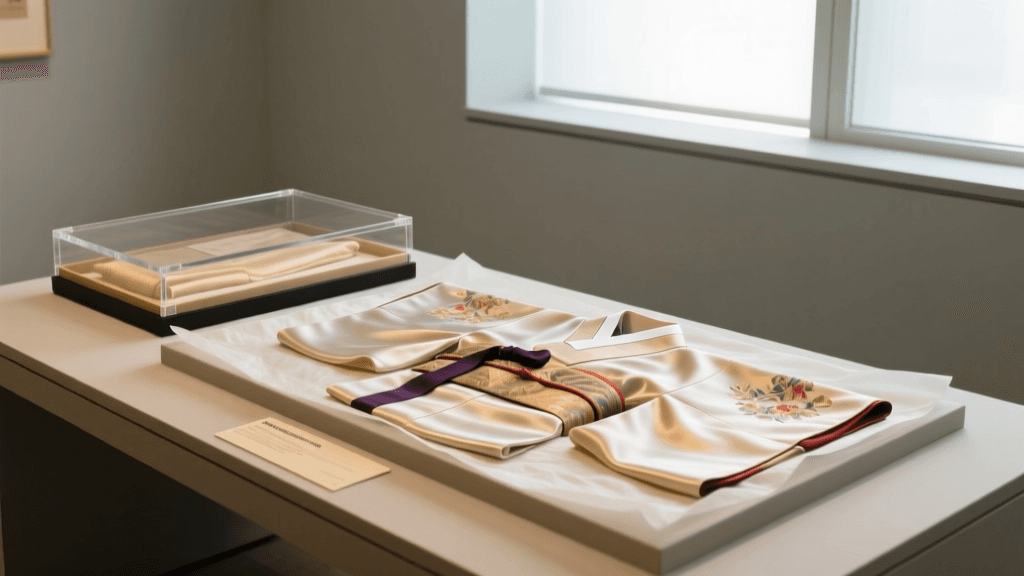
- Wrap the entire folded garment in a final layer of unbuffered tissue or a scoured muslin dust cover before placing it in a Coroplast box.
Preserving the Hanbok Silhouette
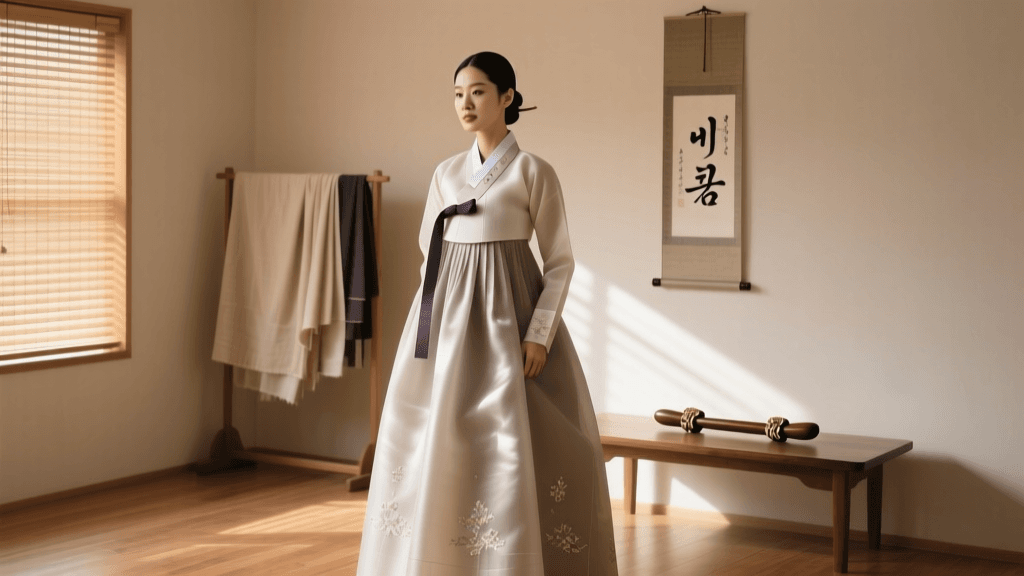
The hanbok presents unique challenges, particularly the heavily pleated chima and the structured jeogori (jacket). Never crush the pleats of a vintage chima. Instead, stuff the interior of the skirt with loose, crumpled unbuffered tissue to support the bell shape, and store it in a wide, shallow archival box rather than folding it. The jeogori should be padded at the shoulders and underarms with tissue to maintain its three-dimensional architecture.
Step 4: Climate Control and 2026 IoT Monitoring
Silk is highly hygroscopic, meaning it readily absorbs and releases moisture from the surrounding air. Fluctuations in relative humidity (RH) cause the fibers to expand and contract, leading to mechanical fatigue. Furthermore, high humidity invites mold, while low humidity causes desiccation and brittleness.
Guidelines from the Victoria and Albert Museum recommend maintaining a stable environment for protein textiles. In 2026, achieving this in a residential setting is easier than ever thanks to advanced IoT (Internet of Things) climate sensors.
- Target Temperature: 65°F to 68°F (18°C to 20°C). Lower temperatures slow chemical degradation.
- Target Relative Humidity: 45% to 55%. Stability is more important than the exact number; avoid swings greater than 5% in a 24-hour period.
- Light Exposure: Store in total darkness. When displaying, limit light exposure to 50 lux and strictly block all UV radiation.
- 2026 Tech Recommendation: Utilize Wi-Fi-enabled data loggers like the Temp Stick or Govee Smart Hygrometer. These devices send push alerts to your smartphone if the RH or temperature in your archival closet drifts outside your predefined safe parameters.
Step 5: Integrated Pest Management (IPM) Without Chemicals
The webbing clothes moth (Tineola bisselliella) and the carpet beetle are the natural predators of silk. In the past, collectors relied on mothballs (naphthalene or paradichlorobenzene), which are now known to be highly toxic, carcinogenic, and capable of melting synthetic threads and plastic sequins often found in mid-century garments.
Modern 2026 IPM protocols rely on monitoring and anoxia rather than toxic fumigants:
- Pheromone Traps: Place sticky pheromone traps designed specifically for webbing clothes moths in the corners of your storage room. These traps lure and capture male moths, disrupting the breeding cycle while serving as an early warning system.
- Quarantine and Anoxia: If you acquire a new vintage kimono, quarantine it immediately. Conservators now frequently use Escal anoxic bags—specialized, oxygen-impermeable laminate enclosures. By adding an oxygen scavenger packet, the oxygen level inside the bag drops below 0.1%, safely suffocating any hidden eggs or larvae over a 21-day period without the use of chemicals.
- Essential Oils: While cedar and lavender are popular, they contain volatile organic compounds (VOCs) and terpenes that can oxidize and stain silk over time. Keep botanical repellents strictly outside the archival boxes, using them only as ambient room fresheners, never in direct contact with the textiles.
2026 Cost Breakdown for a Complete Home Archival Setup
Investing in proper preservation is a financial commitment, but it protects the immense historical and monetary value of your collection. Below is an estimated cost breakdown for setting up a museum-grade storage environment for a collection of up to 10 garments in 2026:
- Archival Coroplast Boxes (10 units): $650
- Unbuffered Acid-Free Tissue (500 sheets): $75
- Scoured Unbleached Muslin (10 yards): $120
- Wi-Fi Climate Data Logger: $110
- Pheromone Monitoring Traps (Annual Supply): $45
- UV Inspection Flashlight (365nm): $35
- Total Estimated Investment: $1,035
Conclusion
Preserving Asian silk garments requires a departure from traditional household storage habits and an embrace of conservation science. By understanding the protein nature of silk fibroin, utilizing strictly unbuffered archival materials, padding structural folds, and leveraging 2026 IoT climate monitoring, collectors can halt the march of time. A vintage kimono or a historic hanbok is not merely a piece of clothing; it is a woven tapestry of cultural identity, artisanal mastery, and historical memory. Treating these textiles with the rigorous respect they deserve ensures that their vibrant silks and intricate embroideries will continue to tell their stories for centuries to come.