Mulberry vs Peace Silk for Cheongsam Tailoring in 2026
The Evolution of Cheongsam Textiles in 2026
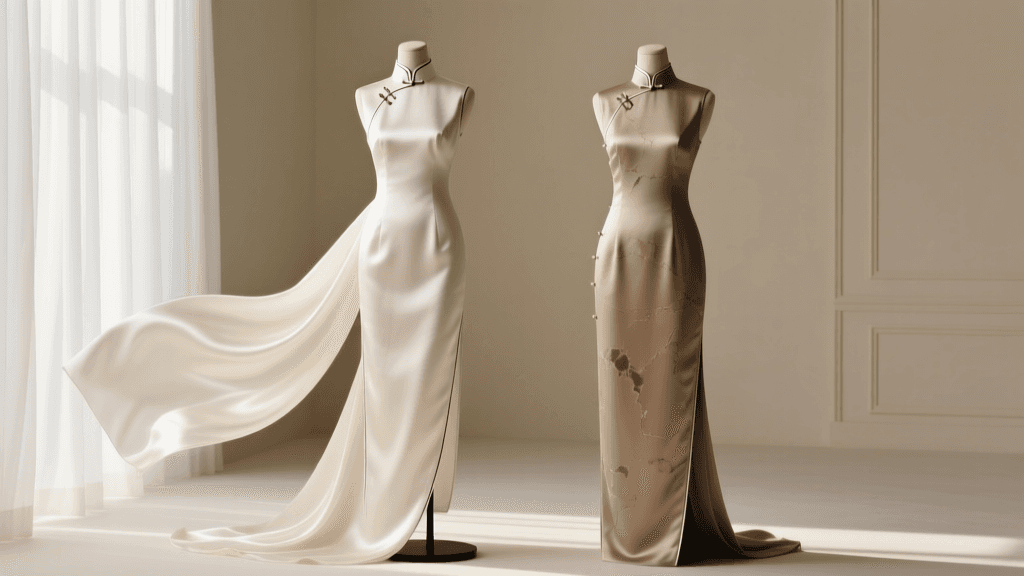
The cheongsam, also widely known as the qipao, remains one of the most iconic and elegant silhouettes in Asian traditional fashion. As we navigate the sartorial landscape of 2026, the intersection of heritage craftsmanship and modern ethical consciousness has fundamentally shifted how we approach fabric selection. While the structural anatomy of the cheongsam—featuring its signature Mandarin collar, asymmetrical closures, and side slits—remains rooted in history, the textiles we use to bring these garments to life are undergoing a radical transformation.
For decades, traditional Mulberry silk has been the undisputed gold standard for high-end qipao tailoring. However, the rise of sustainable fashion mandates and a growing consumer demand for cruelty-free textiles have propelled Peace silk (Ahimsa silk) into the spotlight. For modern tailors, fashion students, and heritage garment enthusiasts, understanding the nuanced differences between these two fibers is critical. This comprehensive guide breaks down the structural, aesthetic, and ethical differences between Mulberry and Peace silk for cheongsam construction in 2026, helping you make an informed decision for your next bespoke garment.
The Gold Standard: Grade 6A Mulberry Silk
Mulberry silk is produced by the Bombyx mori silkworm, which feeds exclusively on mulberry leaves. The resulting cocoons are boiled with the pupae inside, allowing the continuous silk filament to be unraveled in a single, unbroken thread that can measure up to 900 meters long. This continuous filament structure is what gives Mulberry silk its unparalleled smoothness, high tensile strength, and brilliant, light-reflecting luster.
In the context of cheongsam tailoring, Mulberry silk charmeuse (typically ranging from 19 to 22 momme weight) is prized for its liquid drape. It glides over the body, making it ideal for the fluid, bias-cut silhouettes that gained popularity in 1930s Shanghai and remain highly sought after today. According to historical textile archives like the Metropolitan Museum of Art's Heilbrunn Timeline of Art History, the cultivation and weaving of Mulberry silk has been a cornerstone of East Asian material culture for millennia, providing a canvas for intricate embroidery and brocade work that defines ceremonial qipaos.
As of early 2026, the global market for Grade 6A Mulberry silk has stabilized, with premium charmeuse retailing between $45 and $65 per yard. While it remains a premium investment, its predictable behavior under the needle and its ability to hold sharp, structured seams make it a favorite among master tailors.
The Ethical Challenger: Ahimsa Peace Silk
Peace silk, commonly referred to as Ahimsa silk, represents a paradigm shift in sericulture. Unlike traditional methods, Peace silk is harvested only after the moth has naturally emerged from the cocoon, ensuring a cruelty-free lifecycle. Because the emerging moth breaks the continuous filament, Peace silk must be spun rather than reeled, resulting in a yarn that is inherently shorter and more textured.
The most common varieties used in garment construction are Eri and Tussah Peace silks. These fabrics possess a more matte finish, a slightly nubby or 'slubby' texture, and a warmer, more insulating hand-feel compared to Mulberry silk. In 2026, advancements in textile milling have allowed for finer spinning techniques, yielding Peace silk blends that mimic the drape of traditional charmeuse while retaining their ethical integrity. However, tailors must account for its slightly more rustic aesthetic, which lends itself beautifully to modern, minimalist cheongsam designs, daywear qipaos, and autumn/winter collections.
Head-to-Head Fabric Comparison Chart
When selecting your textile, it is vital to weigh the physical properties of the fabric against your design goals. Below is a detailed comparison of how these two textiles perform in a modern tailoring environment.
| Feature | Grade 6A Mulberry Silk (Charmeuse) | Ahimsa Peace Silk (Eri/Tussah Blend) |
|---|---|---|
| Luster & Finish | High shine, reflective, glassy surface | Matte, soft glow, natural texture |
| Drape & Hand | Liquid, heavy drape, cool to the touch | Structured, slightly crisp, warmer feel |
| Seam Slippage | High risk; requires French seams or lining | Low risk; spun yarns grip at seams |
| Embroidery Canvas | Excellent for fine, dense goldwork | Better for rustic, textured thread work |
| 2026 Avg. Price | $45 - $65 per yard | $55 - $85 per yard |
| Ethical Profile | Traditional sericulture (pupae destroyed) | Cruelty-free (moth emerges naturally) |
Tailoring Techniques: Collars, Pankou, and Drape
Constructing the Mandarin Collar
The Mandarin collar (stand collar) is the defining architectural element of the cheongsam. It requires a fabric that can be heavily interfaced while maintaining a smooth, uncreased exterior. Mulberry silk, due to its smooth surface, responds exceptionally well to traditional silk organza interfacing, allowing the collar to stand rigidly without buckling. When using Peace silk, its natural texture can sometimes mask minor interfacing imperfections, which is a boon for less experienced tailors. However, because Peace silk is thicker and more insulating, tailors in 2026 are increasingly using lightweight cotton batiste as an interfacing layer to prevent the collar from becoming overly stiff or bulky.
Knotting Pankou (Frog Buttons)
Pankou, the traditional knotted frog buttons, require fabric strips that can be tightly rolled, ironed, and manipulated into intricate floral or geometric shapes. Mulberry silk charmeuse is notoriously slippery, making the rolling and knotting process a test of a tailor's patience and skill; it often requires a core of cotton yarn to maintain its shape. Peace silk, with its higher friction and spun-yarn construction, grips itself beautifully. Tailors report that Peace silk pankou knots hold their structural integrity much longer over years of wear and tear, reducing the need for maintenance and re-tying.
Managing the Bias Cut and Side Slits
For the classic 1930s-inspired bias-cut cheongsam, Mulberry silk is non-negotiable. The continuous filaments allow the fabric to stretch and recover across the bias, hugging the body's contours gracefully. Peace silk lacks this natural bias elasticity due to its spun nature. If you are designing a body-conforming, slit-heavy evening qipao, stick to Mulberry. If you are designing a relaxed, A-line, or boxy modern cheongsam for daily wear, Peace silk offers a beautiful, architectural silhouette that resists wrinkling far better than its traditional counterpart.
Dyeing and Color Fastness in 2026
The way these two fabrics absorb dye is another critical consideration. Mulberry silk takes on acid dyes with incredible vibrancy, resulting in the deep, jewel-toned reds, emeralds, and sapphires traditionally associated with wedding and ceremonial qipaos. Peace silk, however, has a more complex relationship with color. Its natural, slightly beige undertone and textured surface absorb botanical and natural dyes beautifully, making it the preferred choice for the 'quiet luxury' and earth-tone palettes dominating Asian fashion runways in 2026. When sourcing Peace silk, look for suppliers utilizing closed-loop water systems and Oeko-Tex certified dyes to ensure the ethical integrity of the fabric is maintained from cocoon to final color.
Sourcing Authentic Textiles and Certifications
With the rise of 'greenwashing' in the global textile market, verifying the authenticity of your silk is more important than ever. When purchasing Peace silk for a high-end cheongsam, always demand transparency from your supplier. The Global Organic Textile Standard (GOTS) is the premier certification to look for in 2026, ensuring that the silk is not only ethically harvested but also processed without toxic heavy metals or formaldehyde-based finishing agents.
Additionally, organizations like the Textile Exchange provide rigorous frameworks for tracking preferred fibers through the supply chain. When ordering online from heritage mills in Suzhou or Hangzhou, request a swatch card and a burn test. Mulberry silk will burn slowly, smell like burning hair, and leave a crushable black ash. Peace silk will behave similarly but may have a slightly more erratic burn due to the varying thickness of the spun yarns. Avoid fabrics that melt or smell like sweet plastic, as these are synthetic polyester blends masquerading as ethical silk.
Long-Term Care and Preservation
A bespoke cheongsam is an investment meant to be passed down through generations, and the care requirements differ slightly between these two textiles. Mulberry silk charmeuse is highly susceptible to water spotting and UV degradation. It must be dry-cleaned using eco-friendly, hydrocarbon-based solvents that have become the industry standard in 2026, avoiding the harsh perc chemicals of the past. It should be stored flat or rolled in acid-free tissue paper inside a breathable cotton garment bag.
Peace silk is slightly more forgiving. While dry cleaning is still recommended for heavily structured qipaos with intricate interfacing and metallic embroidery, unlined, minimalist Peace silk day-dresses can often be hand-washed in cool water with a pH-neutral silk detergent. The natural texture of Peace silk also makes it less prone to showing minor water spots or sweat marks, making it a highly practical choice for summer weddings, outdoor tea ceremonies, and destination events where climate control is unpredictable.
Final Thoughts for the Modern Tailor
The choice between Mulberry and Peace silk ultimately depends on the narrative you wish to weave into your cheongsam. If your goal is to recreate a historically accurate, high-glamour evening garment with a liquid drape and brilliant shine, Grade 6A Mulberry silk remains the undisputed champion. However, if you are designing for the modern, eco-conscious consumer who values texture, warmth, and cruelty-free production, Ahimsa Peace silk offers a compelling, luxurious alternative that aligns perfectly with the sustainable ethos of 2026. By understanding the unique structural properties of both fibers, you can honor the rich heritage of the qipao while pushing the boundaries of ethical Asian fashion forward.