Understanding Mormon Garments in 2026: Meaning, Purpose & Styles

Introduction to LDS Temple Garments
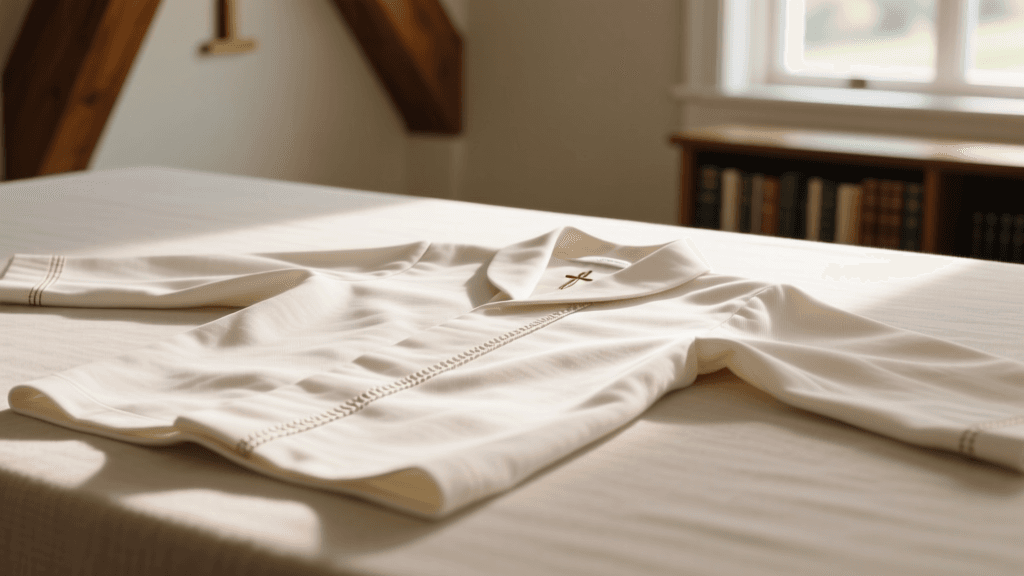
Within the rich tapestry of American-born religious textile traditions, few garments carry as much personal and spiritual significance as the temple garments worn by members of The Church of Jesus Christ of Latter-day Saints (often referred to as Mormons). Unlike outer religious vestments that signal clerical status to the public, Mormon garments are sacred underclothing. They are worn beneath everyday attire by adult members who have participated in the temple endowment ceremony. As we navigate the year 2026, the design, fabric technology, and global distribution of these garments have evolved significantly, balancing deep-rooted 19th-century traditions with modern textile innovations and diverse climate needs.
The Spiritual Meaning and Purpose
To understand Mormon garments, one must look past the physical fabric and examine the spiritual covenants they represent. According to the official teachings of the Church, garments serve as a tangible, physical reminder of the sacred covenants (promises) made with God inside the temple. They are not viewed as magical talismans or superstitious armor that provides physical invulnerability. Instead, they offer spiritual protection by serving as a constant, private reminder of the wearer's commitment to live a righteous life, maintain moral purity, and serve others.
The garments feature specific woven or embroidered marks (symbols) over the chest and navel. These marks correspond to the tokens and teachings received during the endowment ceremony, representing concepts such as honor, integrity, and the nourishment of the spirit. For the wearer, the garment is a deeply intimate expression of faith, acting as a spiritual compass throughout the rigors of daily life.
Historical Context and Evolution
The origins of the LDS garment trace back to the 1840s in Nauvoo, Illinois, when Church founder Joseph Smith introduced the endowment ceremony. Early garments were essentially one-piece union suits that extended to the wrists and ankles, reflecting the modesty standards and undergarment styles of the Victorian era. Over the decades, as societal clothing norms shifted and global membership expanded into tropical and varied climates, the Church gradually adapted the garment's design.
By the mid-20th century, the one-piece suit was replaced by the modern two-piece set (a t-shirt and shorts). In 2026, the evolution continues with a heavy emphasis on inclusivity, comfort, and sustainability. The Church's distribution centers now offer an unprecedented variety of cuts, accommodating diverse body types, maternity needs, and specific athletic requirements, ensuring that the sacred covenants can be kept comfortably by a global membership.
Modern Garment Styles and Fabrics in 2026
The 2026 catalog of LDS garments reflects a mastery of modern textile engineering. Recognizing that a member living in the humid climate of the Philippines has vastly different needs than a member enduring a harsh winter in Canada, the Church offers several distinct fabric blends and styles. When purchasing garments through the official Church distribution store or local Deseret Book retailers, members can choose from the following primary categories:
| Fabric Type | Best Use Case | Climate Suitability | Stretch & Fit | 2026 Price Range (USD) |
|---|---|---|---|---|
| 100% Cotton | Everyday wear, sensitive skin | Temperate to Cool | Low stretch, traditional fit | $9.00 - $12.00 |
| Modal / Cotton Blend | Office wear, all-day comfort | All Seasons | Medium stretch, drapes well | $12.00 - $15.00 |
| Nylon / Spandex (ActiveFit) | Athletics, gym, high movement | Warm to Hot | High stretch, compressive | $14.00 - $18.00 |
| CoolMax Mesh | Tropical climates, heavy sweat | Hot / Humid | Medium stretch, highly breathable | $13.00 - $16.00 |
| Maternity / Nursing Panel | Pregnancy and postpartum | All Seasons | Expandable abdominal panel | $15.00 - $19.00 |
In 2026, the introduction of the 'ActiveFit' seamless line has been particularly popular among younger members and athletes, utilizing moisture-wicking technology that prevents chafing during marathons or intense workouts. Additionally, the expanded maternity line features discreet, overlapping nursing access points, allowing new mothers to maintain their covenants without compromising functionality.
Sizing, Fit, and Purchasing in 2026
Proper fit is essential for both modesty and comfort. A garment that is too tight can cause physical discomfort and skin irritation, while one that is too loose may bunch up and fail to serve its purpose as a modesty layer. In 2026, the Church distribution app features an augmented reality (AR) digital measuring tool. By inputting basic measurements (chest, waist, hip, and inseam), the app recommends the exact size and style best suited for the user's body profile.
Purchasing garments is restricted to endowed members of the Church. To buy them online or in-store, a member must have an active temple recommend on file, which is verified digitally at the point of sale. This restriction underscores the sacred nature of the clothing; it is not sold as a novelty or to the general public, but strictly as a religious necessity for those who have made the associated covenants.
Daily Traditions, Modesty, and Exceptions
The standard tradition is for endowed members to wear the garment day and night, removing it only for bathing, swimming, or activities where the garment would be damaged or where modesty can be maintained through other appropriate clothing (such as wearing a swimsuit at the beach). The garment also dictates the wearer's outer modesty standards. Because the garment features a specific neckline and sleeve length (typically a crew or scoop neck and cap sleeve), members traditionally choose outer clothing that covers the garment, avoiding low-cut tops, short shorts, or crop tops.
However, Church leaders have consistently taught that the garment should not interfere with necessary medical care, rigorous physical education, or specialized occupational uniforms. In 2026, members are encouraged to use personal revelation and common sense to determine when temporary removal is necessary, emphasizing that the spirit of the law (the commitment to God) is more important than rigid, legalistic adherence to wearing the physical fabric in impractical situations.
Care, Washing, and Respectful Disposal
Caring for temple garments requires specific attention to preserve both the fabric and the sacred symbols. Actionable care steps for the 2026 fabric blends include:
- Washing: Use cold or warm water with a mild, enzyme-free detergent. Bleach should never be used, as it degrades the spandex in ActiveFit lines and weakens cotton fibers.
- Drying: Tumble dry on low heat or air dry. High heat will ruin the elasticity of the modal and nylon blends, causing them to shrink and lose their shape.
- Ironing: Generally unnecessary, but if required, use a low heat setting. Never iron directly over the woven marks, as this can scorch the symbolic embroidery.
When a garment becomes worn out, stretched beyond use, or damaged, it cannot simply be thrown in the regular trash or donated to a thrift store. The established protocol for respectful disposal involves carefully cutting out the sacred marks (the symbols on the chest and navel) and destroying them so they are unrecognizable. The remaining fabric, now stripped of its sacred markings, can be discarded in the regular waste or repurposed as cleaning rags. Alternatively, in 2026, many local congregations (wards) provide secure disposal bins at the meetinghouse where members can drop off worn garments, which are then sent to Church facilities for confidential, respectful recycling and destruction.
Conclusion
Mormon temple garments represent a unique intersection of American religious history and modern textile science. As of 2026, the continued refinement of garment styles ensures that millions of Latter-day Saints worldwide can honor their spiritual covenants in a manner that is comfortable, practical, and deeply meaningful. By understanding the purpose, history, and proper care of these garments, we gain valuable insight into the daily lived religion and modesty traditions of a major global faith.