Mormon Temple Garments 2026: Complete History & Style Guide
The Sacred Significance of LDS Temple Garments
For members of The Church of Jesus Christ of Latter-day Saints, temple garments hold profound spiritual significance. Often referred to simply as "garments" by church members, these undergarments are worn by adults who have participated in the sacred endowment ceremony within a Latter-day Saint temple. Unlike religious vestments worn by clergy during specific services, Mormon temple garments are worn beneath everyday clothing, serving as a constant, personal reminder of the covenants made with God. As of 2026, millions of endowed members worldwide wear these garments daily, integrating their faith into the most routine aspects of their lives.
It is a common misconception among those outside the faith that temple garments possess magical or protective properties. The Church has explicitly clarified that the garments themselves do not have inherent power. Instead, their power lies in what they represent: a physical reminder of spiritual promises, a commitment to modesty, and a symbol of the wearer's dedication to living a Christ-centered life. According to the Church Newsroom, the garments are a sacred privilege and a deeply personal expression of faith, not a talisman or a good-luck charm.
A Brief History: From the 1840s to 2026
The origins of the LDS temple garment trace back to 1842 in Nauvoo, Illinois. Joseph Smith, the founder of the Latter-day Saint movement, introduced the endowment ceremony to a small group of close associates. As part of this ceremony, participants were given specific undergarments marked with symbolic figures. These early garments were one-piece union suits, extending to the wrists and ankles, designed to cover the body completely in accordance with the modesty standards of the 19th century. The markings on the garments served as visual reminders of the covenants made during the ceremony, representing concepts like honor, integrity, and the avoidance of sin.
Following the migration to the Salt Lake Valley, Brigham Young and subsequent church leaders oversaw the standardization of garment production. For nearly a century, the design remained largely unchanged—a full-length, one-piece suit made of heavy cotton or wool. However, as the 20th century progressed and global climates, fashion norms, and military service requirements evolved, the Church began to adapt the garment's physical design while preserving its sacred markings and symbolic intent.
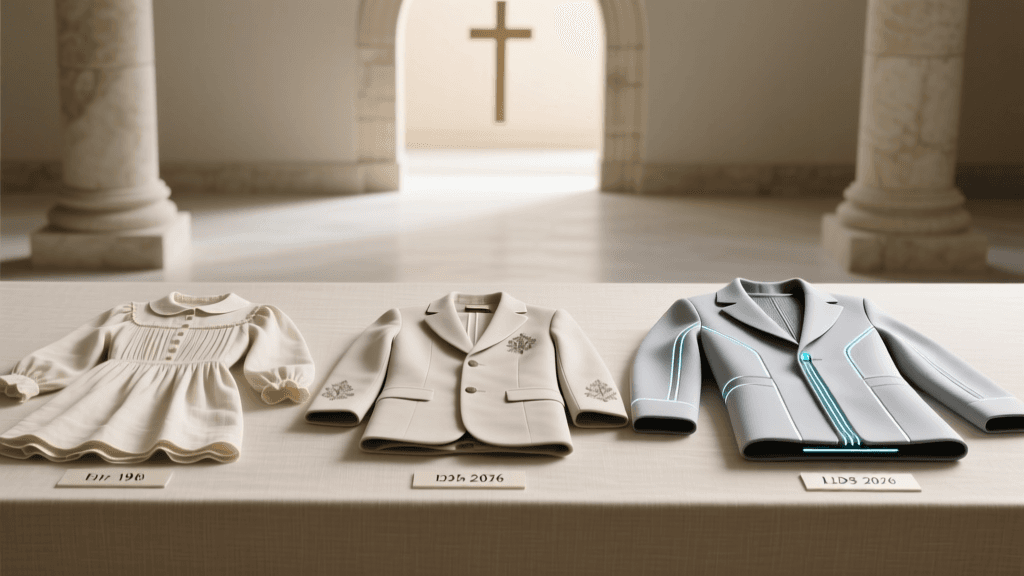
In the 1920s and 1930s, the Church authorized shorter sleeves and legs to accommodate soldiers and those living in tropical climates. The most significant structural shift occurred in the mid-20th century when the one-piece union suit was officially divided into a two-piece set (a top and a bottom), vastly improving comfort and practicality. Moving into the 2020s, and specifically by 2026, the Church has introduced an unprecedented variety of styles, necklines, and inclusive sizing options, ensuring that members of all body types, physical abilities, and climates can comfortably honor their covenants.
Modern Styles and Inclusive Fits in 2026
The landscape of LDS temple garments in 2026 is defined by diversity and comfort. Recognizing that a one-size-fits-all approach does not serve a global membership, the Church's distribution system now offers a wide array of options for both men and women. The sacred markings remain consistent across all styles, but the cut, fabric, and fit have been modernized to align with contemporary needs.
Women's Tops and Bottoms
Women's garments have seen the most significant expansion in recent years. In 2026, women can choose from several top styles, including the traditional crew neck, V-neck, scoop neck, and cap-sleeve designs. For those requiring more coverage or support, camisole styles with built-in shelf bras are available. The bottom options are equally diverse, ranging from traditional knee-length styles to mid-thigh shorts, capri-length leggings, and boy-short cuts. This variety allows women to wear modern, professional, and active attire while maintaining their religious commitments.
Men's Tops and Bottoms
Men's options in 2026 include crew neck and V-neck tops, available in both t-shirt and tank-top styles for hotter climates. For bottoms, men can select from traditional knee-length styles, mid-thigh boxer cuts, and brief-style garments. The introduction of stretch fabrics has been particularly beneficial for men engaged in athletics or physically demanding labor, providing mobility without compromising the garment's modest coverage.
Maternity and Youth Options
The Church also provides specialized garments for pregnant women, featuring stretchy, accommodating panels that grow with the wearer. Furthermore, youth who are preparing for the temple or who have recently received their endowment (typically between the ages of 18 and 20) have access to specific sizing charts designed for younger, more active bodies.
2026 Fabric Comparison Guide
Choosing the right fabric is crucial for daily comfort, especially given the global nature of the Church's membership. In 2026, the Church Distribution Store offers four primary fabric blends, each engineered for specific environments and lifestyles.
| Fabric Type | Best For | Durability | Breathability | Climate Suitability |
|---|---|---|---|---|
| 100% Cotton | Everyday wear, sensitive skin | High | Medium | Temperate, Indoor |
| Cotton/Modacrylic Blend | Fire-resistant needs, daily wear | Very High | Medium | Temperate, Industrial |
| Polyester Mesh | Athletics, high-heat environments | Medium | Very High | Tropical, Humid, Summer |
| Stretch (Spandex/Nylon) | Active lifestyles, form-fitting clothes | High | High | All Climates |
The Polyester Mesh remains the most popular choice for members living in equatorial regions or those who engage in heavy cardiovascular exercise, as it wicks moisture and dries rapidly. The Stretch line, perfected over the last few years, has become the standard for women wearing professional attire, as it prevents bunching and remains invisible under tailored clothing.
How to Purchase: The 2026 Digital Verification System
Unlike standard clothing, LDS temple garments are not sold to the general public. They are strictly reserved for endowed members of the Church. In 2026, the purchasing process has been fully integrated with the Church's digital membership tools. To order garments online or purchase them at a physical Distribution Center, a member must possess a valid, unexpired temple recommend.
When ordering through the official online portal, the system automatically verifies the user's temple recommend status via their linked Church Account. This seamless digital verification eliminates the need for paper slips or manual checks by store clerks, streamlining the process while maintaining the sacred restriction on who can acquire the garments. Members can order multi-packs, subscribe to automated quarterly shipments, and track their orders globally. Physical Distribution Centers, often located adjacent to temples or in major stakes centers, still offer in-person fittings and immediate purchases for those who prefer to feel the fabrics before buying.
Proper Care and Respectful Disposal
Because of their sacred nature, the care and disposal of temple garments are treated with reverence. Members are instructed to wash their garments regularly, just like any other undergarment, using standard laundry detergents. However, they are taught to handle them respectfully, avoiding leaving them on the floor or treating them carelessly.
When a garment becomes worn, torn, or unwearable, it cannot simply be thrown in the trash or donated to a thrift store. The established protocol requires the member to carefully cut out the sacred markings. Once the markings are removed and destroyed, the remaining fabric can be discarded in the regular trash or repurposed as cleaning rags. If the garment is still in good condition but no longer fits, it may be given to another endowed member who can use it, but it must never be given to someone who has not received their endowment.
Cultural Misconceptions and Modern Realities
Despite increased transparency from the Church, misconceptions about Mormon garments persist in popular culture. Media portrayals often sensationalize the garments, depicting them as restrictive or bizarre. In reality, the 2026 garment lineup is remarkably similar in look and feel to high-quality, modest underwear available in mainstream retail stores, distinguished only by the subtle, embroidered symbols.
Another common question is whether members wear garments to the gym or the beach. The general guideline provided by Church leaders is that garments should be worn at all times, but members are encouraged to use wisdom and modesty. For swimming, members typically wear modest swimwear over their garments, or they may temporarily remove them if they become waterlogged, replacing them as soon as practical. For athletics, the mesh and stretch fabrics are specifically designed to be worn during intense physical activity, eliminating the need for removal.
Conclusion
The evolution of Mormon temple garments from the heavy, one-piece union suits of the 1840s to the diverse, technologically advanced fabrics of 2026 reflects a faith that adapts to the practical needs of its modern, global membership without compromising its core theological tenets. For the wearer, the garment is far more than a piece of clothing; it is a deeply personal, daily anchor to their spiritual identity and the covenants they have made in the house of the Lord.