Modern Qipao Styling: Wearing the Cheongsam Today
The Evolution of the Qipao: From 1920s Shanghai to Modern Runways
The qipao, also widely known as the cheongsam, is arguably the most recognizable garment in Chinese fashion history. However, the modern iteration of this iconic dress bears little resemblance to its earliest predecessors. Originally derived from the loose, floor-length banner robes worn by Manchu women during the Qing Dynasty, the qipao was radically transformed in the 1920s. In the bustling, cosmopolitan hub of Shanghai, young women and feminists began tailoring the garment to reflect modern sensibilities, cinching the waist and raising the hemline to calf-length. This sartorial shift was a powerful statement of female liberation and modernity.
As highlighted in the Metropolitan Museum of Art’s landmark exhibition, China: Through the Looking Glass, the qipao has continually served as a canvas for cultural exchange, blending traditional Chinese aesthetics with Western tailoring techniques. By the 1950s, the cheongsam had evolved into the skin-tight, high-collared silhouette frequently seen in classic cinema. Yet, as we move through the 2020s, the garment is experiencing yet another renaissance. Driven by the Xin Zhongshi (New Chinese Style) movement, today’s qipao is deconstructed, relaxed, and seamlessly integrated into contemporary, everyday wardrobes.
Deconstructing the Modern Cheongsam: Key Design Shifts
To style the qipao for the modern era, one must first understand how its anatomy has shifted to accommodate contemporary lifestyles. The rigid, restrictive silhouettes of the mid-20th century have been replaced by fluid lines, adaptable closures, and innovative fabric choices. The Victoria and Albert Museum’s Asian Collections frequently highlight how traditional garments adapt to the socio-economic needs of their wearers, and the modern qipao is a prime example of this functional evolution.
| Feature | Traditional (1930s-1950s) | Modern / Xin Zhongshi (2020s) |
|---|---|---|
| Silhouette | Form-fitting, restrictive, high side slits | A-line, relaxed fit, drop-waist, trapeze cuts |
| Collar | High, stiff Mandarin collar (up to 5cm) | Low Mandarin, V-neck hybrids, detachable collars |
| Closures | Hand-made Pankou (knot) buttons | Hidden zippers, magnetic snaps, decorative faux knots |
| Fabrics | Heavy silk brocade, velvet, stiff jacquard | Cotton-linen blends, crepe, tulle, washed silk |
| Length | Midi to floor-length | Mini, asymmetrical, midi, and two-piece sets |
Fabric Guide: Choosing the Right Material for Your Lifestyle
The fabric of your qipao dictates not only its drape but also its appropriateness for different occasions. Modern styling relies heavily on moving away from the heavy, ornate brocades reserved for weddings and Lunar New Year celebrations, opting instead for breathable, everyday textiles.
- Cotton and Linen Blends: Ideal for summer and casual streetwear. These fabrics offer a matte finish and structured drape that pairs beautifully with sneakers and denim. Cost: $40 - $90.
- Silk Crepe de Chine: The ultimate choice for office wear and elegant evening events. It provides a subtle sheen, fluid movement, and exceptional breathability. Cost: $120 - $250.
- Velvet: A winter staple. Modern velvet qipaos often feature lower collars and long, bell sleeves to avoid looking overly theatrical. Perfect for holiday parties. Cost: $80 - $180.
- Jacquard and Brocade: Best reserved for formal events, weddings, or high-fashion editorial looks. Modern iterations use metallic threads or subtle tone-on-tone patterns rather than loud, contrasting dragons and phoenixes. Cost: $150 - $400+.
Actionable Styling: 3 Ways to Wear a Qipao Today
Styling a cheongsam in the 21st century is all about juxtaposition. By mixing traditional elements with contemporary streetwear or corporate staples, you create a look that is culturally resonant yet thoroughly modern.
Look 1: The Streetwear Fusion (Casual / Daytime)
For a weekend look that channels the Xin Zhongshi trend, opt for a mini or above-the-knee A-line qipao in a cotton-linen blend. Choose a solid, muted color like sage green, charcoal, or navy. The Styling Formula: Layer a crisp, oversized white button-down shirt underneath the qipao, allowing the collar and cuffs to peek out. Pair with chunky white sneakers or combat boots. Accessorize with a crossbody bag and minimalist silver jewelry. This look completely subverts the formality of the Mandarin collar, making it highly wearable for cafe-hopping or casual outings.
Look 2: The Corporate Midi (Office / Business Casual)
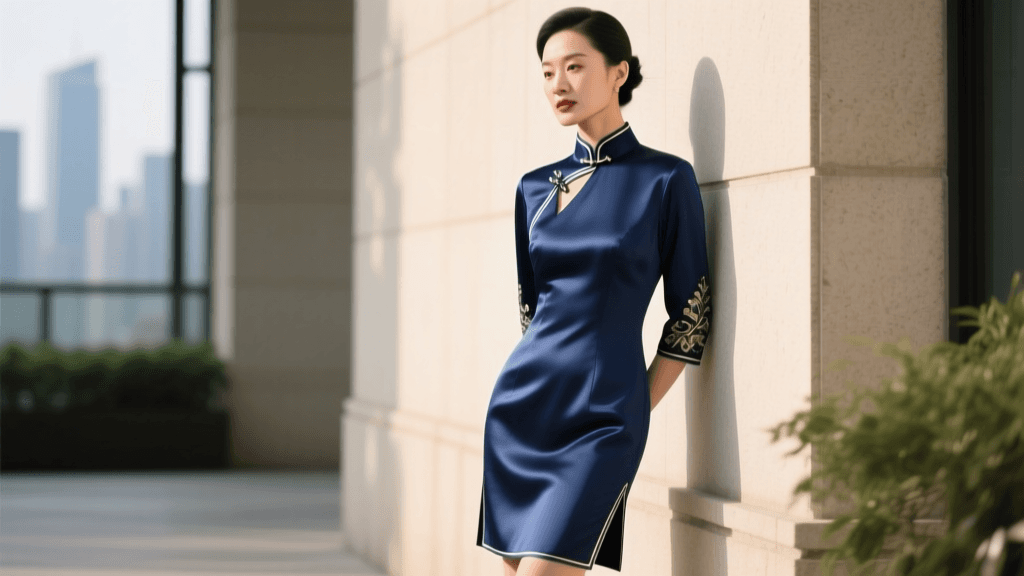
The qipao can be a powerful piece of corporate attire when styled with restraint. Select a knee-length or midi qipao in a dark silk crepe with a subtle geometric or floral jacquard pattern. Ensure the slit is modest (no higher than mid-thigh) and the collar is a relaxed 2cm height. The Styling Formula: Treat the qipao as you would a sleek sheath dress. Pair it with a tailored, oversized blazer in a complementary neutral tone (e.g., a camel blazer over a navy qipao). Finish with pointed-toe loafers or low block heels. The Pankou knot buttons add a unique, sophisticated detail that elevates standard office wear without appearing costumey.
Look 3: Evening Glamour (Galas / Formal Events)
For black-tie events or evening galas, embrace the luxurious heritage of the garment. A floor-length or calf-length velvet qipao in deep jewel tones (emerald, sapphire, or burgundy) is breathtaking. The Styling Formula: Keep the focus on the garment’s silhouette. Opt for a sleeveless or cap-sleeve design to show a hint of skin, balancing the high collar. Pair with strappy metallic heels and a structured clutch. Instead of traditional jade jewelry, opt for modern, sculptural gold or diamond drop earrings. As noted in Vogue’s coverage of Chinese fashion influences, blending traditional silhouettes with avant-garde, modern accessories is the key to red-carpet-ready elegance.
"The true beauty of the modern qipao lies in its versatility. It is no longer a uniform of the past, but a dynamic fashion statement that adapts to the woman wearing it, rather than the other way around."
Fit and Measurements: Avoiding the Cinematic Tropes
One of the most common mistakes modern buyers make is ordering a qipao that is too tight. The skin-tight, restrictive cheongsams seen in mid-century films were often tailored specifically for the camera and are highly impractical for sitting, eating, or breathing comfortably in real life. When buying or commissioning a modern qipao, you must account for ‘ease’.
How to Measure for a Modern Qipao
- Bust: Measure around the fullest part of your chest. Add 1.5 to 2 inches of ease for a modern, comfortable fit.
- Waist: Measure at your natural waistline (the narrowest part). Add 1 to 1.5 inches of ease. If you are buying an A-line or drop-waist modern qipao, the waist measurement is less critical.
- Hips: Measure around the fullest part of your hips. Add 2 inches of ease. This is crucial for ensuring the side slits do not pull open awkwardly when you walk.
- Hollow-to-Hem: Measure from the hollow of your collarbone down to where you want the hem to fall. For a modern midi, this is typically 42-45 inches depending on your height.
- Shoulder Width: Measure from the edge of one shoulder bone to the other. A proper shoulder fit prevents the garment from pulling at the armpits, which is a common issue with off-the-rack qipaos.
Where to Buy: Navigating the Modern Qipao Market
The market for qipaos has expanded dramatically, catering to every budget and quality requirement. Here is a breakdown of where to source your garments:
- Indie Asian Brands (Taobao / Etsy): Brands like Mingzhu, Fourtry, and various independent Shanghai-based designers offer incredible modern, daily-wear qipaos. Prices range from $40 to $120. These are best for cotton, linen, and crepe designs. Be sure to check size charts carefully, as Asian sizing typically runs 1-2 sizes smaller than US/EU sizing.
- Chinatown Tailors (Made-to-Measure): Many traditional tailors in cities like New York, London, and Sydney offer bespoke qipao services. You can select your own fabric and get a perfect fit. Expect to pay $250 to $600, with a turnaround time of 3 to 6 weeks. This is the best route for wedding qipaos or formal silk garments.
- Luxury & High-End Boutiques: Brands like Shanghai Tang or haute couture houses like Guo Pei offer luxury interpretations of the cheongsam. These garments feature impeccable construction, premium silks, and hand-finished Pankou knots. Prices start at $800 and can exceed $5,000.
Garment Care: Preserving Your Cheongsam
Because modern qipaos utilize a wider variety of fabrics, care routines must be adjusted accordingly. Silk and velvet garments must always be dry-cleaned to prevent water spotting and pile crushing. However, the beauty of the modern cotton-linen qipao is its low maintenance. These can be hand-washed in cold water with a gentle, pH-neutral detergent and laid flat to dry. Always store your qipao folded with acid-free tissue paper in the folds to prevent hard creases, or hang it on a wide, padded hanger to maintain the shoulder structure.
Conclusion
The qipao has survived a century of political, social, and cultural upheaval by doing what all great fashion does: evolving. By understanding the shift from traditional tailoring to the modern Xin Zhongshi aesthetic, you can confidently incorporate the cheongsam into your contemporary wardrobe. Whether you are pairing a linen mini-qipao with sneakers for a day in the city or draping yourself in silk crepe for a boardroom meeting, the modern qipao is a testament to the enduring, adaptable elegance of Asian sartorial heritage.