Modern Kimono Styling: A Guide to Contemporary Occasions
The Renaissance of the Kimono in Modern Fashion
The kimono is no longer confined to museums, strict tea ceremonies, or coming-of-age rituals. In recent years, a global renaissance has transformed this iconic T-shaped garment into a versatile staple for modern high fashion, contemporary galas, and avant-garde street style. As highlighted by the Metropolitan Museum of Art's 'Kimono Style' exhibition, the garment has continuously evolved, adapting to the changing silhouettes and lifestyle needs of its wearers while maintaining its profound cultural gravity.
For modern wearers—whether attending a contemporary art gallery opening, a destination wedding, or a high-profile networking gala—styling a kimono requires a delicate balance of respecting traditional rules of formality (kimono no kisoku) and embracing contemporary aesthetics. This comprehensive guide will walk you through practical styling, sourcing, measurements, and modern accessory pairings to help you wear the kimono with confidence at any contemporary occasion.
Decoding Kimono Formality for Modern Events
The foundational rule of kimono styling is matching the garment's formality to the event. Unlike Western fashion, where a 'cocktail dress' can span a wide variety of fabrics and cuts, kimono formality is dictated by fabric type, dyeing technique, and the presence of family crests (kamon).
Weddings and Formal Galas
For black-tie events and weddings, the Houmongi (visiting wear) is the gold standard for married women and older attendees. Characterized by its 'eba' dyeing technique—where the pattern flows seamlessly across the seams like a continuous painting—it exudes elegance without overshadowing the bride. Unmarried women may opt for a Furisode with its dramatic, floor-sweeping sleeves.
Practical Tip: If you are renting a Houmongi in Tokyo or Kyoto for a formal event, expect to pay between ¥30,000 and ¥80,000 ($200–$550 USD) for a premium silk rental package that includes dressing services. You must book these packages 4 to 6 months in advance, especially during the peak wedding seasons of May and October.
Art Gallery Openings and Cocktail Parties
For creative, semi-formal environments like gallery openings, the strict rules of formality can be bent to showcase personal style. The Komon (featuring small, repeating patterns) or Tsumugi (a textured, rustic pongee silk) are excellent choices. While traditionally considered casual or street wear, a high-quality vintage Tsumugi paired with a bold, contemporary Nagoya obi creates an intellectual, artistic silhouette perfect for the modern creative class.
Corporate and Networking Events
When attending corporate dinners or diplomatic receptions, subtlety is key. The Edo Komon is a masterclass in understated luxury. From a distance, it appears to be a solid color, but up close, it reveals microscopic, intricate patterns dyed into the silk. Paired with a single family crest and a refined Fukuro obi, it commands respect in any boardroom or banquet hall.
The Modern Styling Matrix: Occasions, Fabrics, and Footwear
To help you navigate the intersection of tradition and modernity, refer to the matrix below. This chart outlines the ideal combinations for contemporary events, including modern footwear pairings that are increasingly accepted in high-fashion circles.
| Occasion | Kimono Type | Obi Style | Modern Footwear Pairing | Est. Cost (USD) |
|---|---|---|---|---|
| Wedding Guest | Houmongi (Silk) | Fukuro Obi | Classic Zori with brocade straps | $200 - $400 (Rental) |
| Art Gallery Opening | Komon / Tsumugi | Nagoya Obi | Leather ankle boots (e.g., Chelsea) | $80 - $150 (Vintage) |
| Cocktail Party | Edo Komon | Maru Obi (Vintage) | Block-heel sandals | $150 - $300 (Rental) |
| Corporate Gala | Iromuji (Solid Dye) | Fukuro Obi | Minimalist leather Zori | $250 - $500 (Rental) |
| Fashion Week / Avant-Garde | Uchikake (Unlined) | Obi omitted / Belted | Stiletto heels or combat boots | $300+ (Designer/Vintage) |
Breaking Tradition: Contemporary Accessory Pairings
The most exciting developments in modern kimono styling lie in accessory selection. The Victoria and Albert Museum's 'Kimono: Kyoto to Catwalk' exhibition brilliantly showcased how global designers and street-style icons have deconstructed and reimagined kimono accessories.
- The Obidome (Obi Brooch): Traditionally, an obidome is a small, carved jade or coral piece threaded through the obijime (the braided cord). Modern stylists frequently replace this with vintage European brooches, antique cameo pendants, or even minimalist geometric metal pins to add a cross-cultural focal point to the waist.
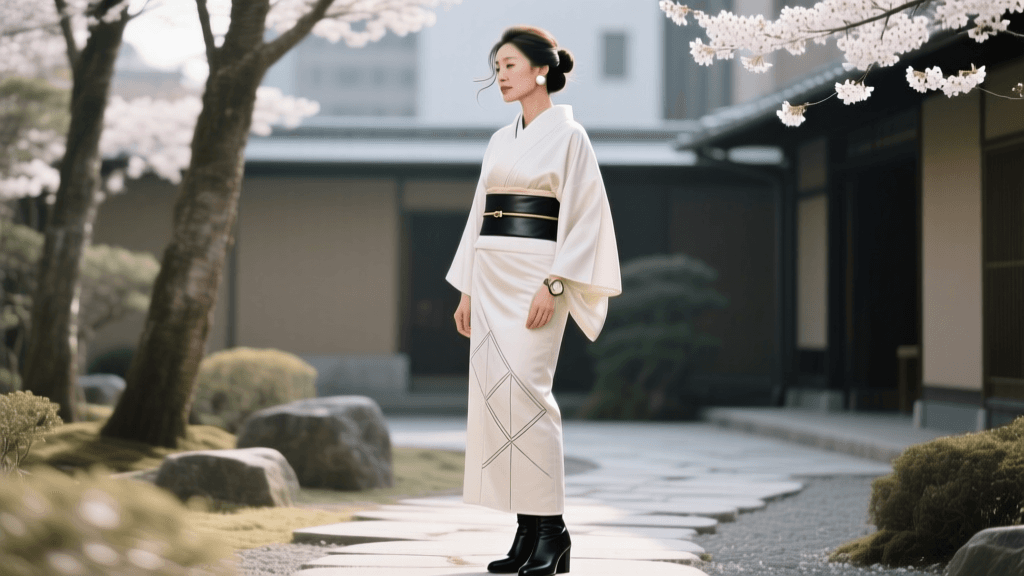
- Footwear Revolution: While white tabi socks and woven zori sandals are mandatory for strict formal events, modern semi-formal styling embraces leather ankle boots, Oxford shoes, and even block heels. Wearing a mid-calf Komon with a tailored coat and leather boots is a staple of the sophisticated Tokyo 'mature street style' (Otona-ppoi) aesthetic.
- Bag Selection: Traditional zogan (woven bamboo and silk) bags can feel overly costumey at a modern cocktail party. Opt instead for a structured leather clutch, a minimalist acrylic box bag, or a high-end designer envelope clutch that complements the colors of your obi.
Practical Fitting: Measurements and the Ohashori
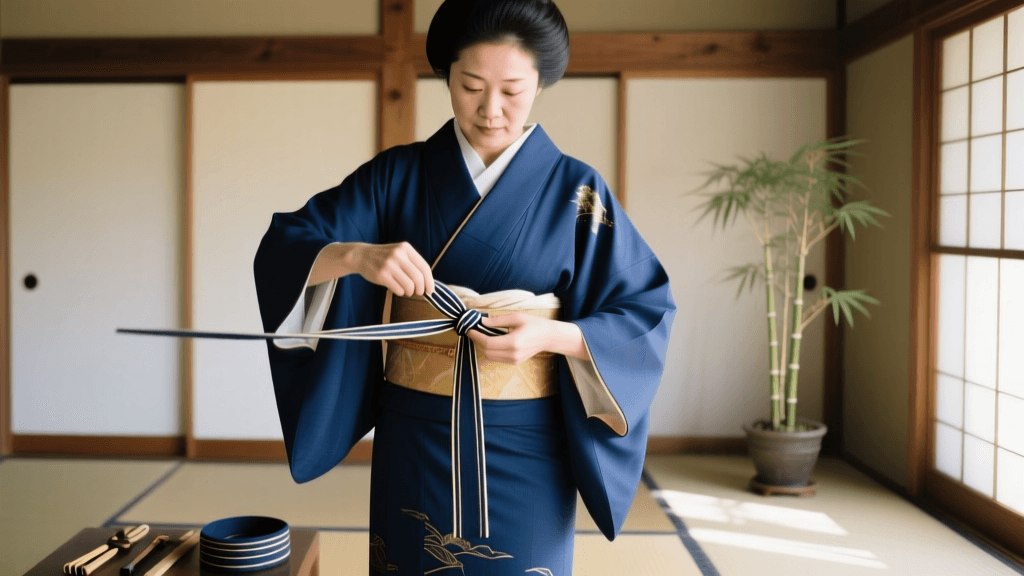
Unlike Western clothing, kimonos are not cut to size; they are wrapped and folded. A standard kimono bolt (tanmono) is approximately 36 cm (14 inches) wide and 12 meters long. The garment is wrapped around the body, and the excess length is folded at the waist to create the ohashori (the waist tuck), which should sit neatly beneath the obi.
The Tall Wearer's Dilemma: For taller individuals or those styling the kimono for avant-garde fashion, finding a vintage kimono with enough length to create an ohashori can be impossible. The modern solution? Drop the ohashori entirely. Wearing the kimono at ankle-length, similar to a maxi dress or duster coat, paired with a wide leather belt or a loosely tied Nagoya obi, is a highly respected modern styling technique. It highlights the beautiful hemline patterns (suso-moyo) that are usually hidden by the tuck.
Sourcing: Vintage, Rental, and Custom Tailoring
Depending on your budget and the occasion, you have three primary avenues for acquiring a modern kimono wardrobe:
- Vintage Markets (Recycle Shops): Tokyo's Shinjuku and Kyoto's Shijo-dori are lined with kimono recycle shops. Here, you can find stunning mid-century Showa-era Komon and silk Haori jackets for $30 to $150. This is the most sustainable and cost-effective way to build a wardrobe for gallery openings and casual parties.
- Rental Boutiques: For formal events, renting is the most practical choice. A high-end rental in Ginza or Gion will include professional dressing (kitsuke), hair styling, and a time slot for return the following day. Budget $250 to $500 for a comprehensive formal package.
- Custom Tanmono Tailoring: For those seeking a bespoke piece, purchasing a bolt of silk and commissioning a tailor is a profound investment. Expect to pay upwards of $2,000 for the silk and dyeing process, plus $300 for the tailoring. The timeline from selecting the fabric to the final fitting is typically 3 to 6 months.
Seasonality in a Climate-Controlled World
Traditional kimono rules dictate strict seasonal changes (koromogae). Awase (lined kimonos) are worn from October to May; Hitoe (unlined) for June and September; and Usuumono (sheer, gauze-like silks) for July and August. However, modern venues are heavily climate-controlled. If you are attending a mid-summer indoor gala, wearing a sheer Ro or Sha silk kimono is visually stunning and culturally accurate, but you should bring a lightweight, modern cashmere wrap or a silk Haori for the heavily air-conditioned interiors and transit.
Care and Maintenance for High-End Silk
Maintaining a kimono requires specialized care, especially when wearing it to modern events where spills or sweat are risks. Never attempt to wash a silk kimono at home. Instead, take it to a professional cleaner specializing in Maru-arai (a specialized full-garment wash using solvents that protect the silk's natural oils and metallic threads). This service typically costs around ¥8,000 to ¥12,000 ($55–$85 USD).
For storage, never use wire hangers, which will distort the shoulder seams. Fold the kimono along its natural seam lines and store it flat in a drawer lined with tatoushi (specialized, breathable, anti-moth Japanese paper). For travelers, investing in a modern, breathable kimono carry-case is essential to transport your garments safely between international events.
Conclusion
Styling a kimono for modern occasions is an exercise in cultural appreciation and personal expression. By understanding the foundational rules of formality, you can confidently bend them to suit contemporary environments. Whether you are pairing a vintage Tsumugi with leather boots for an art exhibition or draping a pristine Houmongi for a diplomatic gala, the kimono remains a powerful, living garment. As global fashion continues to look toward the rich cultural heritage of Japan for inspiration, mastering the art of modern kimono styling ensures you will always be dressed with intention, respect, and undeniable elegance.