Hanbok on the 2026 Red Carpet: Global Fashion Media Trends
The Hanbok Ascent in 2026 Global Fashion Media
The intersection of traditional Asian garments and Western haute couture has reached a sophisticated zenith in 2026. No longer relegated to niche cultural showcases or historical retrospectives, the Korean hanbok has firmly established itself as a formidable presence on global red carpets, prestigious film festivals, and the glossy pages of international fashion editorials. Global fashion media is currently celebrating the hanbok not merely as a symbol of heritage, but as a dynamic, evolving silhouette that challenges and expands contemporary formalwear. As we navigate the 2026 award season and global fashion weeks, top-tier publications are dedicating extensive coverage to how designers are reinterpreting the structural anatomy of the hanbok for modern, high-stakes glamour.
This editorial shift represents a profound maturation in how global media engages with Asian traditions. Rather than treating the garments as static costumes, leading fashion critics and stylists are now analyzing the hanbok through the lens of architectural draping, sustainable textile innovation, and gender-fluid styling. According to foundational cultural documentation from Britannica, the traditional hanbok is defined by its vibrant colors, simple lines without pockets, and a distinct division between the upper and lower garments. In 2026, global media is hyper-focused on how contemporary designers are manipulating these very lines to create breathtaking, avant-garde red carpet moments.
Structural Anatomy: Deconstructing the 2026 Red Carpet Silhouette
To understand the current media fascination, one must examine the specific structural adaptations that designers are employing to capture the flashbulbs of global paparazzi. The traditional hanbok consists primarily of the jeogori (upper garment) and the chima (wrap skirt) for women, or baji (trousers) for men. The 2026 red carpet iterations have pushed these elements into new realms of structural engineering.
The Modernized Jeogori
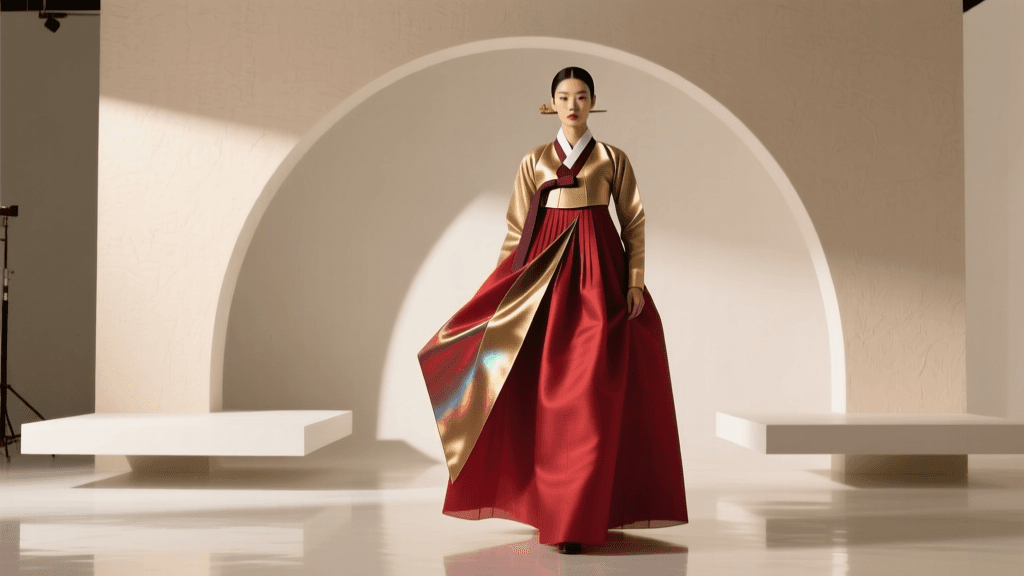
Historically, the jeogori is a short jacket characterized by its curved sleeves, or baerae, and a white detachable collar known as the dongjeong. In 2026, fashion magazines are praising designers who have cropped the jeogori even further, sometimes reducing it to a structured, corset-like bodice that emphasizes the natural waist while retaining the traditional V-neck intersection. The goreum (the long, trailing bow) has been reimagined by global stylists as dramatic, oversized trailing ribbons that mimic the trains of Western bridal or gala gowns, creating a striking visual in motion on the red carpet.
The Sculptural Chima and Baji
The chima, traditionally a full, voluminous skirt tied high above the bust, has been adapted using modern crinolines and lightweight, aerospace-grade mesh to achieve impossible, gravity-defying volumes without the heavy weight of traditional layered silks. Meanwhile, the baji has seen a massive resurgence in gender-neutral red carpet styling. Global fashion editors are highlighting male and non-binary celebrities who pair wide-legged, pleated baji with sharply tailored, Western-style blazers, creating a hybrid silhouette that dominates 2026 editorial spreads.
Media Coverage: How Vogue and Harper's Bazaar Frame the Narrative
The vocabulary used by global fashion media has evolved significantly. In 2026, editors are meticulous about using correct Korean terminology, moving away from generic terms like 'oriental dress' and instead focusing on the specific craftsmanship of the garments. The narrative has shifted heavily toward sustainability and artisanal heritage. Publications are spotlighting the use of Hansan mosi, a traditional fine ramie weaving technique recognized for its breathability and crisp texture. The preservation and modern application of such textiles are frequently highlighted in fashion journals, drawing upon cultural heritage data from organizations like UNESCO, which notes the intricate, community-based craftsmanship required to produce authentic mosi.
Traditional vs. 2026 Red Carpet Hanbok: A Comparative Analysis
To illustrate the evolution covered by this year's fashion media, the following table contrasts the traditional elements of the hanbok with the modernized adaptations currently dominating global red carpets.
| Garment Element | Traditional Characteristics | 2026 Red Carpet Adaptation |
|---|---|---|
| Jeogori (Jacket) | Loose fit, covers the bust, curved sleeves, long trailing goreum (bow). | Cropped, corseted bodices, sharp architectural shoulders, asymmetrical or detachable oversized ribbons. |
| Chima (Skirt) | High-waisted, voluminous, layered heavy silks or cottons, A-line silhouette. | Sculptural, gravity-defying volumes using hidden mesh, high-low hemlines, sheer organza overlays. |
| Dongjeong (Collar) | Stiff, white, detachable paper or fabric collar emphasizing the neckline. | Embellished with micro-pearls, metallic threading, or replaced by sharp, structured metallic chokers. |
| Baji (Trousers) | Loose, baggy, tied at the waist and ankles, designed for floor-sitting. | Tailored wide-leg pleats, high-waisted, paired with structured formal blazers for gender-fluid styling. |
| Textiles | Myeongju (silk), mosi (ramie), cotton, hemp, dyed with natural botanical pigments. | Vegan peace silks, upcycled organza, bio-luminescent natural dyes, metallic jacquard weaves. |
Textile Innovations and Sustainable Couture
A major focal point for 2026 fashion media is the intersection of traditional Asian textiles and modern sustainability. The global push for eco-conscious couture has led stylists to seek out traditional Korean weaving methods that inherently possess sustainable qualities. For instance, the use of Myeongju (traditional Korean silk) is being championed by eco-fashion editors due to the localized, small-batch sericulture practices that contrast sharply with mass-produced, synthetic Western silks. Institutions dedicated to the preservation of Asian art, such as the Metropolitan Museum of Art's Asian Art Department, have long documented the historical significance of these textiles, providing a rich academic backdrop that modern fashion journalists reference when reviewing contemporary collections.
Furthermore, natural dyeing techniques, or cheonyeon-yeomsaek, are being heavily featured in 2026 editorial spreads. The muted, earthy tones derived from persimmon, indigo, and safflower offer a sophisticated alternative to the synthetic, hyper-saturated hues often seen in Western evening wear. Fashion critics are praising the way these natural dyes interact with red carpet lighting, creating a soft, multidimensional glow that photographs exceptionally well.
Actionable Styling Guide: Incorporating Hanbok Elements in 2026
For readers, stylists, and consumers looking to integrate these global media trends into their own formalwear for galas, weddings, or high-profile events in 2026, a thoughtful approach to styling is essential. Here is an actionable guide to achieving a modern, media-ready hanbok aesthetic:
- Master the Proportions: If you choose a cropped, modern jeogori, balance the silhouette with a high-waisted, flowing chima. Ensure the waistline sits just below the bust to maintain the traditional elongation of the lower body, which is crucial for elegant red carpet photography.
- Invest in the Dongjeong: The white collar is the anchor of the hanbok. For formal events, opt for a stiff, impeccably pressed dongjeong. If you are blending the hanbok with Western formalwear, a sharp, structured white collar can add a striking, graphic element to a dark suit or gown.
- Modernize the Footwear: Traditional kkotsin (embroidered silk shoes) are beautiful but often lack the arch support needed for long red carpet events. In 2026, global stylists are pairing modernized hanboks with sleek, pointed-toe velvet mules or minimalist stiletto boots that echo the curved lines of the traditional footwear without sacrificing comfort.
- Embrace Gender-Fluid Layering: For menswear or androgynous styling, layer a sheer, organza durumagi (overcoat) over a sharply tailored Western suit. This provides the sweeping, dramatic movement of traditional Korean outerwear while maintaining a modern, structured foundation.
- Source Ethically: When purchasing or commissioning a modern hanbok, seek out designers who transparently source their textiles. Look for certifications or clear documentation regarding the origin of the silk or ramie, ensuring your garment aligns with the 2026 industry standards for sustainable luxury.
Conclusion
The coverage of the hanbok in 2026 global fashion media marks a triumphant era of cross-cultural sartorial dialogue. By respecting the foundational architecture of the garment while embracing modern textile innovations and structural daring, designers and stylists have elevated the hanbok to a permanent fixture of global haute couture. As fashion media continues to champion authenticity, sustainability, and architectural beauty, the hanbok stands as a testament to the enduring power and adaptability of Asian traditional garments on the world stage.