Modern Hanbok 2026: Styling Jeogori with Denim and Tailored Trousers
The Evolution of the Jeogori in 2026
The global fashion landscape in 2026 has fully embraced the integration of heritage garments into everyday wardrobes, moving far beyond the confines of ceremonial wear and museum archives. At the forefront of this movement is the modernization of the hanbok, South Korea’s traditional dress. Historically, as noted by The Metropolitan Museum of Art, the hanbok was characterized by its vibrant colors, simple lines, and elegant silhouettes that historically concealed the body's natural shape while allowing for fluid movement. Today, contemporary designers are re-engineering these foundational elements to suit the dynamic lifestyles of the mid-2020s.
The most versatile piece to emerge from this renaissance is the modern jeogori—the traditional upper garment. While traditionally characterized by long, sweeping sleeves and a voluminous fit that tied at the chest with a goreum (ribbon), the 2026 iteration is a masterclass in structural tailoring. Designers are now offering cropped silhouettes, hidden magnetic closures, and breathable, eco-friendly fabric blends. This evolution has transformed the jeogori from a strictly festive item into a sophisticated layering piece that seamlessly bridges the gap between Eastern heritage and Western contemporary silhouettes.
The Anatomy of a 2026 Modern Jeogori
To successfully mix traditional pieces with contemporary clothing, one must first understand the structural shifts in modern hanbok design. According to the Encyclopedia Britannica, the traditional jeogori consists of the gil (main body), somae (sleeves), and git (collar). In 2026, the proportions of these elements have been meticulously adjusted for daily wear.
- The Hemline: Traditional jeogori hemlines often fell below the bust. The 2026 modern cut is cropped to hit exactly at the natural waist or the floating rib (approximately 14 to 16 inches from the shoulder seam), allowing it to sit flush against high-waisted bottoms without bunching.
- The Sleeves: The voluminous, bell-shaped sleeves have been tapered. Modern designs feature a slight lantern sleeve or a structured bishop sleeve that gathers at a tight, buttoned cuff, preventing interference with keyboards or dining.
- The Closures: The elaborate, time-consuming goreum ties have largely been replaced by hidden hook-and-eye closures or sleek, minimalist magnetic snaps, though many designers retain a single, detachable decorative ribbon for formal occasions.
- The Fabrics: Moving away from high-maintenance pure silks, the 2026 market is dominated by Tencel-silk blends, washed ramie, and organic linen. These materials align with the sustainable fashion mandates championed by organizations like Fashion Revolution, offering the lustrous drape of heritage textiles with the durability required for daily wear.
Office-Ready: Pairing Jeogori with Tailored Trousers
The modern workplace in 2026 demands versatility, allowing for personal expression while maintaining a polished aesthetic. The cropped jeogori is uniquely positioned to replace the standard blazer or silk camisole in a professional capsule wardrobe. The key to nailing this look lies in proportion and fabric weight.
For a commanding office presence, pair a structured, ramie-blend jeogori in a muted tone—such as celadon, dusty rose, or slate grey—with high-waisted, wide-leg tailored trousers. The trousers should feature a minimum 12-inch front rise to ensure that the cropped hem of the jeogori meets the waistband perfectly, eliminating any gap that could expose the midriff when reaching or sitting.
Styling Blueprint for the Office:
- Top: Slate grey linen-ramie jeogori with a mandarin collar (approx. cost: $160 - $220).
- Bottom: Charcoal wool-blend wide-leg trousers with a 14-inch rise and a 32-inch inseam (approx. cost: $140 - $250).
- Footwear: Pointed-toe leather loafers with a subtle 2-inch block heel to elongate the leg line, balancing the volume of the wide-leg trousers.
- Layering: In cooler months, layer a fitted, ribbed merino wool turtleneck beneath the jeogori. Ensure the turtleneck is in a matching monochromatic shade to maintain a continuous vertical line.
Streetwear Edge: Hanbok Meets Raw Denim
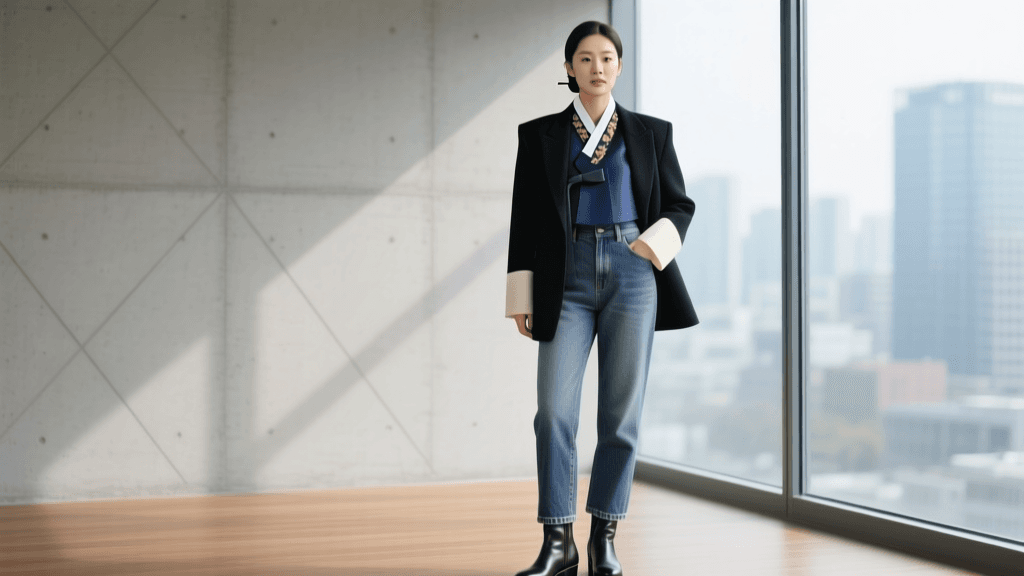
For weekend streetwear, the juxtaposition of delicate heritage textiles against rugged, utilitarian fabrics creates a striking visual tension that defines 2026 avant-garde street style. The soft, organic drape of a silk-blend jeogori contrasts beautifully with the stiff, architectural lines of heavy raw denim.
When selecting denim to pair with traditional upper garments, opt for a straight or relaxed fit with a mid-to-high rise. Skinny jeans tend to create an unbalanced, top-heavy silhouette when paired with the structural volume of hanbok sleeves. A 14oz to 16oz Japanese selvedge denim in a deep indigo or washed vintage black provides the necessary visual weight to anchor the delicate pastels often found in modern hanbok palettes.
'The beauty of mixing hanbok with streetwear lies in the rebellion against strict sartorial rules. It is about taking something sacred and historical, and grounding it in the grit of everyday urban life.' — Contemporary K-Fashion Stylist, Seoul Fashion Week 2026.
Styling Blueprint for Streetwear:
- Top: Ivory Tencel-silk jeogori with subtle tone-on-tone embroidery at the cuffs (approx. cost: $180 - $280).
- Bottom: 14oz raw selvedge denim, relaxed straight fit, cuffed at the ankle to expose the footwear.
- Footwear: Chunky, minimalist white leather sneakers or thick-soled Chelsea boots.
- Outerwear: An oversized, cropped leather bomber jacket worn over the shoulders to frame the jeogori’s collar.
2026 Fabric and Silhouette Pairing Guide
Understanding how different traditional fabrics interact with modern textiles is crucial for a cohesive outfit. The table below outlines the best pairings for various occasions and seasons in 2026.
| Traditional Fabric | Modern Pairing | Best Silhouette | Ideal Occasion | Estimated 2026 Cost (Top) |
|---|---|---|---|---|
| Washed Ramie | Wool-Blend Trousers | Cropped, structured | Corporate Office, Meetings | $140 - $190 |
| Tencel-Silk Blend | Raw Selvedge Denim | Relaxed, lantern sleeve | Streetwear, Gallery Openings | $180 - $280 |
| Organic Linen | Pleated Midi Skirt | Wrap-style, tie waist | Brunch, Casual Daytime | $110 - $150 |
| Brocade (Jacquard) | Vegan Leather Pants | Boxy, architectural | Evening Wear, Cocktail | $250 - $400 |
Accessorizing the Fusion Look
Accessories serve as the vital bridge between the traditional and the modern. In 2026, the norigae—a traditional ornamental tassel historically tied to the goreum or waistband—has been reimagined. Rather than wearing it on the garment, contemporary stylists are attaching miniature, metallic norigae to the hardware of modern luxury handbags, or using them as striking, asymmetrical lapel pins on tailored coats worn over the jeogori.
Hair accessories also offer a subtle nod to heritage. The daenggi, a traditional silk ribbon used to tie braided hair, is now frequently woven through modern claw clips or tied around the base of a sleek, low chignon. For a more avant-garde approach, thin silk daenggi ribbons are being utilized as neckties over crisp white poplin shirts worn beneath unbuttoned, sheer organza jeogori.
Care and Maintenance for Modern Blends
Caring for mixed-material garments requires a departure from the strict, expensive dry-cleaning regimens of the past. The 2026 eco-friendly blends like Tencel-silk and washed ramie are designed for longevity and ease of care, provided you follow specific guidelines.
- Washing: Hand wash in cold water (below 30°C or 86°F) using a pH-neutral, enzyme-free detergent. Never wring or twist the fabric, as this will distort the structural seams and delicate embroidery.
- Drying: Lay the garment flat on a mesh drying rack away from direct sunlight. Hanging a wet jeogori can cause the shoulders to stretch and the hemline to warp.
- Ironing: Use a low-heat steam iron. Always place a cotton pressing cloth between the iron and the garment, especially when dealing with jacquard brocades or silk blends, to prevent scorching and shine.
- Storage: Store folded in a breathable cotton garment bag. Avoid wire hangers, which can create permanent dimples in the padded shoulder seams of structured modern jeogori.
Conclusion
The integration of the hanbok into daily 2026 wardrobes is not merely a fleeting trend; it is a profound reclamation of cultural identity through the lens of modern functionality. By understanding the architectural shifts in the modern jeogori and mastering the art of proportion with tailored trousers and raw denim, you can create a wardrobe that is deeply rooted in Asian heritage while remaining fiercely relevant in the contemporary global fashion landscape.