How the Modern Hanbok Conquered 2026 Fashion Media
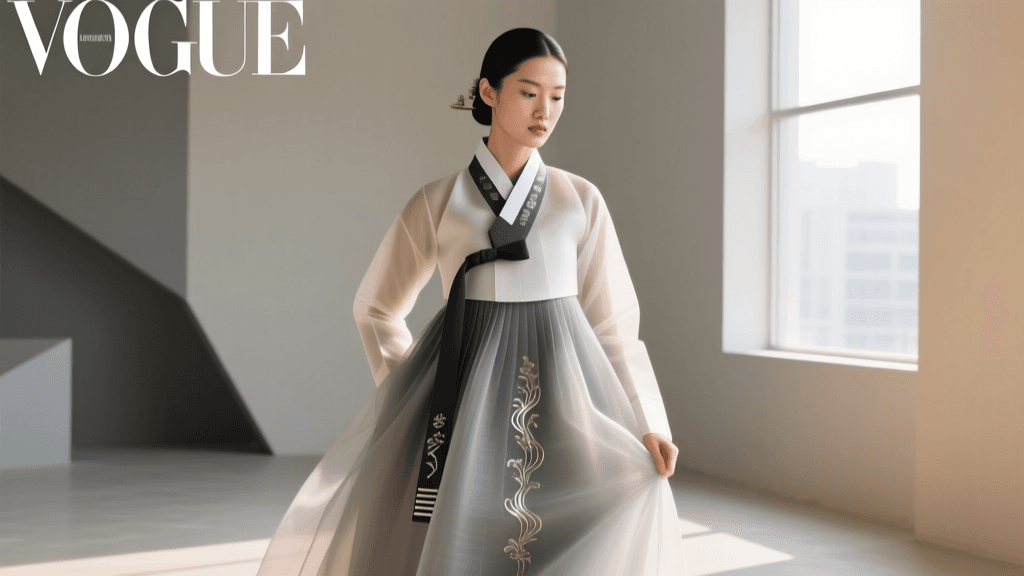
The 2026 Editorial Shift: From Cultural Artifact to Haute Couture
In the landscape of 2026 global fashion media, the traditional Korean hanbok has transcended its historical boundaries to become a dominant structural force in high-fashion editorials, luxury campaigns, and avant-garde red-carpet styling. No longer relegated to cultural heritage months or niche K-pop stage wardrobes, the contemporary hanbok is now a staple in the pages of Vogue, Harper's Bazaar, and Elle. This shift represents a profound maturation in how Western and global fashion media engage with Asian traditions—moving away from superficial costume appropriation toward a deep, structural appreciation of Korean garment engineering.
The foundation for this 2026 renaissance was laid by extensive digital archiving and cultural diplomacy over the past decade. Initiatives like the Google Arts & Culture digital archives have allowed contemporary designers and editorial stylists to study historical Joseon-era construction techniques, fabric draping, and color theory without needing physical access to fragile museum pieces. As a result, the 2026 editorial spreads we see today are informed by authentic historical silhouettes, reimagined through the lens of modern luxury textiles and sustainable fashion practices.
Core Hanbok Elements Redefining 2026 Runways and Glossies
To understand the hanbok's dominance in 2026 fashion media, one must look at the specific garment components that stylists and creative directors are isolating and amplifying in their shoots.
The Cropped Jeogori and Proportional Play
The jeogori (traditional upper garment) is characterized by its cropped length and curved sleeves (baerae). In 2026 editorials, fashion houses are utilizing the cropped jeogori to manipulate bodily proportions. By pairing a sharply tailored, modernized jeogori with high-waisted, wide-leg trousers or volumetric skirts, stylists are creating an elongated lower-body silhouette that photographs beautifully for full-page editorial spreads. The structural stiffness of modern silk organza replaces traditional ramie, giving the sleeves an architectural, gravity-defying quality that catches studio lighting perfectly.
The Volumetric Chima
The chima (wrap skirt) is the undisputed star of 2026 high-fashion movement photography. Unlike Western corseted skirts that restrict movement, the traditional chima is tied high above the natural waist, allowing the fabric to cascade in a continuous, bell-like dome. Global fashion media has embraced this silhouette for its dramatic, sweeping motion. In recent Spring/Summer 2026 campaigns, we have seen luxury brands integrate the chima's high-waisted, voluminous wrapping technique into their eveningwear, utilizing eco-friendly cupro and recycled taffeta to mimic the rustling sound and fluid drape of historical silk.
The Goreum and Dongjeong
The goreum (the long, trailing ribbons used to tie the jeogori) and the dongjeong (the stiff, white paper-like collar) are being used as focal points in editorial portraiture. The stark white dongjeong frames the face and jawline, acting as a natural reflector in beauty and fashion close-ups. Meanwhile, the goreum has been reimagined by Western designers as an asymmetrical tying mechanism on modern gowns, replacing traditional zippers and buttons with fluid, kinetic fabric knots that add a sense of romanticism and motion to static editorial images.
Data Table: 2026 Global Fashion Media Hanbok Integration
The integration of hanbok elements into global fashion media is not uniform; different publications prioritize different aspects of the garment based on their editorial focus. Below is a breakdown of how major fashion publications are utilizing hanbok aesthetics in their 2026 issues.
| Publication (2026) | Editorial Theme | Featured Hanbok Element | Stylistic Approach & Media Impact |
|---|---|---|---|
| Vogue Italia | Architectural Volume | Chima (Skirt) Silhouette | Paired with brutalist concrete backgrounds; emphasizes structural doming and sustainable taffeta. |
| Harper's Bazaar Global | Neo-Romanticism | Goreum (Ribbons) | Used as asymmetrical closures on evening gowns; soft, kinetic movement captured in wind-swept outdoor shoots. |
| Elle Korea | Heritage Futurism | Jeogori (Jacket) & Dongjeong | Metallic threads and laser-cut collars; merging traditional tailoring with cyberpunk aesthetics. |
| W Magazine | Gender Fluidity | Baji (Trousers) & Durumagi | Oversized, relaxed-fit baji styled with cropped leather; challenging traditional gendered silhouettes in high fashion. |
Leading Contemporary Brands in the Global Spotlight
The surge in media demand for authentic yet modernized hanbok has elevated several contemporary Korean designers to global household names in 2026. Fashion editors and celebrity stylists are no longer relying on Western approximation; they are pulling directly from Seoul-based heritage brands.
- Danha: Originally catapulted to fame by global K-pop idols, Danha's 2026 editorial line focuses on 'daily luxury.' Their modernized jeogori, retailing between $600 and $1,200, feature subtle pearlescent weaves and are a top pull for celebrity red-carpet styling, particularly at international film festivals.
- Tchai Kim: Known for revolutionizing the chima, Tchai Kim's 2026 collections introduce the 'slit-chima,' allowing for greater mobility while maintaining the iconic bell shape. Priced from $800 to $2,400, these pieces are heavily featured in avant-garde European fashion editorials.
- LIE Collection: Blending streetwear with traditional motifs, LIE's incorporation of saekdong (traditional color-striped sleeves) into 2026 oversized outerwear has made them a favorite for youth-culture and street-style media spreads in Tokyo, New York, and London.
Actionable Styling Guide for 2026 Hanbok Editorials
For fashion stylists, photographers, and creative directors looking to incorporate hanbok elements into their 2026 portfolios, respecting the garment's architecture while pushing creative boundaries is paramount. Here is an actionable guide to styling contemporary hanbok for modern media:
1. Lighting and Fabric Interaction
Traditional hanbok relies heavily on the interplay of light and shadow across its volumetric folds. When shooting modern silk organza or synthetic ramie blends, utilize diffused, directional lighting. Avoid harsh, direct flash, which flattens the delicate pleating of the chima. Cross-lighting will accentuate the structural curvature of the sleeves and the skirt's dome.
2. Footwear Pairings
The traditional kkotsin (floral silk shoes) or hwa (leather boots) are rarely practical for high-fashion movement. In 2026, top stylists are pairing contemporary hanbok with architectural, platform footwear or minimalist, square-toed leather boots. This grounds the ethereal volume of the garment, providing a striking visual contrast that appeals to modern editorial sensibilities.
3. Hair and Beauty Synergy
To honor the clean lines of the dongjeong (white collar), 2026 beauty trends in hanbok editorials favor severely slicked-back hair or tight, sculptural braids. This ensures the collar remains the undisputed focal point of the neckline. Makeup leans toward 'glass skin' with a focus on gradient lip tints, echoing the soft, natural color transitions found in traditional Korean dyeing techniques.
4. Respecting the Goreum Knot
The tying of the goreum is a specific, historically significant knot. It is not merely a bow. Stylists must work with hanbok-trained dressers to ensure the knot is tied correctly—with the right ribbon crossing over the left, and the ends falling in precise, measured lengths. Incorrect tying is immediately noticeable to culturally literate audiences and can lead to media backlash regarding cultural insensitivity.
The Future of Asian Traditions in Western Fashion Media
The trajectory of the hanbok in global fashion media reflects a broader, much-needed correction in how the industry treats Asian traditions. As noted in foundational cultural analyses by BBC Culture, the global pipeline for traditional dress was once heavily bottlenecked by Western interpretations and occasional misappropriations. However, the 2026 landscape is defined by direct collaboration. Western fashion houses are now hiring Korean heritage consultants, and global magazines are commissioning Seoul-based photographers and stylists to helm their Asian-tradition features.
This shift ensures that the hanbok is not treated as a fleeting trend or a monolithic costume, but as a living, breathing sartorial language. As we move through 2026, the integration of the hanbok into global fashion media stands as a masterclass in how to honor the past while aggressively designing for the future. For readers, collectors, and industry professionals, the message is clear: the future of global fashion is deeply rooted in the meticulous, structural brilliance of Asian traditions, and the hanbok is leading the charge.