Everyday vs Ceremonial Hanbok: A 2026 Styling Guide
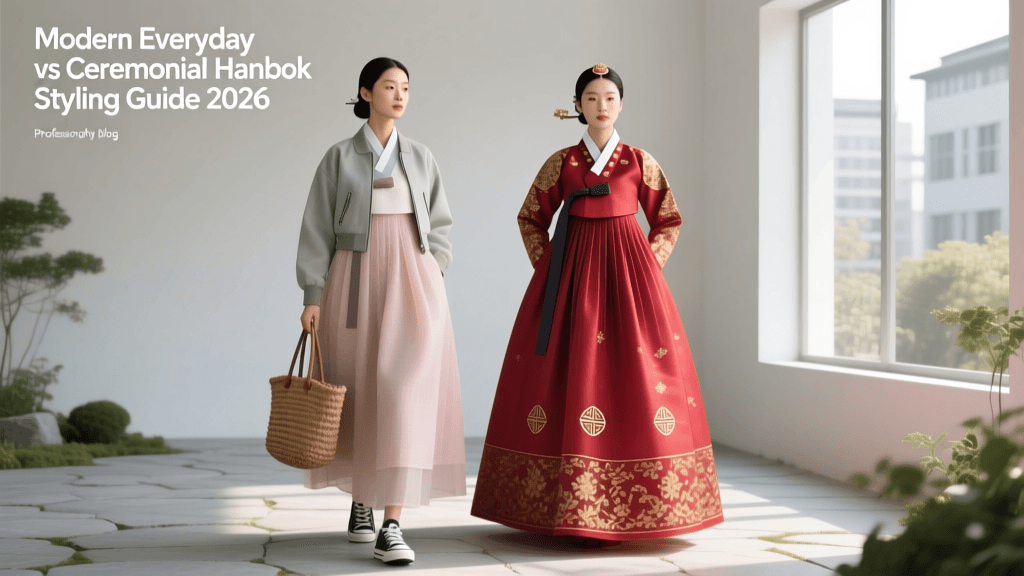
The Hanbok Renaissance: Navigating Tradition and Modernity in 2026
As we move through the fashion landscape of 2026, the hanbok—the traditional Korean garment—has solidified its place not just as a historical artifact, but as a living, breathing element of global and domestic wardrobes. The modern hanbok renaissance has bifurcated into two distinct paths: the meticulously preserved ceremonial hanbok and the highly adaptable everyday hanbok (often referred to as saenghwal hanbok or daily hanbok). For enthusiasts, designers, and cultural historians alike, understanding the nuances between these two categories is essential for proper styling, purchasing, and cultural appreciation.
Historically, the hanbok's basic structure has remained remarkably consistent since the Goryeo and Joseon dynasties, characterized by the jeogori (upper garment) and the chima (wrap-around skirt) for women, or baji (relaxed trousers) for men. According to The Metropolitan Museum of Art's Heilbrunn Timeline of Art History, the elegant lines and vibrant colors of traditional Korean dress have long reflected the deeply rooted Confucian values and social hierarchies of the era. Today, however, those rigid social markers have dissolved, leaving us with a garment that is celebrated for its aesthetic beauty and structural ingenuity.
Ceremonial Hanbok: Preserving the Joseon Legacy
Ceremonial hanbok is worn during major life events and traditional holidays such as Chuseok, Seollal, weddings, and hwangap (60th birthday celebrations). In 2026, the demand for authentic, high-fidelity ceremonial garments remains incredibly strong, driven by a renewed interest in heritage craftsmanship and luxury textiles.
Key Features of Ceremonial Dress
- Fabrics and Textiles: Ceremonial garments rely heavily on luxurious silks, specifically myeongju (plain-woven silk) and intricately woven brocades. In 2026, there is a massive surge in the use of sustainably sourced, hand-woven silk from traditional weaving hubs like Jinju.
- Color Palette (Obangsaek): Traditional ceremonial wear strictly adheres to the Obangsaek color theory, utilizing the five cardinal colors (blue, red, yellow, white, and black) to symbolize harmony and balance. A classic bridal hwalot (ceremonial robe) features vibrant red and blue silk adorned with gold-leaf stamping (geumbak).
- Silhouette and Volume: The ceremonial chima is exceptionally voluminous, often requiring multiple petticoats (sokchima) to achieve the iconic bell shape. The jeogori is traditionally cut short, ending just below the bust, with long, sweeping sleeves.
- Embellishments: Intricate embroidery featuring peonies, bats, and cranes symbolizing wealth, longevity, and good fortune is standard. The Victoria and Albert Museum notes that these motifs are not merely decorative but serve as profound cultural talismans.
Everyday Hanbok: The Saenghwal Movement
The saenghwal hanbok (daily life hanbok) movement, which began gaining traction in the late 2010s, has fully matured by 2026. Everyday hanbok is designed for the realities of modern urban life—commuting, working in offices, and casual socializing. It strips away the restrictive elements of ceremonial wear while retaining the fundamental architectural lines of the traditional garment.
Practicality Meets Tradition
- Modernized Fabrics: To accommodate daily wear and machine washing, 2026 everyday collections heavily feature organic cotton, linen blends, ramie (mosi), and even lightweight technical synthetics for summer wear. These fabrics drape beautifully but resist the heavy wrinkling associated with pure silk.
- Altered Silhouettes: The most noticeable difference is the length and volume. The everyday chima often falls to the mid-calf or ankle and is cut with less fabric to prevent tripping on subway stairs or crowded sidewalks. The jeogori is frequently lengthened to cover the waistband of the skirt, providing more modesty and ease of movement.
- Simplified Fastenings: While the traditional goreum (chest ties) remain a defining visual element, everyday versions often feature shorter, wider ties, or hidden snap-buttons and magnetic clasps to mimic the look of the knot without the time-consuming tying process.
- Pockets and Functionality: A major innovation in the 2026 everyday hanbok market is the integration of deep, hidden side-seam pockets in the chima and baji, a feature historically absent in traditional designs but strictly necessary for modern smartphone and key storage.
Ceremonial vs. Everyday Hanbok: 2026 Comparison Chart
To help you decide which style suits your needs, here is a comprehensive breakdown of how ceremonial and everyday hanbok compare across several critical metrics in the current market.
| Feature | Ceremonial Hanbok | Everyday (Saenghwal) Hanbok |
|---|---|---|
| Primary Occasions | Weddings, Seollal, Chuseok, Hwangap | Office wear, cafes, casual outings, travel |
| Dominant Fabrics | Pure silk, brocade, satin, ramie | Cotton, linen, polyester blends, denim |
| Skirt Volume | High (requires petticoats) | Low to Medium (A-line or wrap styles) |
| Jeogori Length | Very short (ends above waist) | Standard (covers waist or hip) |
| Average Cost (2026) | $450 - $2,500+ USD | $75 - $220 USD |
| Care Instructions | Dry clean only, careful steaming | Machine washable (gentle), tumble dry low |
| Fastenings | Traditional long Goreum knots | Short ties, hidden snaps, zippers |
Styling Your Hanbok for Modern Occasions
Styling a hanbok in 2026 requires a thoughtful blend of traditional accessories and contemporary fashion sensibilities. Whether you are attending a formal ceremony or heading to a casual weekend market, the right styling elevates the garment.
Ceremonial Styling
For formal events, accessories are non-negotiable. Women typically wear their hair in a braided style adorned with a daenggi (traditional ribbon) or an elegant updo secured with a binyeo (ornamental hairpin). A norigae—a decorative pendant tied to the goreum or the waistband of the skirt—is essential. In 2026, antique jade and silver norigae are highly sought after as family heirlooms. Footwear consists of hwa or kkotsin, traditional leather or silk shoes with slightly upturned toes, worn with white cotton socks (beoseon).
Everyday Styling
The beauty of the everyday hanbok lies in its versatility. In 2026, it is incredibly common to see a cotton chima paired with a modern knit cardigan or a tailored blazer instead of a traditional jeogori. Conversely, a modernized jeogori can be worn over high-waisted denim jeans. For footwear, everyday hanbok is frequently styled with modern leather loafers, minimalist sneakers, or ankle boots. Hair is generally left in modern, everyday styles, though a simple contemporary hair clip can subtly nod to the traditional binyeo.
Sourcing and Caring for Your Garments
Acquiring a high-quality hanbok requires knowing where to look. For ceremonial garments, bespoke tailoring is still the gold standard. In Seoul, districts like Jongno and Insadong remain the epicenter for master tailors who take precise measurements and hand-stitch the goreum. According to the Encyclopedia of Korean Culture, the precise knotting of the otgoreum is considered an art form in itself, requiring a specific asymmetrical balance that machines cannot replicate. Expect to pay upwards of $800 for a custom silk set in 2026.
For everyday hanbok, the market is booming with independent designers and online boutiques. Brands focusing on sustainable, slow-fashion practices are dominating the 2026 market, offering organic hemp and naturally dyed cotton sets ranging from $90 to $180. When caring for your garments, always respect the fabric. While everyday cotton sets can be washed at home, the structural integrity of a silk ceremonial skirt can be ruined by improper washing. Always invest in professional dry cleaning for your heritage pieces and store them flat or loosely rolled in breathable cotton garment bags to prevent permanent creasing.
Conclusion
The dichotomy between ceremonial and everyday hanbok in 2026 is not a story of replacement, but of parallel evolution. The ceremonial hanbok serves as a vital, breathtaking link to Korea's rich historical tapestry, preserving ancient techniques, color theories, and silhouettes for momentous life events. Meanwhile, the everyday hanbok proves that traditional dress can adapt, breathe, and thrive in the fast-paced modern world. By understanding the distinct purposes, fabrics, and styling rules of both categories, you can respectfully and beautifully integrate the hanbok into your life, honoring the past while fully embracing the present.