Miao Silver Jewelry and Embroidery: A Guizhou Guide
The Living History Books of Guizhou
Unlike many ancient cultures that relied on written texts to pass down their histories, the Miao (Hmong) people of southwestern China encoded their mythology, migrations, and spiritual beliefs into their garments. Concentrated primarily in the mountainous regions of Guizhou, Yunnan, and Hunan provinces, the Miao ethnic group developed a sartorial tradition so intricate that it serves as a wearable archive. For collectors, fashion historians, and cultural enthusiasts, understanding Miao clothing requires looking beyond mere aesthetics to appreciate the profound metallurgical and textile engineering involved.
At the heart of this tradition are two distinct but complementary crafts: the heavy, resonant silver jewelry worn during festivals, and the painstakingly detailed silk embroidery that adorns indigo-dyed cotton and hemp. This guide provides an in-depth, actionable look into the craftsmanship, sourcing, and modern preservation of Miao ethnic minority clothing traditions.
The Weight of Heritage: Miao Silver Jewelry
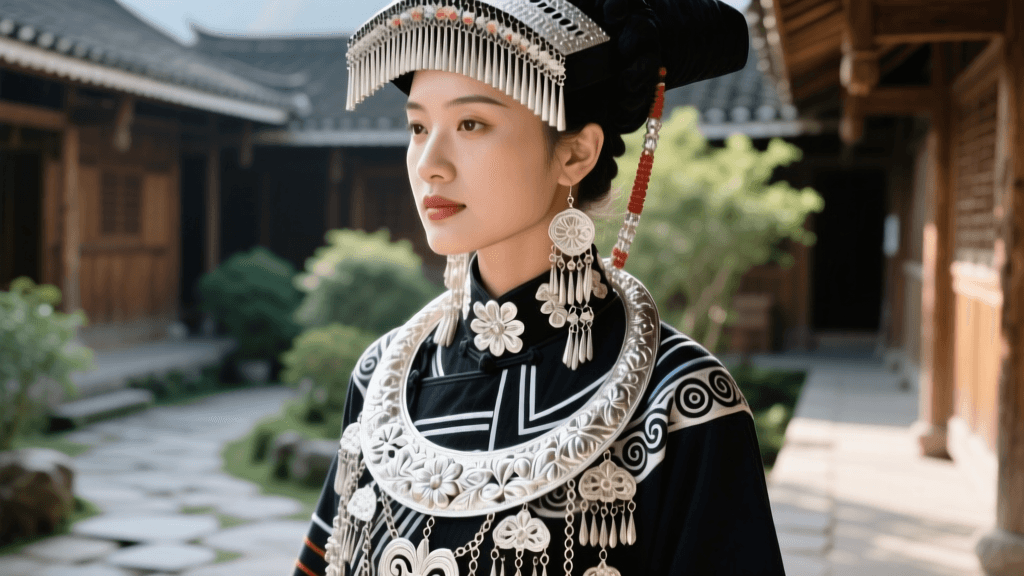
Miao silver jewelry is not merely decorative; it is a profound display of familial wealth, spiritual protection, and ancestral reverence. During major celebrations like the Lusheng Festival or the Miao New Year, women adorn themselves in massive silver headdresses, horned crowns, multi-layered necklaces, and heavy chest plates. The tinkling sound of the silver is believed to ward off malevolent spirits, while the sheer weight of the metal demonstrates the prosperity and dedication of the wearer's family.
Measurements, Weights, and Costs
A full festival silver set is a marvel of structural engineering and metallurgy. Here are the practical specifications you need to know if you are studying or sourcing authentic pieces:
- Total Weight: A complete ceremonial set, including the silver horn headdress, hairpins, neck torcs, and chest chains, typically weighs between 5 to 10 kilograms (11 to 22 lbs). Some elaborate headdresses alone can weigh up to 3 kilograms.
- Silver Purity and Pricing: Traditional 'Miao Silver' found in tourist markets is often an alloy of silver, copper, and nickel, which is much cheaper but lacks the cultural and material value of genuine pieces. Authentic festival silver is crafted from 99% or 92.5% sterling silver. When sourcing from master silversmiths in Guizhou, expect to pay the daily market rate for raw silver (approximately 5 to 7 RMB per gram) plus an artisan craftsmanship fee of 10 to 25 RMB per gram.
- Total Investment: A genuine, hand-forged sterling silver bridal or festival set can cost anywhere from 30,000 to over 100,000 RMB ($4,200 to $14,000 USD), depending on the complexity of the filigree work.
Authentication and Sourcing Advice
When purchasing Miao silver, always ask for Zu Yin (pure silver). Because traditional Miao silversmiths do not always stamp their work with modern '925' or '999' hallmarks, buyers should use a neodymium magnet to test for base metals like nickel or iron, which will attract the magnet. For high-value antique pieces, a non-destructive X-ray fluorescence (XRF) test is recommended to verify the elemental composition without damaging the historical patina.
Threads of Mythology: Miao Embroidery Techniques
While silver provides the armor, embroidery provides the soul. Miao embroidery is renowned for its complexity, vibrant color palettes, and three-dimensional textures. As documented in the British Museum's ethnographic archives, Miao textiles are among the most technically diverse in Asia, utilizing over a dozen distinct stitching methods.
Key Embroidery Techniques
- Pingxiu (Flat Embroidery): The most common technique, used for broad areas of color and intricate storytelling motifs. It resembles traditional Chinese silk painting but executed with spun silk threads on a cotton base.
- Daxiu (Plaited/Braided Embroidery): Involves braiding silk threads into tiny cords before couching them onto the fabric. This creates a raised, textured outline that is highly durable and resistant to fraying.
- Zhouxiu (Wrinkled/3D Embroidery): A highly specialized technique where the thread is intentionally twisted and bunched to create raised, sculptural elements, often used to depict the scales of dragons or the petals of flowers.
The Butterfly Mother and Mythological Motifs
To authenticate a piece as traditionally Miao rather than a modern commercial reproduction, look for the Mai Bang (Butterfly Mother). According to Miao creation myths, the Butterfly Mother hatched from the heart of a sacred maple tree and laid twelve eggs, which hatched into the first humans, dragons, and water buffaloes. Authentic vintage jackets will almost always feature the Butterfly Mother on the central back panel or the collar. Another vital motif is the water buffalo horn, representing agricultural wealth and the spirits of the ancestors.
The Foundation: Indigo Dyeing and the Hundred-Pleat Skirt
Miao embroidery is rarely done on white fabric. The base cloth is traditionally hand-woven cotton or hemp, dyed repeatedly in vats of fermented indigo. To achieve the signature dark, lustrous finish that is slightly water-resistant, the dyed cloth is beaten with wooden mallets for hours, sometimes glazed with egg white or ox-hide glue.
The crowning textile achievement of the Miao is the Bai Zhe Qun (hundred-pleat skirt). Crafting a single skirt requires 15 to 20 meters of heavy indigo cloth. The artisan must fold the damp fabric into hundreds of microscopic, uniform pleats, bind it tightly with cotton string, and steam it for hours to set the folds. Actionable Care Tip: If you acquire an authentic pleated skirt, never hang it. The weight of the heavy cotton will pull the pleats out over time. Always store it flat, or tightly rolled in acid-free tissue paper in a climate-controlled environment.
Practical Sourcing Guide for Collectors and Travelers
Acquiring authentic Miao garments requires knowing where to go and what to expect. Based on cultural market analyses and Sixth Tone's cultural heritage reporting, here is a comparative guide to sourcing Miao textiles and silver.
| Sourcing Location | Specialty | Price Range (USD) | Best For |
|---|---|---|---|
| Xijiang Miao Village (Guizhou) | Modern silver replicas, basic embroidered souvenirs, performance costumes | $50 - $500 | Tourists, casual souvenirs, visual inspiration |
| Kaili Sunday Market (Guizhou) | Vintage indigo textiles, raw silver, authentic village-worn embroidery | $100 - $2,500+ | Serious collectors, textile researchers, vintage buyers |
| Panjiayuan Market (Beijing) | Curated antique Miao pieces, rare festival silver, museum-grade jackets | $500 - $8,000+ | High-end collectors, interior designers, museum curators |
| Online Specialized Dealers | Authenticated vintage panels, framed embroidery, silver hairpins | $150 - $3,000 | Global buyers, home decor, modern fashion integration |
How to Authenticate Vintage Embroidery
When buying vintage Miao embroidery at markets like Kaili or Panjiayuan, perform the 'back-side test'. Machine embroidery, which flooded the market in the late 1990s, will have neat, uniform bobbin threads on the reverse side, often with a white or black backing paper. Authentic hand-embroidery will show slight irregularities, knotting, and the natural, uneven tension of human hands on the reverse. Furthermore, you can perform a discreet burn test on a loose thread: natural silk will smell like burnt hair and turn to ash, while modern synthetic rayon or polyester will melt into a hard plastic bead.
Modern Styling and Cultural Integration
Integrating ethnic minority garments into a modern wardrobe requires a balance of respect and aesthetic harmony. Wearing a full, traditional Miao festival outfit outside of its cultural context can easily cross into costume territory. Instead, adopt a deconstructed approach to styling:
- The Statement Collar: Pair a heavy, authentic Miao silver neck torc or a single, intricately embroidered collar piece over a minimalist, high-necked black turtleneck or a sleek modern evening gown. The contrast between the ancient, heavy craftsmanship and modern, clean lines is visually striking.
- Framed Textiles: Vintage Miao jacket panels, particularly those featuring the Butterfly Mother or intricate dragon motifs, are often too fragile for daily wear. Have them professionally mounted on acid-free matting and framed behind UV-protective glass as high-end textile art.
- Upcycled Accessories: Many collectors purchase damaged or fragmented Miao baby carriers (which feature some of the most protective and dense embroidery) and have them re-tailored into luxury handbags, tablet sleeves, or bomber jacket back-panels by professional leatherworkers.
Preserving the Heritage
The rapid modernization of rural China poses a significant threat to traditional Miao craftsmanship. Younger generations are increasingly moving to urban centers, leaving fewer apprentices to learn the grueling processes of indigo fermentation, silver filigree, and 3D silk embroidery. By understanding the true cost, labor, and cultural weight of these garments, collectors and enthusiasts can support the master artisans who are fighting to keep this wearable history alive. When you invest in a piece of Miao silver or embroidery, you are not just buying a garment; you are preserving a chapter of human history that was written not with ink, but with thread and fire.