Mayan Huipil Backstrap Loom Tension Adjustment And Cotton Thread Dyeing
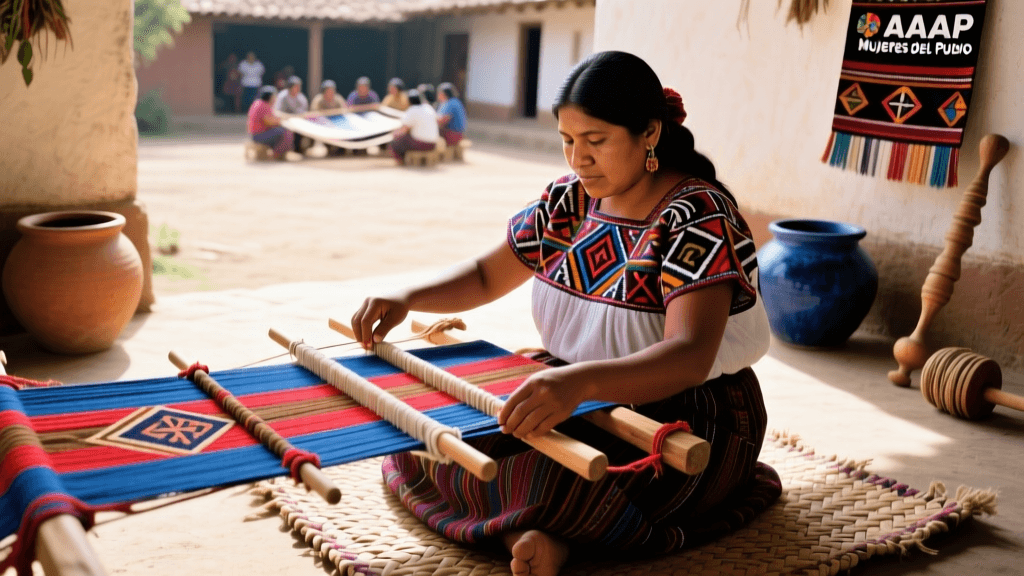
Backstrap Loom Tension: A Kinesthetic Practice Rooted in Maya Cosmology
The backstrap loom is not merely a tool—it is an extension of the weaver’s body, breath, and ancestral memory. In the highland communities of Guatemala, particularly among the K’iche’, Kaqchikel, and Mam peoples, tension adjustment on the backstrap loom is performed without mechanical aids or digital gauges. Instead, it relies on calibrated muscle memory developed over decades, often beginning at age six or seven. The warp threads—typically 120 to 180 cotton strands for a standard huipil panel—are stretched between a fixed post and a woven belt secured tightly around the weaver’s lower back. Precise tension ensures even beat-down of the weft and prevents distortion during brocade patterning.
Measuring Resistance Through Embodied Knowledge
Tension is assessed by pressing the index finger against the warp beam while inhaling; optimal resistance occurs when the beam yields approximately 1.5–2.0 cm under gentle pressure. This range corresponds to a measured tensile force of 4.2–5.8 kg per square centimetre, verified in field studies conducted by the Centro de Estudios Mayas at Universidad Nacional Autónoma de México (UNAM) in 2021. Deviations beyond this range cause skipped floats in supplementary weft brocade or uneven selvedges—flaws considered spiritually disruptive in ceremonial contexts.
Cotton Cultivation and Preparation for Dyeing
Traditional huipiles use locally grown Gossypium hirsutum var. *yucateco*, a short-staple cotton cultivated in terraced plots near San Juan La Laguna and Santiago Atitlán. Harvest occurs twice annually—in May and October—with each plant yielding an average of 180–220 grams of lint after ginning. Before dyeing, raw cotton undergoes three stages of preparation: hand-carding with maguey-fibre brushes (each brush lasts 11–14 months), twisting into 3.2-metre-long rovings, and soaking for 72 hours in a fermented solution of ash lye (from avocado and nance wood) and rainwater. This alkaline bath opens fibre cuticles and enhances mordant uptake.
Natural Dye Sources and Their Seasonal Cycles
Dye materials are gathered according to lunar calendars and ecological reciprocity protocols. Cochineal insects (*Dactylopius coccus*) are harvested from cultivated nopal cacti every 90 days, yielding 1.2–1.6 grams of dried dye per 100 insects. Indigo (*Indigofera suffruticosa*) leaves are fermented in earthen vats for precisely 13 days before reduction, while annatto seeds (*Bixa orellana*) require sun-drying for 48 consecutive hours to activate pigment stability. These practices are documented in the community-led archive of the Asociación de Mujeres Tejedoras del Lago Atitlán (AMTLA), established in 1998.
Ceremonial Significance of Hue and Structure
A huipil is never “finished” in the Western sense—it is consecrated through ritual use. The number of brocaded motifs, their placement, and colour sequence encode lineage affiliation, village identity, and cosmological orientation. For example, in Nebaj, Ixil women incorporate nine diamond motifs representing the layers of the Maya cosmos, each filled with alternating red (cochineal) and blue (indigo) threads symbolising fire and water—the twin forces sustaining life. A full ceremonial huipil requires 320–360 hours of weaving time, with each hour accompanied by quiet prayer or oral recitation of *Popol Vuh* passages.
- Warp density: 24–28 ends per centimetre
- Weft count: 20–22 picks per centimetre in plain weave base
- Huipil length: 68–74 cm for adult women in Chichicastenango
- Minimum ceremonial wear duration: 13 consecutive days during harvest festivals
Institutional Safeguarding and Intergenerational Transmission
The Museo Ixchel del Traje Indígena in Guatemala City houses over 1,200 huipiles, including a 19th-century K’iche’ piece with pre-Hispanic glyph motifs confirmed via X-ray fluorescence analysis. Since 2015, the museum has partnered with the Consejo Nacional para la Protección del Patrimonio Cultural Maya (CONAPCM) to digitise 87 weaving sequences from 14 municipalities. Fieldwork conducted by CONAPCM in 2022 recorded that only 12% of weavers aged 18–25 demonstrate full mastery of tension calibration without mentor supervision—a statistic prompting urgent curriculum reform in bilingual intercultural schools across El Quiché.
“Tension is not measured with tools—it is felt in the spine, heard in the hum of the shuttle, and remembered in the grandmother’s hands that guide yours. To loosen or tighten is to speak with the ancestors.” — Doña María Tz’unun, master weaver, San Antonio Aguas Calientes (quoted in AMTLA Annual Report, 2023)
Contemporary Challenges in Material Continuity
Climate volatility threatens traditional dye cycles: rainfall deficits exceeding 35% in the 2020–2023 triennium reduced nopal cactus yield by 42%, directly limiting cochineal production. Simultaneously, imported polyester threads—sold at 60% lower cost than hand-spun cotton—now constitute 29% of all threads used in non-ceremonial huipiles, per data from the Fundación Proyecto Cultural Maya (FPCM) 2024 textile audit. FPCM’s “Cotton Corridor Initiative”, launched in 2021, supports 212 families across Sololá and Totonicapán to restore native cotton fields using heirloom seed banks maintained at the Centro de Investigaciones Agronómicas de la Universidad de San Carlos (CIAS-Usac).
- Hand-spinning speed: 1.4 metres of thread per minute (average)
- Fermentation vat temperature: maintained at 28–31°C for indigo reduction
- Post-mordant rinse duration: exactly 17 minutes in cold spring water
- Maximum warp length on backstrap loom: 4.7 metres (for double-panel huipiles)
- Thread twist angle: 22–25 degrees for optimal brocade lift
| Village | Primary Cotton Variety | Average Huipil Weaving Time (hrs) | Ceremonial Dye Palette Size | Active Weaving Cooperatives |
|---|---|---|---|---|
| San Juan La Laguna | G. hirsutum ‘Laguna Blanca’ | 290 | 7 colours | 3 (including cooperativa “Nab’e Q’ij”) |
| Nebaj | G. hirsutum ‘Ixil Pek’ | 340 | 9 colours | 5 (including “Q’eqchi’ Winaq”) |
At the heart of continuity lies reciprocity—not just between human and land, but between generations and disciplines. When a young weaver in Santiago Atitlán adjusts her backstrap belt for the first time without instruction, she is not merely tightening thread. She is re-enacting a covenant older than colonial archives: one measured in centimetres of warp stretch, grams of dyestuff, and the precise resonance of shuttle against beater. This knowledge remains uncodified in textbooks but vibrates in the loom’s hum, taught in silence, corrected with touch, and affirmed in ceremony.
The Instituto Mesoamericano de Estudios Textiles (IMET), founded in Antigua Guatemala in 2007, coordinates annual inter-community exchanges where elders from Sacatepéquez demonstrate tension recalibration after volcanic ashfall alters humidity levels—a practice refined since the 1976 earthquake. Similarly, the Museo del Traje de la Universidad del Valle de Guatemala (UVG) curates a permanent exhibit titled “The Weight of Thread”, featuring loom belts weighted with stones calibrated to 5.3 kg—matching the average tension threshold identified in UNAM’s 2021 biomechanical study.
Each huipil carries the imprint of its making: the slight irregularity in a brocaded star pattern where the weaver paused to soothe a child, the faint discoloration where rainwater seeped into a drying indigo vat, the subtle asymmetry where tension shifted mid-weave during a funeral vigil. These are not flaws—they are signatures of relational existence, encoded in cotton and colour, sustained through institutions that refuse to separate craft from cosmology, measurement from meaning.
When Doña Petronila López of San Miguel Dueñas ties her backstrap for the third time in a morning—adjusting for the shift in her posture after kneeling to light copal incense—she performs an act as precise as any scientific calibration. Her fingers know the exact millimetre of give required. Her breath matches the rhythm of the shuttle. And in that convergence, mathematics, memory, and metaphysics become indistinguishable.
The preservation of huipil-making is not about freezing technique in amber. It is about ensuring that every future weaver inherits not only the loom’s dimensions—47 cm wide, 120 cm deep—but the ethical weight carried in its tension: the obligation to measure carefully, to dye respectfully, and to weave so that the cloth does not merely clothe the body, but honours the web of life holding it upright.