Authenticating Maya Huipiles: 2026 Guide to Backstrap Textiles
The Renaissance of the Maya Huipil in 2026
In the global textile market of 2026, there has been a profound and necessary shift toward recognizing indigenous garments not merely as fashion commodities, but as protected cultural intellectual property. At the forefront of this movement is the Maya huipil, a traditional woven tunic worn by indigenous women across Guatemala and parts of Mexico. Far from being a simple piece of clothing, the huipil serves as a wearable manuscript, encoding the wearer’s village, marital status, social standing, and cosmological beliefs. As demand for authentic Latin American textile arts surges this year, the market has unfortunately seen an influx of mass-produced, machine-made imitations. For collectors, designers, and culturally conscious buyers, understanding how to authenticate a genuine, backstrap-woven huipil is more critical than ever.
The Anatomy of a Traditional Huipil
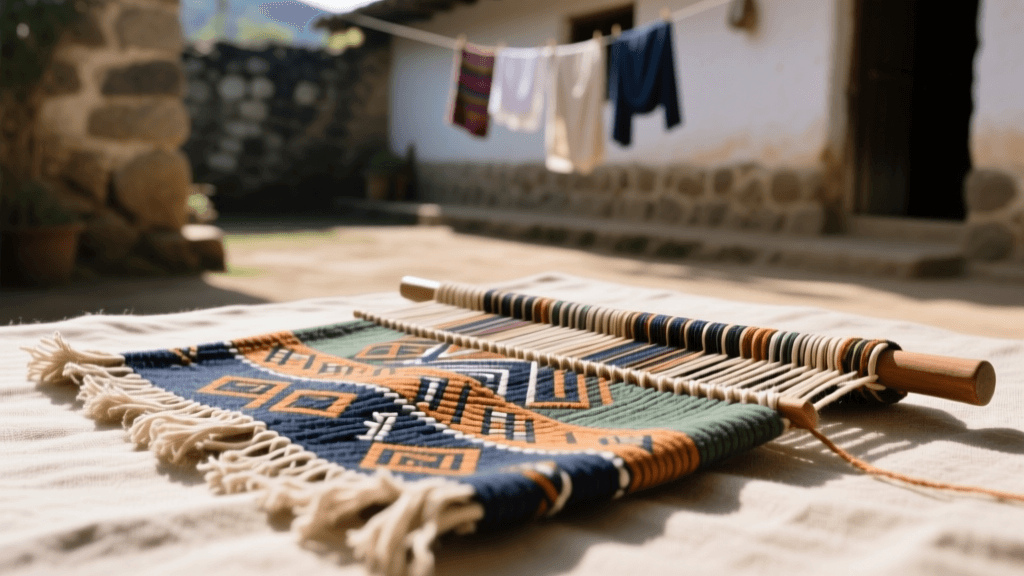
To authenticate a huipil, one must first understand its fundamental architecture. A traditional garment is not cut from a single large sheet of fabric. Instead, it is constructed from one, two, or three narrow panels of handwoven cloth known as lienzos. These panels are woven on a backstrap loom, which limits the width of the fabric to the span of the weaver’s hips—typically between 18 and 24 inches.
The Randa and the Cuello
When multiple lienzos are required to achieve the necessary width for a blouse or dress, they are joined together using a highly decorative, intricate hand-stitched seam called a randa. In a genuine 2026 vintage or newly commissioned ceremonial huipil, the randa is often executed with contrasting silk or cotton threads, featuring motifs like zig-zags (representing mountains or serpents) or interlocking loops. The neckline, or cuello, is similarly finished by hand, often featuring dense embroidery or drawn-thread work that varies strictly by municipality.
Backstrap Loom vs. Foot Loom: The Authenticity Test
The most definitive way to authenticate a traditional Maya huipil is by identifying the type of loom used to create it. The backstrap loom (telar de cintura) is an ancient, pre-Columbian technology where the tension of the warp threads is controlled by the weaver’s own body weight. In contrast, the foot loom (telar de pie), introduced by the Spanish in the 16th century, uses wooden pedals and a rigid frame, allowing for wider, faster, and more uniform production. While foot-loom textiles have their own valid place in Latin American textile arts, they are not the traditional medium for a ceremonial or identity-bearing huipil.
| Feature | Backstrap Loom (Telar de Cintura) | Foot Loom (Telar de Pie) |
|---|---|---|
| Maximum Width | 18 to 24 inches (Body-limited) | 40 to 60+ inches (Frame-limited) |
| Selvage Edges | Clean, finished, and integral to the weave | Often cut, raw, or machine-hemmed |
| Tension & Uniformity | Slight, organic irregularities (human tension) | Perfectly uniform, mechanical tension |
| Brocade Integration | Woven directly into the warp (supplementary weft) | Often embroidered on post-weave or jacquard |
| Production Time | 2 to 6 months for a single garment | 1 to 2 weeks for multiple garments |
Pro-Tip for Buyers: Hold the textile up to a light source. In a true backstrap-woven huipil, the intricate brocade patterns (the jaspe or supplementary weft) are integrated directly into the weave. If you can see loose threads dangling on the reverse side, or if the pattern appears stamped or machine-embroidered over a base cloth, you are likely looking at a commercial, mass-produced replica.
Decoding the Motifs: A Visual Language
Every municipality in the Guatemalan highlands possesses a distinct visual vocabulary. According to research preserved by institutions like the Smithsonian National Museum of the American Indian, these motifs are not random decorative choices; they are deeply tied to Maya cosmology and the natural environment.
- The Diamond (El Rombo): Representing the four cardinal directions, the sun's path, and the universe. It is one of the oldest and most ubiquitous motifs, heavily featured in huipiles from Chichicastenango and Santa Catarina Palopó.
- The Quetzal Bird: A symbol of freedom and wealth, native to the cloud forests of the region.
- Toads and Frogs (Sapos): Often woven into the garments of agricultural communities, these represent fertility, the coming rains, and the voice of the earth.
- The Double-Headed Eagle: A fascinating syncretic motif that blends the indigenous concept of looking toward the past and future with the heraldic crest of the Spanish Habsburgs.
Natural Dyes vs. Synthetic Threads in 2026
While the mid-20th century saw a massive influx of cheap, neon-bright aniline and acrylic yarns, the 2026 textile market is experiencing a powerful renaissance in natural dyeing. Discerning collectors now actively seek out huipiles dyed with organic, pre-Columbian materials. Organizations dedicated to textile preservation, such as Maiwa Handprints' Natural Dye Archive, highlight the incredible colorfastness and ecological harmony of these ancient techniques.
Key Natural Dyes to Look For:
- Cochineal (Dactylopius coccus): An insect that lives on the nopal cactus, crushed to produce vibrant, colorfast crimsons, purples, and deep pinks. A genuine cochineal dye will have a rich, complex depth that shifts slightly in natural sunlight.
- Indigo (Añil): Derived from the leaves of the indigo plant, yielding deep, organic blues that fade beautifully over decades of wear, unlike synthetic navy dyes which crack and turn chalky.
- Sacatinta and Walnut: Used to create deep, warm browns and blacks, often used in the mourning huipiles of specific highland villages.
To test for synthetic dyes, examine the wear points (like the neckline or underarms). Synthetic threads tend to pill and lose their color in a uniform, chalky manner, whereas naturally dyed cotton and wool develop a rich, highly sought-after patina.
2026 Market Pricing and Valuation Guide
Pricing a huipil requires an understanding of its provenance, age, and complexity. In 2026, the fair-trade market has stabilized, ensuring that master weavers are compensated for the hundreds of hours of labor required to produce a single garment. Below is a general valuation guide for authentic, backstrap-woven huipiles in the current market:
- Everyday Wear (Huipil Sencillo): $150 – $350 USD. Woven with commercial cotton but featuring traditional village motifs and backstrap tension.
- Ceremonial / Cofradía Huipiles: $600 – $1,500 USD. Commissioned for religious festivals, featuring dense, full-coverage brocade, silk threads, and natural dyes.
- Vintage / Antique (Pre-1980s): $1,200 – $4,500+ USD. Highly collectible pieces featuring extinct village patterns, hand-spun cotton (coyuche), and historical cochineal dyes.
Ethical Sourcing and Avoiding Cultural Appropriation
As the appreciation for Latin American traditional garments grows, so does the ethical responsibility of the buyer. In recent years, several international fashion houses have faced severe backlash—and legal action—for plagiarizing indigenous Maya designs without attribution or compensation. In 2026, ethical sourcing is not just a preference; it is a mandate for anyone operating in the textile arts space.
Advocacy groups like Cultural Survival continually emphasize the importance of direct-trade relationships. To ensure your purchase supports the indigenous economy rather than exploiting it, adhere to the following principles:
- Buy Direct from Cooperatives: Seek out women-led weaving cooperatives in regions like Quetzaltenango, Sololá, or the highlands of Chiapas. Organizations such as Trama Textiles or the weaver collectives of Santiago Atitlán offer direct-to-consumer platforms that guarantee 100% of the profit returns to the artisans.
- Demand Provenance: A reputable dealer should be able to tell you the exact village, the name of the weaver (if she consents to share it), and the specific meaning behind the motifs.
- Avoid "Upcycled" Fast Fashion: Be highly skeptical of brands that cut up vintage, sacred ceremonial huipiles to create modern handbags, shoes, or jacket panels. This practice destroys historical artifacts and strips the garment of its spiritual integrity.
Conclusion
The Maya huipil remains one of the most sophisticated and deeply meaningful garments in the Americas. By learning to read the tension of the backstrap loom, decode the ancient cosmological motifs, and identify the subtle brilliance of natural dyes, you elevate yourself from a mere consumer to a guardian of Latin American textile heritage. As we navigate the 2026 market, prioritizing authenticity and ethical compensation ensures that the rhythmic clack of the wooden loom continues to echo through the highlands for generations to come.