Complete Guide to Matching Kimono Obi, Zori & Bags
The Art of Kitsuke: Beyond the Kimono
When most people think of traditional Japanese clothing, the vibrant silk of the kimono immediately comes to mind. However, the true mastery of kitsuke—the art of wearing the kimono—lies in the meticulous selection, coordination, and tying of its accessories. A kimono without its proper obi, zori, and accompanying accoutrements is like a framed painting without a mat or border; it lacks structural integrity and contextual completeness. According to the Metropolitan Museum of Art's Heilbrunn Timeline of Art History, the evolution of Japanese dress is deeply intertwined with the accessories that signify class, season, and occasion. This comprehensive guide will walk you through the nuanced rules of matching your obi, zori, and bags to ensure your ensemble is both culturally respectful and aesthetically flawless.
Understanding Formality: The Obi Hierarchy
The obi is not merely a belt; it is the structural and visual anchor of the entire ensemble. It dictates the formality of the outfit more than any other single accessory. Choosing the correct obi requires an understanding of its weave, pattern placement, and dimensions.
Maru and Fukuro Obi: The Pinnacle of Formality
The Maru obi is the most formal, heavy, and elaborate of all obi types. Fully patterned on both sides and often woven with metallic gold and silver threads, it is almost exclusively reserved for traditional brides and geisha. Because of its immense weight and stiffness (measuring roughly 68 cm wide and over 4.5 meters long), it is rarely worn by the general public today. Instead, the Fukuro obi has become the standard for formal wear. Measuring approximately 31 cm (12 inches) in width and 4.2 meters in length, the Fukuro obi is patterned on only one side, making it lighter and easier to tie into complex knots like the taiko musubi (drum knot) or the elaborate fukura suzume (sparrow bow) worn with furisode. When attending a wedding as a guest or participating in a formal tea ceremony, a Fukuro obi paired with a homongi or tsukesage kimono is the gold standard.
Nagoya Obi: Semi-Formal Elegance
For semi-formal occasions, the Nagoya obi is the most practical and widely used choice. Invented in the 1920s, it is pre-folded and stitched along one edge, tapering from 31 cm at the decorative end to about 15 cm at the section that wraps around the waist. This ingenious design makes it significantly easier to tie the standard drum knot. Nagoya obi are perfect for tsukesage and high-end komon (repeating pattern) kimonos, making them ideal for graduation ceremonies, upscale dining, and casual tea gatherings.
Zori and Tabi: Grounding Your Ensemble
Footwear in Japanese traditional dress is strictly regulated by formality and gender. Zori are the formal, flat or elevated sandals worn with kimono, while geta (wooden clogs) are reserved for casual wear, festivals, or specific summer ensembles like the yukata.
Material and Hanao (Thongs)
Formal zori are typically covered in vinyl, leather, or silk brocade. The hanao (the thongs that hold the foot) are crucial indicators of formality. For women, white hanao are the most formal and are worn with white tabi to weddings and highly formal events. Black or colored hanao are slightly less formal and are often paired with patterned zori for parties or coming-of-age ceremonies. As highlighted by the Victoria and Albert Museum's Kimono: Kyoto to Catwalk exhibition, the integration of modern materials like vinyl in the 20th century revolutionized zori, making them weather-resistant while maintaining a high-gloss, formal appearance.
Heel Heights and Tabi Rules
Zori heel heights vary based on the kimono type. Standard formal zori have a heel height of about 4 to 5 cm. However, furisode (long-sleeved kimonos worn by unmarried women) are often paired with high-heeled zori, measuring 8 to 10 cm, to elevate the hem and allow the long sleeves to drape elegantly without touching the ground. Footwear is incomplete without tabi, the split-toe socks. For any formal event, tabi must be pristine white cotton. Colored or patterned tabi are strictly for casual, fashion-forward, or theatrical wear.
The Subtle Elegance of Obiage and Obijime
While the obi commands attention, the obiage and obijime provide the subtle, refined details that true connoisseurs look for.
- Obiage: This is a silk, scarf-like cloth used to cover and hide the obi-makura (the pillow used to give the obi knot its volume). For formal wear, the obiage is typically made of shibori (tie-dyed) silk crepe in shades of vibrant red, soft pink, or pale gold. It should peek out just slightly above the obi, never dominating the visual space.
- Obijime: This is the braided cord tied over the center of the obi knot to secure it. The art of making these cords is called kumihimo. Formal obijime are thick, round, and often feature subtle metallic threads woven into the silk. They should contrast gently with the obi but harmonize with the obiage and the kimono's secondary colors.
Handbags and Kinchaku: The Final Touch
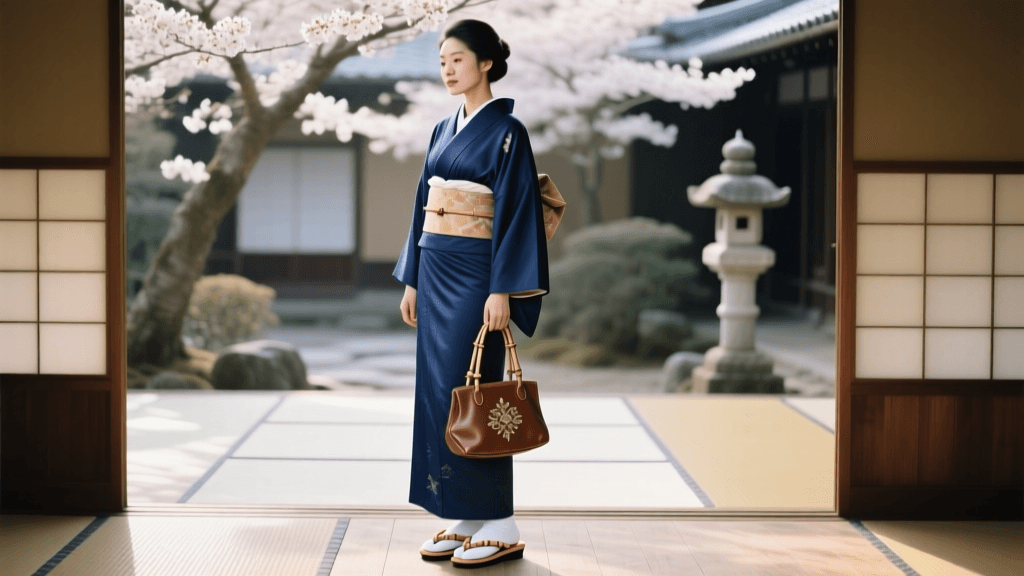
Traditional Japanese bags come in various forms, from structured clutches to kinchaku (drawstring pouches). A common mistake made by beginners is purchasing a bag that perfectly matches the kimono's primary pattern. In traditional kitsuke, your bag should coordinate with your obi or your zori, not the kimono itself. For highly formal events like weddings, a small, structured brocade clutch or a beaded evening bag is preferred. For semi-formal events, a woven rattan bag (for summer) or a leather-trimmed fabric bag (for winter) is appropriate. The bag should be just large enough to hold a few essentials, as large, bulky bags disrupt the sleek silhouette of the kimono.
Seasonal Rules for Accessories
Japan's deep appreciation for the seasons extends to kimono accessories. In the peak of summer (July and August), accessories should reflect coolness. Obi made of ro or sha (sheer, gauze-like silk) are worn, and obiage/obijime in cool tones like ice blue, mint, or translucent white are favored. Zori with woven rattan or bamboo covers replace vinyl. Conversely, in the winter, rich brocades, deep jewel tones, and plush velvet accents on bags and zori are preferred to evoke warmth and luxury.
Quick Reference: Accessory Matching Chart
To help you visualize the correct pairings, refer to the formality chart below:
| Event / Occasion | Kimono Type | Obi Type | Zori & Tabi | Bag Style |
|---|---|---|---|---|
| Wedding (Guest) | Homongi / Tsukesage | Fukuro (Brocade/Gold) | Vinyl Zori (White Hanao), White Tabi | Small Brocade Clutch |
| Coming of Age (Seijin) | Furisode | Fukuro / Maru | High-Heel Zori, White Tabi | Ornate Furisode Clutch |
| Tea Ceremony | Iromuji / Edo Komon | Nagoya (Subdued weave) | Flat Leather/Vinyl Zori, White Tabi | Minimalist Fabric Bag |
| Graduation | Hakata / Hakama | Hakama-shita Obi | Boots (Modern) or Flat Zori | Leather Satchel / Kinchaku |
| Summer Festival | Yukata | Hanhaba (Half-width) | Geta (Wooden), Barefoot or Tabi | Woven Basket / Kinchaku |
Conclusion
Mastering the coordination of kimono accessories is a lifelong journey that rewards patience and attention to detail. By understanding the hierarchy of the obi, the strict rules of zori and tabi, and the subtle interplay of obiage, obijime, and bags, you elevate your attire from a simple costume to a profound expression of Japanese cultural heritage. For those looking to experience traditional dressing firsthand or find authentic rental shops during their travels, the Japan National Tourism Organization (JNTO) offers extensive resources and guides on experiencing traditional culture across the country. Whether you are attending a wedding in Kyoto or a tea ceremony in Tokyo, respecting these sartorial rules ensures you participate in the tradition with grace, elegance, and deep cultural appreciation.